Dinghy Blues

“Laughing Baby, she am no more…”
Not completely, but nevertheless it’s a sad day for us. The West Marine 310 RIB we lovingly called Laughing Baby has reached the end of her working life and it’s time to put her out to pasture. (What’s the marine equivalent of pasture…lagoon?) She still floats and as of today doesn’t leak at all. But the wood transom is starting to go and it makes us nervous to put the big 8hp on her these days and worse, the dinghy guys say the vinyl is nearing end-of-life. And since we charter her and the Never for Ever as a team… well she just isn’t up to snuff anymore.
We’ve been keeping an eye out for a good used RIB but haven’t seen anything come on the market that was suitable. Oddly enough there are lots of inflatable bottomed tenders, but the sharp rocks and oyster-filled shallows of the PNW make that just a bit contra-indicated.
A lucky find?
I was checking out kijiji in BC the other day and came across a Highfield 290 UL for under $3000. That was way more than I had in the budget, but the more I looked at it the more intriguing it was. The UL stands for ultralight which means it had an aluminum bottom which was both tougher and lighter the fiberglass of the current boat. At 9’7″, the 290 is about 7 inches shorter that the current RIB and comes in at 86 lbs vs the 113 lbs. But it will still handle the 8HP and fit 4 people comfortably.

I figured if buying new might now be on the table, then I should do my due diligence and call around. At the time I assumed the 2021 Vancouver Boat Show was off (turns out it now is being held virtually in late February) so it thought waiting for a show deal was off the table. I checked out a bunch of dealers and talked to Nanaimo Chandlery — which is run by the same people as Nanaimo Yacht Charters — to see if they could get me a deal but it seemed this Highfield’s price was as good as it first appeared.
So I called SG Power in Victoria to get the scoop. Turns out it was a 2020 floor model and yes, it was still available. So I bought it.
A Small Problem
So now I had a problem. Actually a couple of them. I was in Alberta, the marina was in Nanaimo and the new tender was in Victoria. And we weren’t going to be on the coast before May at the earliest — and even that was up-in-the-air with the Covid situation. The fellow at SG Power was, rightly so, reluctant to commit it to commercial shipping as it was out of the box and it would be hard to ensure it made the trip intact. He did however volunteer to store it for me, even after I told him worst case was us not making it out until spring. Great service and a pleasure to deal with these guys.
The other problem was I really didn’t think Laughing Baby deserved to be unceremoniously discarded as she still had a lot of life left, albeit perhaps not zooming around at high speeds. So now we had two dinghies.
I talked to a few friends on the island but none of them had the facilities or vehicles to help with the problem and the people at NYCSS didn’t have any trips to Victoria planned—although they did generously offer us use of the truck when we finally made it out. So we had a fallback plan but I was hoping to get it dealt with earlier. Then I sent a note off to Matt from Gudgeon to see if he knew anyone. Matt is back in Victoria after he left his boat in Mexico Sadly she is now for sale). He said he would ask around and actually sounded semi-hopeful. I offered a trade of transportation in exchange for Laughing Baby just in case someone with a truck was looking for a cheap dinghy. Fingers crossed.
In the meantime I am talking to a few other contacts/friends and if I have to, I will pay for a rental truck—although that solution still leaves me trying to find a home for the old dinghy.
What’s in a Name
First world problems: another conundrum is what we name the new tender? The original was a compromise, because we thought Laughing Baby wouldn’t play as well on the VHF as Never for Ever, so the I suggested we assign that name to the tender. And that deal still stands. But do we keep the name as is? Add a “Two” or “II” to the end (or “Too” as some people go for.)

I guess we will wait and see—these boating rituals are sometimes a puzzle.
Happier Days
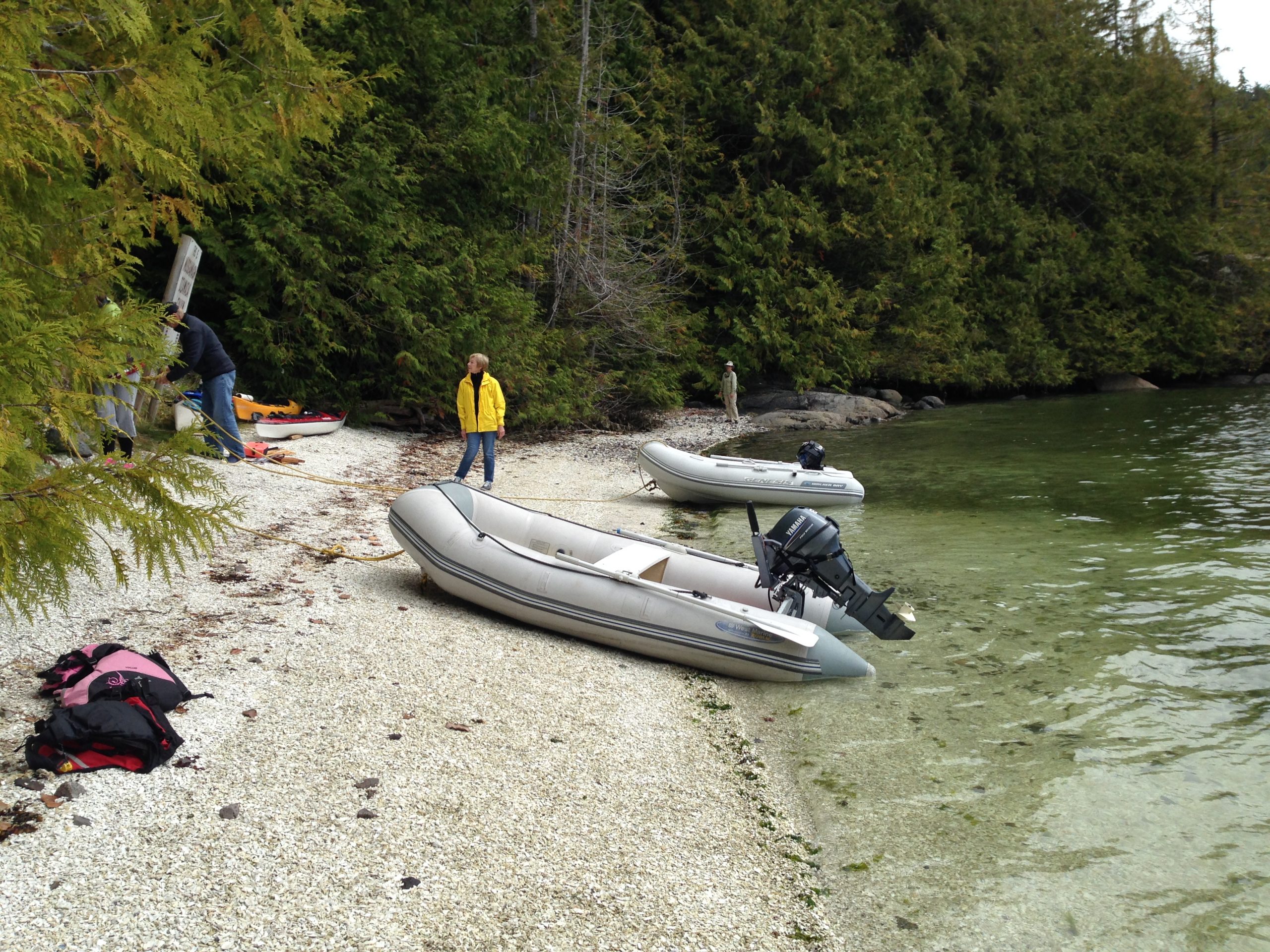
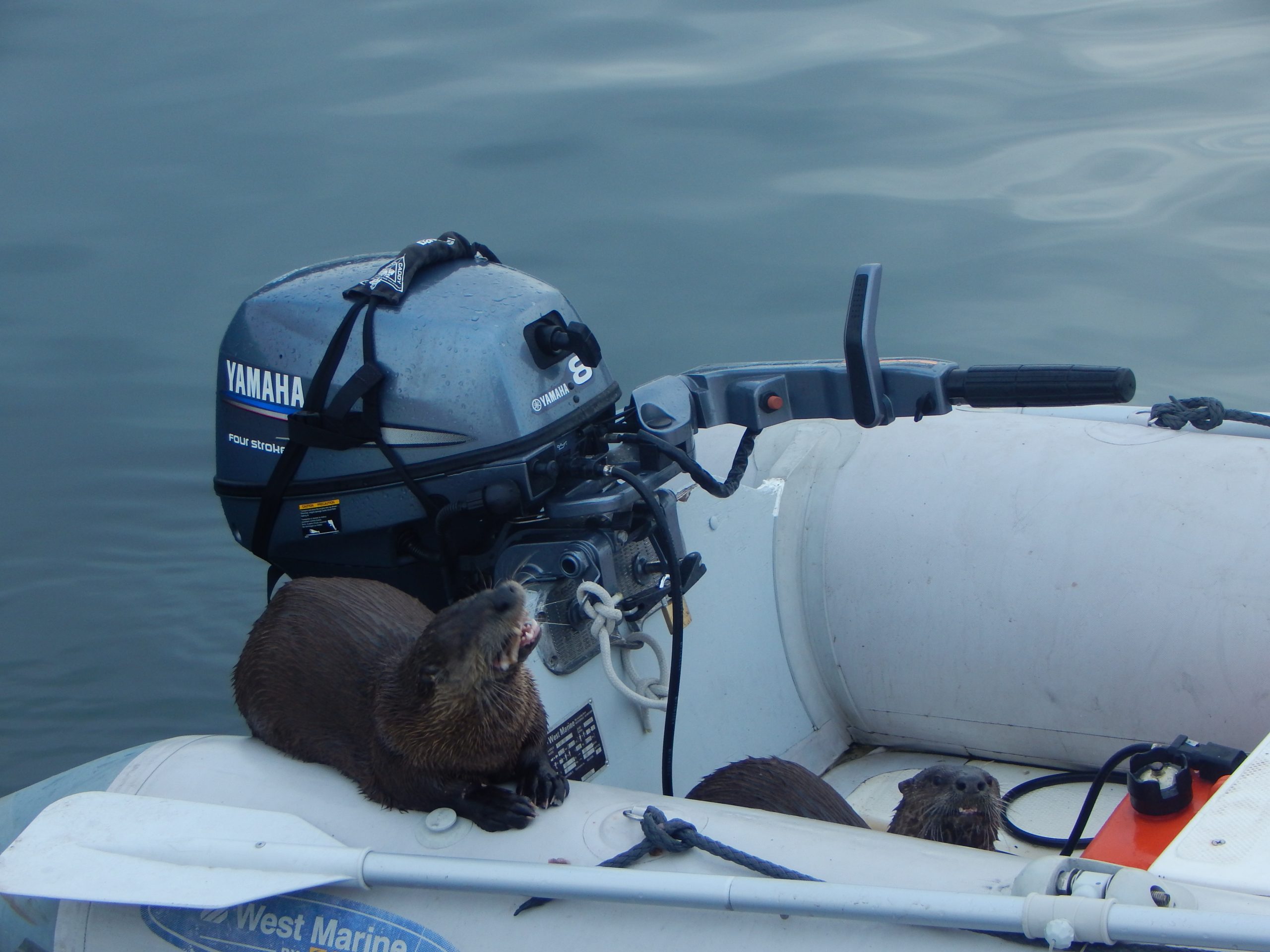
So that’s that. Hopefully we have some fun oaring ahead of us and maybe even a bit of zooming. Finally here are few final images of the adventures we’ve had with the original Laughing Baby over the years—and if you know anyone who will give her a good home, let me know.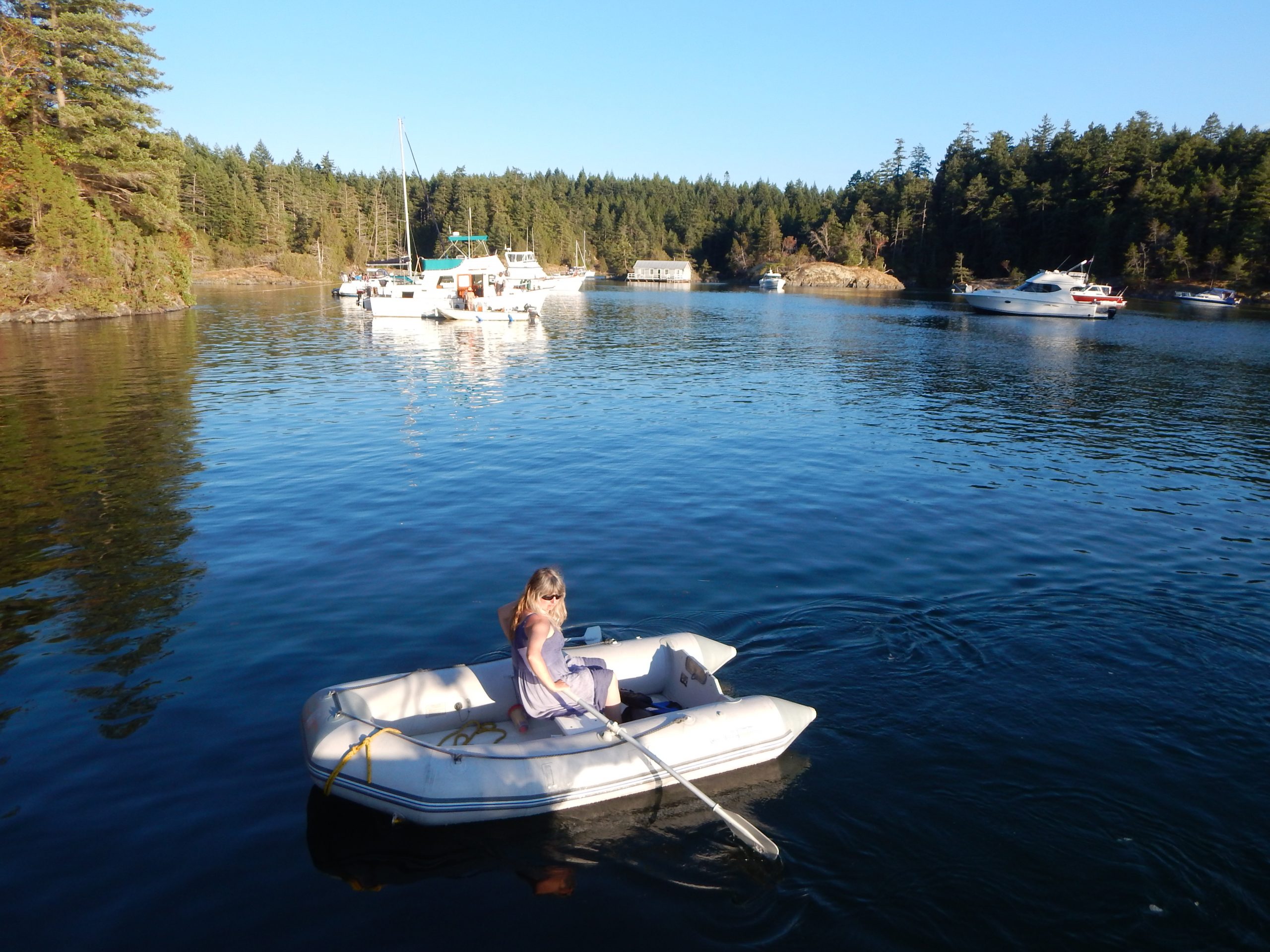






—Bruce #Equipment
Standard ebooks, January 2021
It’s 2021 and that means books published in 1925 in the US are now in PD (public domain). Of course some of these are already in the public domain in Canada, but Standard Ebooks runs off American copyright laws. So I added a few new stories to my Ukridge Stories, the Jeeves Stories, and my Mack Reynolds Short Fiction and the updated versions can be download on the site.


I have also added a few new texts to the corpus.


Old Posts
Links to previous posts about the books I have worked on:
Calibre Web 2021
A recent update to Calibre Web version .6 added the series info, so there is no longer a need to add that to the templates. And they did make a few changes to the code for the publishing date.
Reminder You can edit the script through View Package Contents
Now to add the pub date so my python web scraping program can access it:
After ~line 71 on /cps/templates/shelf.html
        {% if (entry.Books.pubdate|string)[:10] != '0101-01-01' %}
         <p  class="series" id="pubdate">{{entry.Books.pubdate|formatdate}} </p>
        {% endif %}
—just after the {% endif %} for the series section.
Remember to go to Admin and restart Calibre before exporting.
Note: updated March 2022
– to change the class to “series” to match the previous lines and add an id of “pubdate” for the script to search for.
Note: updated July 2022
– changing the class to “series” caused “pubdate”to show up if there was no series. So I added id=”series” to the preceding {if} as well (see below) — around line 64 — and then searched for id rather than class in the python script.
        {% if entry.Books.series.__len__() > 0 %}
        <p id="series" class="series"p>
Note: updated Oct 2022
The source code was changed from entry.pubdate to entry.Books.pubdate (and all other calls — see series above)
Note: Update April 2024
Edited opds.py to enable Homepage widget: https://github.com/janeczku/calibre-web/commit/0499e578cdd45db656da34cd2d7152c8d88ceb23#diff-4ec64b67724eadd1f9c30601b50791079ee157b6bf63c411ce68d637c9793f1dR416-R425
2020: The Covid Reads
Well it’s Year 9 of this “experiment.” I guess it’s a habit now.
Been a heck of year hasn’t it? One might suppose in such a year of lockouts and stoppages that my reading total would have gone up—not like I had much else to do… But, not so much.
One thing to note as you scroll the following list is the lack of rereads this year—more on that later. So without further ado…
January (8)
The Calculating Stars Mary Robinette Kowal (2018)
Lady Astronaut Book 1 – ebook;
The Lady Astronaut of Mars Mary Robinette Kowal (2014)
Lady Astronaut Book 0.5 – ebook;
The Fated Sky Mary Robinette Kowal (2018)
Lady Astronaut Book 2 – ebook;
The Long Way to a Small, Angry Planet Becky Chambers (2014)
Wayfarers Book 1 – ebook; reread
A Closed and Common Orbit Becky Chambers (2016)
Wayfarers Book 2 – ebook;
All the Birds in the Sky Charlie Jane Anders (2016)
– ebook;
Tripoint C.J. Cherryh (1994)
Company Wars Book 6 – ebook;
Master and Commander Patrick O’Brian (1969)
Aubrey–Maturin Book 1 – ebook;
February (7)
Post Captain Patrick O’Brian (1972)
Aubrey–Maturin Book 2 – ebook;
Record of a Spaceborn Few Becky Chambers (2018)
Wayfarers Book 3 – ebook;
HMS Surprise Patrick O’Brian (1973)
Aubrey–Maturin Book 3 – ebook;
The Mauritius Command Patrick O’Brian (1977)
Aubrey–Maturin Book 4 – ebook;
Consider Pheblas Iain M. Banks (1987)
Culture 1 – ebook;
Desolation Island Patrick O’Brian (1978)
Aubrey–Maturin Book 5 – ebook;
Ack-Ack Macaque Gareth L. Powell (2013)
Ack-Ack Macaque Book 1 – ebook;
March (9)
The Fortune of War Patrick O’Brian (1979)
Aubrey–Maturin Book 6 – ebook;
Willfull Child Steven Erickson (2014)
Willfull Child Book 1 – ebook;
The Poppy War R. F. Kuang (2018)
The Poppy War Book 1 – ebook;
The Surgeon’s Mate Patrick O’Brian (1980)
Aubrey–Maturin Book 7 – ebook;
The Dragon War R. F. Kuang (2019)
The Poppy War Book 2 – ebook;
The Quartered Sea Tanya Huff (1999)
The Quarters Book 4 – ebook;
Autonomous Annalee Newitz (2017)
– ebook;
The Killing Light Myke Cole (2019)
The Sacred Throne Book 3 – ebook;
The Ionian Mission Patrick O’Brian (1981)
Aubrey–Maturin Book 8 – ebook;
April (12)
Black Star Renegades Michael Moreci (2018)
Black Star Renegades Book 1 – ebook;
Treason’s Harbour Patrick O’Brian (1983)
Aubrey–Maturin Book 9 – ebook;
The Forge David Drake and S.M. Stirling (1991)
The General Book 1 – ebook; reread
The Hammer David Drake and S.M. Stirling (1992)
The General Book 2 – ebook; reread
The Anvil David Drake and S.M. Stirling (1993)
The General Book 3 – ebook; reread
The Steel David Drake and S.M. Stirling (1993)
The General Book 4 – ebook; reread
The Sword David Drake and S.M. Stirling (1995)
The General Book 5 – ebook; reread
The Far Side of the World Patrick O’Brian (1984)
Aubrey–Maturin Book 10 – ebook;
Sixteenth Watch Myke Cole (2020)
– ebook;
The Reverse of the Medal Patrick O’Brian (1986)
Aubrey–Maturin Book 11 – ebook;
Leviathan Wakes James S.A. Corey (2011)
Expanse Book 1 – ebook;
The Letter of Marque Patrick O’Brian (1988)
Aubrey–Maturin Book 12 – ebook;
May (8)
Caliban’s War James S.A. Corey (2012)
Expanse Book 2 – ebook;
The Thirteen Gun Salute Patrick O’Brian (1989)
Aubrey–Maturin Book 13 – ebook;
The Nutmeg of Consolation Patrick O’Brian (1991)
Aubrey–Maturin Book 14 – ebook;
The Last Emperox John Scalzi (2020)
Interdependency Book 3 – ebook;
Abbadon’s Gate James S.A. Corey (2013)
Expanse Book 3 – ebook;
Clarissa Oakes Patrick O’Brian (1992)
Aubrey–Maturin Book 15 – ebook;
The Wine-Dark Sea Patrick O’Brian (1993)
Aubrey–Maturin Book 16 – ebook;
Wrath of Betty Steven Erickson (2016)
Willfull Child Book 2 – ebook;
June (12)
Network Effect Martha Wells (2020)
Murderbot Book 5 – ebook;
The Commodore Patrick O’Brian (1995)
Aubrey–Maturin Book 17 – ebook;
Queen Timothy Zahn (2020)
Sibyl’s War Book 3 – ebook;
Accepting the Lance Sharon Lee & Steve Miller (2019)
Liaden Book 15 – ebook;
The Search for Spark Steven Erickson (2018)
Willfull Child Book 3 – ebook;
An Illusion of Thieves Cate Glass (2019)
Chimera Book 1 – ebook;
Lord Valentine’s Castle Robert Silverberg (1980)
Lord Valentine Book 1 – ebook; reread
Cibola Burn James S.A. Corey (2014)
Expanse Book 4 – ebook;
Oathbound Mercedes Lackey (1988)
Vow and Honor Book 1 – ebook;
Oathbreakers Mercedes Lackey (1989)
Vows and Honor Book 2 – ebook;
Oathblood Mercedes Lackey (1998)
Vows and Honor Book 3 – ebook;
The Yellow Admiral Patrick O’Brian (1996)
Aubrey–Maturin Book 18 – ebook;
July (10)
The Hundred Days Patrick O’Brian (1998)
Aubrey–Maturin Book 19 – ebook;
A Conjuring of Assassins Cate Glass (2020)
Chimera Book 2 – ebook;
Tooth and Claw Jo Walton (2003)
– ebook;
Jade City Fonda Lee (2017)
The Green Bone Saga Book 1 – ebook;
Split Infinity Piers Anthony (1980)
Apprentice Adept Book 1 – ebook; reread
Untitled L.A. Vermeer (?)
– manuscript;
Blue Adept Piers Anthony (1981)
Apprentice Adept Book 2 – ebook; reread
Juxtaposition Piers Anthony (1982)
Apprentice Adept Book 3 – ebook; reread
Ukridge Stories P.G. Wodehouse (1920)
– ebook; link
Blue at the Mizzen Patrick O’Brian (1999)
Aubrey–Maturin Book 20 – ebook;
August (9)
Love among the Chickens P.G. Wodehouse (1920)
– ebook; link
Nemesis Games James S.A. Corey (2015)
Expanse Book 5 – ebook;
Ninefox Gambit Yoon Ha Lee (2016)
Machineries of Empire Book 1 – ebook;
Raven Stratagem Yoon Ha Lee (2017)
Machineries of Empire Book 2 – ebook;
Jade War Fonda Lee (2019)
The Green Bone Saga Book 2 – ebook;
The Final, Unfinished Voyage of Jack Aubrey Patrick O’Brian (2004)
Aubrey/Maturin Book 21 – ebook;
Maske: Thaery Jack Vance (1974)
– ebook; reread
Cocaine Blues Kerry Greenwood (1989)
Phryne Fisher Mysteries Book 1 – ebook
Revenant Gun Yoon Ha Lee (2018)
Machineries of Empire Book 3 – ebook;
September (8)
The Way of the World William Congreve (1700)
– ebook; reread link
Babylon’s Ashes James S.A. Corey (2016)
Expanse Book 6 – ebook;
A Pillar of Fire by Night Tom Kratman (2018)
A Desert Called Peace (Carrera) Book 7 – ebook;
Flying Too High Kerry Greenwood (1990)
Phryne Fisher Mysteries Book 2 – ebook
Days of Burning, Days of Wrath Tom Kratman (2020)
A Desert Called Peace (Carrera) Book 8 – ebook;
Cobra Traitor Timothy Zahn (2018)
Cobra Rebellion Book 3 – ebook;
Gideon the Ninth Tamsyn Muir (2019)
Locked Tomb Book 1 – ebook;
Alliance Rising C.J. Cherryh & Jane S. Fancher (2019)
The Hinder Stars Book 1 – ebook;
October (8)
Harrow the Ninth Tamsyn Muir (2020)
Locked Tomb Book 2 – ebook;
Deal with the Devil Kit Rocha (2020)
Mercenary Librarians Book 1 – ebook;
A Deadly Education Naomi Novik (2020)
Scholomance Book 1 – ebook;
New Moon Ian McDonald (2015)
Luna Book 1 – ebook;
With the Lightnings David Drake (2000)
Lt. Leary Book 1 – ebook; reread
Lt. Leary, Commanding David Drake (2001)
Lt. Leary Book 2 – ebook; reread
The Relentless Moon Mary Robinette Kowal (2020)
Lady Astronaut Book 3 – ebook;
The Far Side of the Stars David Drake (2003)
Lt. Leary Book 3 – ebook; reread
November (12/4)
The Physicians of Vilnoc Lois McMaster Bujold (2020)
Penric & Desdemona Book 8 – ebook;
Murder on the Ballarat Train Kerry Greenwood (1991)
Phryne Fisher Mysteries Book 3 – ebook;
Wolf Moon Ian McDonald (2017)
Luna Book 2 – ebook;
Persepolis Rising James S. A. Corey (2017)
Expanse Book 7 – ebook;
The Galaxy Ballroom Sharon Lee & Steve Miller (2019)
Liaden Book 15.5 – ebook; (short story)
The Door Though Space Marion Zimmer Bradley (1961)
– ebook;
Moon Rising Ian McDonald (2019)
Luna Book 3 – ebook;
Lord Arthur Savile’s Crimes and Other Stories Oscar Wilde (1908)
– ebook; link
The Raven Tower Ann Leckie (2019)
– ebook;
Last Man Out Elliot Kay (2018)
Poor Man’s Fight Book 4 – ebook
The Perfect Gun Elizabeth Bear (2019)
– ebook; (short story)
The Mysterious Study of Doctor Sex Tamsyn Muir (2020)
Locked Tomb Book 0.5 – ebook; (short story)
Death at Victoria Dock Kerry Greenwood (1992)
Phryne Fisher Mysteries Book 4 – ebook;
The Origin of the Flow John Scalzi (2019)
Interdependency Book 0.5 – ebook;
A Year and a Day in Old Theradane Scott Lynch (2019)
– ebook
Tinker Wen Spencer (2003)
Elfhome Book 1 – ebook;
December (9)
The Wolf Who Rules Wen Spencer (2006)
Elfhome Book 2 – ebook;
Guns of the Dawn Adrian Tchaikovsky (2015)
– ebook;
The Green Mill Murder Kerry Greenwood (1993)
Phryne Fisher Mysteries Book 5 – ebook;
Deerskin Robin McKinley (1993)
– ebook;
Children of the Fleet Orson Scott Card (2017)
Fleet School Book 1 – ebook;
Tiamat’s Wrath James S. A. Corey (2019)
The Expanse Book 8 – ebook;
Children’s Stories Oscar Wilde (1888)
– ebook; link
Or What You Will Jo Walton (2020)
– ebook;
Trader’s Leap Sharon Lee & Steve Miller (2020)
Liaden Book 19 – ebook;
((\
(-.-)
o_(“)(“)
The Afterword
So. Huh. I thought the final tally would show that I plowed through the books this year. But as I went back through the last few years’ totals, I realized that just wasn’t true. After a little contemplation I decided one reason (and trust me, there are many more excuses to come) was me making a concerted effort to get through my “To Be Read” stack and thus limiting the number of rereads—which always go a lot faster. And another reason was that for most of the year, lying-on-the-couch reading just wasn’t…appealing? So 80% of the 2020 reading was really just in the evenings before-going-to-sleep reading. I don’t know why that was so, but it was. “2020, huh, what is it good for…”
The numbers
112 books (and 4 standalone short stories)
15 rereads
9.33 books/month, .3 books/day
(Note: the short stories were a result of me downloading stories from the inter-webs and then making them into standalone ebooks. Eventually I will combine them into collections, but I had no real way of recording them in the count, so there they are, sticking out like sore thumbs.)
2020 Monthly totals
January — 8
February — 7
March — 9
April — 12
May — 8
June — 12
July — 10
August — 9
September — 8
October — 8
November — 12/4
December — 9
The Reread \ To Be Read Situation
You might want to skip down to So, What Did I Read since this section is purely self-indulgent and quite likely borderline-whinging unless you have strong opinions on the proverbial yet ubiquitous To Be Read Stack.
My ebook library now sits at 886 books. Compared to the 735 I had last year at this time. That’s an increase of 151 books… can you see where this is going?
My unread stack now sits at 72 as compared to the panic-inducing 87 of last year. A decrease of only 15 books. And yet I read 97 new books in 2020, only occasionally taking a break and dipping back into the old stuff for relief. And it is important to note that unlike regular bibliophiles (which incidentally I don’t actually count myself as being among) I abhor a to be read stack and count it as a black mark. Never in my life have I ever had more than four or five unread books, and usually that was from a particular buying binge or the starting of a new multi-book series. The situation as described last year was/is intolerable and I worked hard in 2020 to deal with it. To my obvious despair, as I counted it all up this last week of December and found the total to be still completely unacceptable.
The why is complex. Some of it is L’s acquisition of 20 Phryne Fisher Mysteries that I said I wasn’t going to read and then, ever so slowly, started in on. I’ve only read 5 so far but that forced me to file the other 15 in my to-be-read ‘pile’ rather than dump them as I had originally intended.
Some of it was stubborn complete-ism on my part. Quite a few series were added to or completed by their authors in 2020, so obviously I went out and got them rather than wait until I actually had time to read them (which is a really new [and bad] habit for me). That accounts for another 10 or so. As well I mistakenly acquired a book 5 of a series (Fleet Elements by Walter Jon Williams) and upon that unhappy discovery, felt I needed to go get books 1–4.
Also I decided to read the Aubrey/Maturin Books (22) and the Expanse novels (8) which was a massive mistake if I had really intended to knockdown the already unwieldy unread pile. I also added a few new emergency classics I don’t really intend to read like The Great Gatsby and For Whom the Bell Tolls.
Confusing the numbers further there was also a concerted effort to acquire ebook copies of old favourites. So in reality the Grand Total encompasses another ~45 books that are ones that I have read before (in paper) but are now in a to-be-reread pile. So they are new acquisitions but not counted as unread. But then again, I also moved the 30 or so “unread” ebooks from last year that fell into this category into that to-be-reread pile, deleting them from the to-be-read total—so that just makes it worse.
All in all a distinct failure and I really, really intend to stop acquiring new titles until I have the pile down to 10 or so with another 15-20 of long-term good intentions/emergency titles (Around the World in Eighty Days, Middlemarch, Treasure Island, a bunch of Verne etc.).
So, What Did I Read?
I had heard great things about the Culture novels by Iain M. Banks but for some reason ended up getting an Expanse title by James S.A. Corey. I think it was me reading Earl’s mention of them last year in his list that got them jumbled in my head. Which is why I read the Expanse series this year. I did read Consider Phlebas by Banks and will likely continue on with them if I ever get through my pile.
I also read the Lady Astronaut series by Mary Robinette Kowal — another series I had meant to put off acquiring, but L wanted to read them so I got sucked in. A particular apt series to read in 2020. I revisited Tanya Huff and Mercedes Lackey’s classic fantasy universes and of course indulged in the much anticipated full-length Murderbot novel.
Non SF/Fantasy
I also racked up an amazing (for me) total of non-genre books. I started in on the Aubrey/Maturin books because…well…sailing—and it turned out I really enjoyed them. There was also Kerry Greenwood’s Phryne books (I had watched the excellent TV series and was eventually tempted to the dark side (mysteries…shudder). My work with Standard Ebooks added one play, some Wodehouse and 2 collections of Oscar Wilde stories which in reality started as 4 or 5 volumes. There are links to these titles in the list so feel free to download and enjoy. L finished her YA MS and I got to read that (it was damn good and I am keen to hear what the publishers say).
All in all that’s 32 non sf/fantasy books. Close to a third.
(The Aubrey/Maturin books set off a reread of the first couple of David Drake’s RCN Series which is, in some ways, a remarkably close SF reworking of the Aubrey books.)
a note about gender
I have long not cared a whit about the gender of my authors—and, having grown up in the now slightly icky SF tradition of women hiding their gender behind initials, I can still be mildly surprised some days when I find out an old favourite was written by a woman. (By which I mean I never bothered to look it up, not that I am surprised a woman wrote it.)
But this year, for some reason, I thought I would count. Turns out I read 42 books by women. That’s close to 40%. And if you removed the relentlessly masculine (and definitely not sf/fantasy) Aubrey/Maturin books, it would likely have been close to 50%. Which in a historically male dominated genre, is pretty damned good, if I do say so myself…and I do. So I hereby give myself a self-satisfied nod and stuff that particular stat back onto the back closet top shelf where it belongs. Just read good books people. Judge me if you will.
Modern SF Redux and more excuses
Last year I brought up the topic of the state of modern Science fiction and Fantasy and admired it for how it had “kicked it up a notch.” And after reading a whole sh#t-ton of newer stuff this year I still stand by my judgement—but have a caveat to offer.
I like schlock. And publishers are, understandably, not publishing much of it these days in their efforts to elevate the genre. Even a book touted as a “space opera” like Elizabeth Bear’s Ancestral Nights takes a bit more effort that I can (or am willing to) sustain over the course of 100 books/year. My brain starts to be full and the escapism part of reading starts to diminish in ever increasing waves. This is another reason why my count is a bit down. I read for pleasure, not edification, so a great romp is always greatly appreciated.
Some of my favourites of the year (The Poppy War by R. F. Kuang, Fonda Lee’s The Green Bone Saga, Gideon the Ninth by Tamsyn Muir, and most especially Ann Leckie’s The Raven Tower) were dense enough that they in no way could qualify as a light read. So I often found myself trying to find something a bit lighter and more “fun”—yet another reason for acquiring titles rather than continually taking from the “To Be Read” pile (I know, I know…excuses, excuses). And the better a book was, the more you had your brain cells and guts wrenched around—I particularly was affected by Robin McKinley’s Deerskin and she pulled me out of it just as I was considering abandoning the book for the sake of my mental health…2020 will do that to you. It’s enough to want to make you stop reading good books. (OK, not really, but you get my drift.)
So while I commend the modern editors for their exaltation, elevation and expansion of the genre(s), could we maybe still publish some quality space lasers and explosion stories and thoughtless muscled heroes (of any gender whatsoever) succeeding against stupid odds—just for some relief? (I’ve got the aforementioned Fleet Elements series cued up so maybe that will be my 2021 guilty pleasure.)
A Note About Home-made Books
I “made” 3 illicit editions of books this year (other than the 4 short stories). All three are not available as ebooks and 2 of them are likely never to be issued as they are old and desirable to no one but weirdos like me. The third though, ah that one is an example of the stupidity of how rights are being handled in a digital age.
Frederick Pohl’s Gateway was literally a gateway for my science fiction reading. It was among the earliest and best sf novels I read and has been a timeless goto that I have reread many, many times. So I took it into my head that it was just what I needed in 2020. Nope. Not available as an ebook. And even if I wanted to, my paper copy is one of those books literally held together by masking tape.
But hold on! The rest of the series (which are ok but not anywhere near in the class of the original…sort of an Ender’s Game scenario) were available. Here’s the thing though. Baen holds the rights to Books 3, Heechee Rendezvous and 4, The Annals of the Heechee, and Tor (MacMillan) owns the rights for Book 2, Beyond the Blue Event Horizon and The Boy Who Would Live Forever (nominally Book 5, which I have never read as it was written 20 years after the others). No one, as far as my extensive searching (accompanied by much swearing), owns the rights to the first book in this monumental series and thus, because the world of electronic rights is bizarre, was unavailable as an ebook.
Seriously? Books 2-5 are available but not the original? Who came up with a universe where that was reasonable? It’s something out of some futuristic corporate dystopian novel.
So I stole it. I found a site that had bad OCR posted in html, wrote a python script to download the text. Went through and fixed the gross errors and formatted all the sidebar stuff (there is a lot if it in Gateway) and made my own, illicit, ebook. If and when the rest of the publishing world ever gets their heads out of their collective asses I will most assuredly acquire a licit copy, but until then… seriously?… no Book One? Aaargh.
(Note: I did buy the other 3 books so several someone’s got their money out of this debacle.)
Wrap it up already
In conclusion, I think this is enough maundering—how ’bout all y’all draw your own conclusions. As for me, in summary, good books, and plenty of ‘em.
And now on to 2021!
My fellow book counters: Leslie’s 2020 book and music list and the one, the only, the original, Earl’s 2020 retrospective.
Links to previous years’ book count posts:
Instagram Since Last Time


Standard ebooks
So this happened…
I’ve been working with the Standard Ebooks Project for a few years now and it turns out I’m among the top contributors. So as a reward we got promoted 🙂

I’ve talked about the project and listed my ebook contributions previously (2019 update and the 2020 update) but briefly “Standard Ebooks takes ebooks from open-sources repositories like Project Gutenberg, formats and typesets them using a carefully designed and professional-grade style manual, fully proofreads and corrects them, and then builds them to create a new edition that takes advantage of state-of-the-art ereader and browser technology.”
Alex, the founder, wanted to try and build in some support as the project has been growing by leaps and bounds so he has made the shift to a non-profit (it’s way more complex than that in reality) and invited a core group of us to help represent the project. As the project gains more and more momentum in the broader community he is trying to negotiate the shift from self-funded hobby to a full-time commitment. Wish us luck and be sure to check out the growing list of books.
Oh and feel free to contribute…
Instagram Since Last Time

Instagram Since Halloween


Sourdough for idiots like me
I’ve been reluctant to write this down and post it because it’s a) over-explained on the interwebs, and b) so very, very subjective. Remember that term. The best advice you will get is to wing it and see what happens. Go Bob Ross on that thing and see if you have any “happy accidents.” But here it goes…

Caveats
Truth is most “experts” you will come across are bread snobs—just like coffee snobs, audiophiles etc. etc. ad nauseum. I’m not. I like truckstop coffee, AM radio and warm, fresh bread. Good is almost always good enough. They’re not wrong but take any maxims with a literal grain of salt. Sourdough seems to be the epitome of bread-baking snobbery: dense vs airy, crust texture, good crumb/bad crumb, the internet is full of “subject matter experts” pontificating on what makes the best sourdough. But the truth is bread is bread, and it’s pretty darn easy to make a decent loaf. Under-baked is bad, but it’s hard to over-bake. Under-kneaded is bad, but it’s hard to over-knead. Under-salted is bad, but…well actually it is bad to over-salt. Don’t over-salt.
Sourdough is super easy. It just takes a bit of time to make.
Sourdough for the Regular Person
There are (to me) two basic techniques and two basic cooking methods. I use both and frankly I see very little difference in the final product (see the snob comments above 🙂 ). There are a lot of things you can do to address the “sourness” of the final loaf and I will mention a few later. But if your aim is to produce a good tasting loaf of bread without using commercial yeast, sourdough is well within most home bakers’ means.
Sources
I use several recipes that I have modified from a few sources. I prefer videos, as a lot of it is technique and developing texture and the visuals help build confidence you are on the right track. But be your own baker…
Bake with Jack videos: Beginners Sourdough I love Jack. He’s fun, encouraging and realistic about bread.
His recipe calls for folding not kneading and uses a stone in the oven. Be sure to check out his timing video as well to help build a good model for making the whole, lengthy process more manageable.
Cooking with Alex: A Non-Baker’s Guide To Making Sourdough Bread Alex is an experimenter and strives to simplify. His recipe uses kneading and a dutch oven.
Finally I found this video that has a woman producing a loaf in just one day which I have used to great success. I don’t use her recipe but the timing works well for me.

Starter
Just go ahead and make a starter. It’s easy. Lots of videos, web pages etc, etc. Try this method that is from a study into just what the heck sourdough wild yeast really is (spoiler alert: we don’t really know).
I made mine a couple of years ago. I used white flour, and tap water and have had no issues—it took about 5 days. But feel free to follow all the hints you will find online about distilled water or other flours.
My Hints
- They encourage you to throw away half the starter in order to provide a better culture-to-food ratio (flour [starch] is food to the yeast). It’s not necessary but does help to get more food to the hungry yeast without filling gallon jars with fermenting starter.
- If it starts to smell like “nail polish” it just means it is hungry. Feed it more. Don’t throw it out. If it develops a bit of liquid on top, it is hungry. Feed it more. Don’t throw it out. If it doesn’t rise as fast as it used to, it is hungry, throw out half and feed it more. Don’t start over.
- I feed my starter with rye flour now. White still works when I run out but the rye does provide a bit more “sourness.”
- I keep about 4 or 5 tablespoons in a jar in a fridge. I feed it once a week with a heaping tablespoon or so of flour and equal amounts of water—discarding some first. If I know I am going to bake that week I will add 50 gms of flour and 50 gms of water (a half cup-ish total) and let it sit on the counter for a while (until it starts to double) before returning it to the fridge.
- Use an elastic on the jar to see how much it rises after you feed it in preparation to using.
- Starter can be high hydration and jiggly or low hydration and putty-like. As far as I can tell it doesn’t matter.
- Every month or so, if I haven’t been baking, I will pull it out of the fridge and feed it every day for a few days before discarding a bunch and returning it to the fridge. Does it help? I have no idea; but it reassures me the starter is still rarin’ to go.

The Process
Before we get to the recipe itself let’s talk about the process and the various options. Again, as far as I can tell, no one method works substantially better than another. If you watch the Jack’s timing video above, you will hear him talk about adapting the method to your lifestyle not vice versa. Just make it work for you. The only time I have ever made a “bad” loaf (according to my admittedly low standards) was when I forgot the salt. Don’t forget the salt.
Prepare the starter: I usually (but not always) take it out the night before and feed it so that I have around 100-200 gms of usable starter with a 5 tbsps or so left over. Or… if you are making an overnight loaf, it is more than adequate to feed it in the morning and starting the loaf a few hours later. Or… just use it straight from the fridge—I would suggest you would do this only if you have more than just the scrapings in the jar. But give it a try even if you do.
This part can be referred to as making the levain.
Hint: mark the starting level of the starter and then time how long it takes to double. That will give you a rough idea how long you will need to proof a one-day sourdough and a measure of how vigorous your starter is.
Mix: Mix the prepared starter (levain) with flour and water and salt. I usually mix the starter with water and then add flour and salt—purely because it’s easier. Salt killing yeast is a myth—look it up. Then I usually let it rest for 15–30 minutes or so—up to an hour.
Or just use starter straight from the fridge. That works too…it might take a bit more time that’s all.

Knead: I knead for 8-10 minutes. Sure there are lots of tests, but 8 minutes by the clock almost always does the trick. Eventually you will get to know the dough. Which will then change as you screw with flour or hydration. 8 minutes works for me.
Proof for 4 hours (I have a bread setting on my oven that can be used to speed that up).
OR
Stretch and Fold: Instead of kneading just fold the dough. Give it a nice long stretch and then fold it over on itself. If you fold a lot each time the crumb will be closer (more dense); if you fold less it will be airier. Theoretically.
Fold 1—stretch, fold the dough in half—turn 90° and repeat. 12 times or so. Rest 2 hours.
Fold 2—stretch, fold the dough in half—turn 90° and repeat. 6 times or so. Rest 2 hours.
Fold 3—stretch, fold the dough in half—turn 90° and repeat. 6 times or so. Rest 1 hour.
This is varies slightly for the same-day sourdough—mostly more folds. See the end of this post for the timing on that.
Hints: have a bowl of water handy to wet your hands before each fold—it makes it easier. The dough will become less sticky with each set of folds.

Preshape: Put the dough (seam side up if you have been paying attention, which apparently you should. I usually forget.) on a lightly (lightly!) floured surface. Fold the four corners across the center, roll it over and pull it towards you in several directions to try and form a ball with a little surface tension. It’s all about the surface tension.
Rest for an hour covered with a cloth.
Note: if you are making two small loaves (as I usually do), divide the dough before the pre-shape.
Final Shape: the final shaping’s aim is to create a tight structure without degassing the dough too much. Dust the top of the dough with a bit of flour and roll it over. Fold the four corners over—it is like folding an envelope.
- If making a boule, roll it back over and pull it into a ball gently to try and create more surface tension.
- If making a loaf roll the seam down and pull towards you into a sausage shape.
Final Rest: You have tons of choices here. Bannetons are a thing—look them up. Supposedly they help wick moisture away from the dough and prevent sticking while providing shape. I use bowls. Floured cloths are also a thing to prevent sticking—they say rice flour is best, but who has that. I’ve started just lining two identical bowls with parchment paper and a bit of flour—works like a charm.
If you are attempting same-day sourdough, put the shaped dough in a bowl or container lined with parchment, seam side down and cover with a cloth. Proof for 1.5–2 hours or until it has doubled (although who can really judge what doubling is…seriously…?).
If you are proofing overnight, place in a lined container (parchment or a very, very floured cloth) seam side up. I use a square casserole for two loaves separated by a fold of cloth/parchment. Cover with a cloth and throw in the fridge overnight 12-20 hours.
The point of proofing overnight is manifold:
- it gives the (slower) sourdough yeast more time to produce gasses and rise
- it (supposedly) allows gluten to develop more
- it (allegedly) allows the flavours to become more intense.
Baking
Remember to take the dough out of the fridge 2 hours or so before you bake it.

Dig those wrinkles from the parchment.
When preheating the oven, regardless of the method, the longer the better. You want to get as much heat into the stone/dutch oven as possible. I usually do it for 45 minutes to an hour. But 30 minutes still works.
Method 1: preheat the oven with a pizza stone to 425°. Boil some water in the kettle.
Method 2: preheat oven with a dutch oven in it to 450°. My mom uses a pyrex casserole so don’t sweat the dutch oven. I use a cheap Lodge cast iron one on the boat . Mainly you want to contain the moisture — the rest is just heat retention.

If you are doing a same-day sourdough you will transfer the parchment paper directly onto the cooking surface. Easy-peasy. If you proofed overnight you will want to turn proofing container upside down onto a floured peel of some sort (I often use the back of a plate). If you are like me, you then have to gently peel the parchment/cloth away from the dough because it never actually comes away easily despite what the professionals say.
Slice the top of the dough: this allows the dough to continue to rise in the oven and controls where the inevitable split happens. There are all sorts of rules and techniques—look them up. I mostly just put a healthy slash into the dough: minimum half inch deep and usually the whole width of the loaf. I do this before I put it on the pizza stone or after I put it into the hot dutch oven.
Method 1: slide/place the dough on the pizza stone. Pour the boiled water into a cake tin or other container and quickly shut the door. It’s all about the steam baby!
Method 2: take the pre-heated container out of the oven. If you are same-day dough’n it, the drop the parchment directly in. Otherwise flop it from the peel/plate into the hot container. Remember, it’s hot! Seriously…hot. I almost always give it an extra spritz of water to add a bit more moisture, but the internet assures me this is not necessary and definitely not canon. Put the cover back on (with oven mitts!) and put into the oven. Turn the oven temp down to 425°
After 20 or so minutes remove the lid to allow the top to brown.
Method 1: Cooking time is around 30–40 minutes.
Method 2: 20–25 minutes with the lid on, 20–25 minutes wth the lid off.
It’s done: when a) the top is browned to your preference (seriously, go ahead and increase the temp and push it—that dark, dark brown thick crust is a neat texture) or when it is hollow sounding when you thump it on the bottom. I almost always just follow the clock and split the difference: 35 minutes for method 1 / 45 minutes for method 2.
Let cool: “they” say that you need to let it cool completely but that is bollocks. Who needs to trade supposedly increased flavour for warm, melted butter goodness? But the bread does continue to cook after you remove it from the oven so allow 15–20 minutes to cool if you can resist the temptation. Sometimes I just can’t.

The Recipes
I flop back and forth between the two recipes (which really are essentially the same). I finally bought a scale because it really is easier to be more consistent — but just keep track of the amount of flour it takes to make the dough tacky but not too sticky and you are good to go. When scaling I usually stick to Jack’s recipe. Regardless, I generally divide the dough into two small loaves, perfect for two people, one meal each. An uncut loaf keeps pretty well for a few days.
Alex the French Guy
- 1 part sourdough | (200 gm)
- 2 part water | (400 gm) 400ml | 1 3/4 cups
- 3 part flour | (600 gm) | 4 cups
- 12 gm salt|1.5 tsp | (2 gm per 100 gm of flour)
Jack the British Guy
- leaven: 50gm rye + 50 gm water (100 gms)
- 310 gm water
- 450gm flour (usually white)
- 1 tsp salt and a bit
Tips and Tricks?

I forgot and left the convection on—still tasted good though.
- Seriously, you can’t “ruin” bread unless it’s raw. Even if you burn it, it’s still not inedible—sometimes it even tastes better.
- Play with hydration and moisture. Higher hydration can be a pain but it does change the texture.
- Want flavour? Rye and whole wheat flours tend to be more “sour.” Longer proofing in the fridge will build both gluten and flavour. Starving your starter a bit before you use it apparently adds favour. “They” say a less hydrated starter also increases sourness. Your mileage will vary.
- Parchment really is a convenient way to line containers. Strictly non-traditional, but who cares?
- Get a dough scraper. It helps with wetter doughs and really helps clean up. I spritz the crusty counter with water and then scrape it up into a paper towel. A quick wipe and you are done.
- Come up with a schedule that works for you. Don’t be a slave to the dough!
- Not feeling it? Just make a no knead loaf and save yourself the bother. The starter will wait.
- People take sourdough way too seriously. Don’t be one of those people. 🙂

And finally:
- Make yourself a bullet point recipe—it makes the organizing the day easier:
Day 1
-
- Feed up your starter in the evening
Day 2
-
- Mix your dough, 30 minute rest
- 1st Fold (12 folds), 2 hours rest
- 2nd Fold (6 folds), 2 hours rest
- 3rd Fold (6 folds), 1 hour rest
- Preshape, 1 hour rest
- Final shape, into basket, refrigerate
Day 3
-
- Remove from fridge
- Bake
OR
Same-day sourdough:
-
- 8 am autolyse (a fancy word for mix and rest)
- 9 am mix in salt & starter (kneed until mixed/sticky)
- 9:30 am first fold
- 10:00 am second fold
- 10:30 am third fold
- 11:00 am fourth fold (warm spot or proofing oven)
- 12:00 pm fifth fold
- 1:00 pm sixth fold (take of proofer)
- 1:30 pm pre-shape (and divide first if necessary)
- 1:45 pm final shape
- Final proof 1.5 hr or so
- 2:45 Heat dutch oven 450°
- 3:30 Reduce heat. Bake 20 min, 30 min with cover off

Huh…
One door closes (hopefully). Another opens. Onwards as ever…