Boat Maintenance
They say boating is fixing things in exotic locations. Well it’s not too exotic here but the list of things to do keeps growing. We are hampered somewhat by a lack of tools and materials; I don’t want to buy a bunch of stuff I will have to store and then haul off the boat, but on the other hand paying someone else to do things is cost prohibitive to say the least.

I can tell you for a fact, the bottom’s not this clean now.
So here is the current list of things we need to do before we take off, or at least before the end of June when we get off for the season — in order of importance or likelihood to get done.
- Change oil
- Check all safety equipment
- Check all lights
- Dispose of outdated flares
- Repair fiberglass dings
- Patch shower base
- Clean dinghy & find slow leak
- Rebuild head again
- Fix loose dome light (aft cabin)
- Fix loose plugin (aft cabin)
- Fix faucet
- Fix hydraulic cylinder on freezer
- Scrub rust on stove burners
- Fix velcro on port settee
- Screw panels back in
- Rebuild fresh water pump
- Re-waterproof canvas
- Polish hull topsides
- Haulout and clean the hull
- Change zincs
- Fix antenna connector
- Fix BBQ
- Find anchor leak
Make windlass cover- Find ST 60 covers
- Polish wood
- Refill Head-O-Matic bullet
- Relabel old Rainbow Hunter gear
- Mark anchor rode
- Get new BBQ starters
- Fix autopilot remote
- Service sails
Must do’s
Change Oil
When we tied up for the winter we were pretty close to our 100 hour oil change. The last time we changed it we used all of R Shack Island’s tools and I had been intending to buy my own. Now that we are going to be putting Never for Ever into charter that’s not so wise an investment. So I either buy tools I won’t have any further use for, pay a ridiculous amount of $$ to have someone else do it, or see if I can borrow an oil filter wrench and oil pump and scrounge the rest.
Check all Safety Equipment
We have to check the airhorn, the batteries in the flashlights, expiry dates on flares and fire extinguishers and make sure everything is in an easily accessible space. I also want to take off the life ring and rescue sling to see if the lines are in good shape and ready to be used without mishap.
Check all lights
We had a few burned out or non-functioning navigation lights last fall, so I want to check them all again before we take off.
Dispose of outdated flares
We also have old flares that need to be disposed of properly. Here in Victoria there is a place that will do it for a fee, but I think the Power Squadron will be having a free disposal day sometime this spring.
Repair fiberglass dings
I also have to start in on the dings and gouges in the fiberglass and gelcoat; these are mainly in the cockpit on the nonskid, so I am not sure how I am going to make those look good. But at least one of them looks to be deep enough to be a problem.
Patch shower base
The shower base has a few old dings that were patched with silicone that need attending to. Hopefully I can find something that will not be too ugly but be a bit more permanent.
Clean dinghy & find slow leak
I spent almost a day in October cleaning Laughing Baby and patching her slow leaks. But apparently I didn’t find them all since I still have one pontoon that goes soft after about 2 weeks. And because I wanted to keep the foredeck clear she’s been in the water for 7 months and needs another thorough cleaning.
Rebuild head again
I (we) rebuilt the head last summer but it is already starting to allow a little backflow into the bowl. So either I didn’t do it right or we need to do more in the way of preventative maintenance. Since you can buy the whole pump assemble for slightly more than the rebuild kit, I think that’s how we are going to go this time.
Fix Dome light (aft cabin)
One of the dome lights in the aft cabin spins when you touch it. We both know why, given we’ve hit our heads on it a half dozen times each. Hopefully a quick fix.
Fix plugin (aft cabin)
The 110v socket in the aft cabin is not secured to the bulkhead. Again I am hoping for an easy fix although I suspect something has been stripped or broken.
Fix faucet
The kitchen faucet fell off mid passage last July. I fixed it underway but never got back to it. There is some sort of seal/washer missing from under the counter so the faucet doesn’t pivot smoothly and it is eventually going to work itself loose and fall off again.
Fix hydraulic cylinder on freezer
When we bought the boat the hydraulic lift arm that hold the freezer open wasn’t working. Then it started working. Now it isn’t working again. If I could figure out why, I would be tempted to leave it, but the lid is pretty heavy and I’m afraid it will just come crashing down on someone’s arm.
Scrub rust on stove burners
I noticed the tops of the burners on the stove had lost some enamel and were rusting slightly. I’d like to scrub them down and look to see if there is a heat-resistant paint I can use to coat them again.
Fix velcro on port settee
The port settee cushion works its way out as you sit on it because the velcro on the seat does’t match the velcro on the cushion. I have no idea how that state of affairs came to be.
Screw panels back in
When searching for a fresh water leak, I unscrewed an awful lot of panels and floorboards. Not all of them got screwed back in.
Rebuild fresh water pump
Our fresh water pump goes off for half a second every hour or so. At first I thought it was a leak somewhere, but I couldn’t find one anywhere and now I am convinced the pump is just leaking pressure. Rebuild kits are reasonably affordable so that’s my next step.
Re-waterproof canvas
We cleaned and waterproofed all the canvas in October, but I think it would be good to redo it before we take off for the season.

This seems to be the problem area of the boat with at least three jobs relating to the anchor locker that need to be done
More want than need
Polish hull topsides
We got the hull repainted and polished last year but I never got around to cleaning and polishing the topsides. I’m hoping to borrow or rent a rotary buffer.
Haulout and clean the hull
We will haul the boat before we turn it over to NYC but I would like to at least haul and pressure wash the hull before we take off. We’ll see.
Change zincs
If we do haul then I will change the zincs. They were last changed in April last year so it is probably a good idea. (Zincs are sacrificial anodes that are designed to easily dissolve instead of important metal bits in the harsh and conductive saltwater environment.)
Fix antenna connector
When we were tracing masthead wiring last summer we noticed the VHF antenna cable connector at the base of the mast was a bit corroded. If it’s not already affecting reception it probably will eventually.
Fix BBQ
The heat plate in the BBQ is rusted through. It works fine as is and I have built a heavy duty foil replacement that lasts 4 or 5 months; but I really should order a replacement part. But it is an old BBQ. Maybe a new one is a better idea.
Make windlass coverWe had a leak in the forward cabin that turned out to be a corroded seal in the windlass. So until we can get it replaced we had a sunbrella cover made up to keep it dry.
Find anchor locker leak
There is also a small fresh water leak somewhere forward. No big deal but it does mean the bilge is never dry and you can’t use the storage space immediately aft of the anchor locker without things getting damp. I am still trying to find out what’s leaking.
Find ST 60 covers
When we bought the boat one of the ST 6o instrument covers was missing. And on our first big sail, as things went flying across the cabin, another one went missing. We have searched high and low to no avail. I’d like to see if I can pick up some used ones as replacements.
Polish wood
Apart from general cleaning I would like to apply some oil and/or polish to all the wood in the boat. And there is a lot of wood.
Refill Head-O-Matic bullet
Our head came with a Head-O-Matic system that injects blue stuff into the water with every flush. We ran out and I haven’t found a replacement source yet.
Relabel old Rainbow Hunter gear
There is still a bunch of gear (spare fuel tank, power cord) that has the old boat name on it. We need to go through everything and use a big black marker to relabel.
Mark anchor rode
The anchor rode has red paint on it every so often but we have yet to figure out exactly what the marks stand for. We figure it must be around every 20 feet or so. Regardless, we need to measure it out and put fresh marks on just to make anchoring a bit easier.
Get new BBQ starters
…for starting the stove. We have at least 4 mostly empty starters, but it would be nice to start the season with new ones.
Fix autopilot remote
When we got the AIS working on the chartplotter we somehow (or else it was a coincidence) broke the wireless connection between the autopilot and the remote. While a remote is undeniably a luxury item, it seems silly to have one and not have it work. Still, tracking down the issue seems like it’s going to be expensive.
Service sails
Not strictly necessary since they were serviced in 2014, it would probably be a good idea to haul them down and take them in for a look. Time and money…
Well that’s it so far. I am sure there are going to be a ton of things crop up in the next month or so before we cast off for good, especially as we start to sail more, but for now it’s enough to keep us busy.
—Captain Why #Posts
You can lead a horse to water…
In the category of Clear Insights into Human Behaviour:
Cartwright believes education, not enforcement, is the way to make snowmobiling safer, although it’s unlikely education campaigns will reach everyone, especially that segment of sledders liable to crush their own friends.
Instagram This Week


Instagram This Week


DRM: Redefining Ownership
Why we should know what we are buying
Bruce Timothy Keith
(A shorter (and better edited) version of this article was published in the March issue of T8N magazine)
Everywhere you turn these days, you are surrounded by a lot of digital content. From movies to music, computer games to ebooks, even the software in our appliances and machinery, you will find you have bought and paid for many things that don’t really exist. Netflix, Amazon and iTunes are quickly becoming as big a part of our family expenses as Walmart, Home Depot or The Bay. And computers and software are everywhere, even your car can have up to 100 or more tiny computers. But have you ever stopped to ask yourself just what you’re actually buying; what you really own? And who decided what that is? The answer is not as straightforward as you think.
In the good old days, we had stacks of bulky vinyl albums, shelves of dusty books and boxes of video tapes that we bought from physical stores and counted as prized possessions. But today, in an age of faster and easier, many of us are more and more likely to just download the latest game from Steam or buy the latest Adele single from iTunes. But somewhere along the way we have all come to accept that when we want to lend Uncle James our copy of the Star Wars trilogy or sell our unread copy of James Joyce’s Ulysses, well … we can’t. Product creators are business people and they expect, reasonably, to receive fair value for the things they produce. But in a digital world where simply saving a file to the cloud can produce an unlimited number of copies, they are justifiably afraid of not being able to stay in business anymore.
Copy Protection, DRM (Digital Rights Management) and other assorted Technical Protection Measures is their solution. The logic is that without protecting their digital files, the creators and rights holders of digital products won’t make any money and leave no incentive for them to create any more. While this may sound a little crass, artists, writers and creators of every stripe have always had a reasonable expectation of some remuneration and, as Glenn Rollans, President of the Book Publishers Association of Alberta and Vice President of the Association of Canadian Publishers and a Publisher in his own right at Brush Education Inc., explains “DRM is … more about facilitating use within the bounds of the sales agreement. It creates a kind of moral handshake on the transaction.” What that means is that we share an understanding that if I sell you a digital copy of my song, you agree not to redistribute it freely. DRM simply ensures that everyone complies.
Where Did This Agreement Come From?
All this originates with the idea of copyright itself. Copyright in English law goes back to the British Statute of Anne enacted in 1710, when London booksellers were increasing agitated at their Scottish counterparts for printing and selling books they felt they owned exclusive rights to. To resolve the issue, the law granted publishers of a book legal protection from illicit copying for 14 years and 21 years of protection for any book already in print. Since then the idea of copyright (the right to copy) has become entrenched in our societies as a way to protect rights holders. Copyright law has evolved over the years to cover almost all intellectual property (IP), and while the terms of copyright vary across the world, there are increasing global pressures to unify the laws.
But with the advent of digital IP it quickly became obvious that the law was not enough. IP was proving too easy to copy in a computerized world. It was still fairly impractical to copy a vinyl album or a paperback book, but the first mainstream digital product, computer software, was infinitely easier to duplicate. In fact, in 1975 when the embryonic Micro-Soft wrote a computer interpreter called Altair Basic, an enterprising member of the Homebrew Computer Club figured out a way of copying the paper tape software and distributed it for free to his club mates so they wouldn’t have to purchase the $200 software. This prompted a young Bill Gates to write the now historic Open Letter to Hobbyists calling those members thieves. ”As the majority of hobbyists must be aware,” he wrote, “most of you steal your software. Hardware must be paid for, but software is something to share. Who cares if the people who worked on it get paid? … Most directly the thing you do is theft.” Mr. Gates wanted to be paid for the difficult work they had done writing the software that allowed the hobbyists to enjoy their hobby. Fair enough.
Unfortunately for Gates, at the time there was no way to prevent the copying. But with the advent of floppy disks that changed. Software companies were able to program in hidden files or deliberate errors that initially prevented copying. Of course someone eventually figured out a solution and thus began an endless and ongoing war between the software companies and would-be copiers. From secret codes to complex anti-theft software the only thing constant in the struggle was that no matter what copy protection was put in place, sooner or later someone would find a way to circumvent it. The result was increasingly product creators, distributors and even hardware manufacturers all joined together to create ways of blocking illegal copying.
As each form of intellectual property became digitized, it took on some new form of digital rights management to attempt to protect the rights holders. It can be as simple as the enforced Interpol message on a DVD. You can’t avoid seeing it; cooperation between the software and hardware manufacturers has made that impossible. But DRM has become increasingly more and more complex; it currently exists in so many forms and in so many products it is often impossible to recognize. DVDs have regional locks on them so they won’t play on DVD players manufactured in different regions. Music can be locked to a maximum number of playback devices. Computer software can be required to “check-in” online before it will run. The computer chip in your car has propriety code or a physical “key” so only authorized people can service them. The current issue surrounding Netflix and geo-blocking is another form of DRM; one that allows the rights holders to control who and where people can use content. And 300 years after the invention of copyright to protect book publishers, ebooks are a reality and publishers are no longer content to rely on the law for copyright protection. Ebook DRM does things like preventing us from moving or copying our books from one device to another and forcing library ebooks to “expire” after a certain amount of days and locking the book files to specific reading software.
In most mediums, DRM is become increasingly unobtrusive. Movies are moving more and more to a streaming model (Netflix), computer games are controlled by online distributors like Steam and lots of business class software like Adobe’s Creative Suite and Microsoft Office has moved to a cloud-based subscription model. We no longer have to add in our 30 digit code-key, but the copy protection is there nonetheless.
DRM Down on the Farm
These days modern farmers are essentially driving around a giant computer outfitted with harvesting blades. And only the manufacturers like John Deere have the keys to those boxes. Modifications or troubleshooting require proprietary software that farmers aren’t allowed access to. And even if they managed to get the right software, even calibrating the ECU (engine control unit) often requires a factory password. No password, no changes—not without the permission of the manufacturer. Gone are the days of farmers fixing and rebuilding their own equipment; the dealer-repair business is just too lucrative for manufacturers to cede any control back to farmers.
But once again, there’s a growing grey-market for diagnostic equipment, and some farmers have even managed to get their hands on the software they need to re-calibrate and repair equipment on their own.
Why Is DRM Controversial?
It’s complicated. Initially artists and publishers were reluctant to move into the digital market because of concerns of theft. And so the retailers and distributors became the motivating force behind the creation and maintenance of DRM to control how the digital products could be. The classic example is the digital music revolution that occurred when Apple convinced the music companies to allow them to open the iTunes store and sell DRM-locked downloads. By pointing to the history of copy protection in the software industry and promising that consumers would only be able to play the music on iPods and that the music would be locked by Apple so it couldn’t be played by unauthorized people, Apple was allowed to proceed with their experiment, which as we all know, has become a market-changing success.
But it is important to note, it is not the artists or the publishing company (who both have some claim to be the rights holders) who control the DRM. It is the retailer who dictates how the product can be used and shared. The infamous and ironic 2009 deletion of George Orwell’s 1984 by Amazon from customers’ Kindles without their knowledge or permission is the classic example of how DRM has skewed the concept of ownership. Amazon made a mistake and sold a product they had no rights to sell, so they corrected that error by removing the book from everyone’s devices with no notice. A now classic example of how DRM is changing the concept of ownership in the digital world.
Whose Interests Does it Protect?
It is important to ask who really benefits from DRM and what those benefits are. To find the answer you have to look to see who the players are. In book publishing, for example, authors, and their publishers, are generally the rights holders. They produce the product and move it through a distribution chain that places it in the hands of retailers. Retailers in turn sell to the consumer who ultimately pays for the entire process. To be able to produce more books, or music, or games, publishers and creators need to make money. To them, since DRM ensures profit, it’s a benefit to creators and consumers alike. Rollans believes this digital rights fence “around a digital product that was expensive to create and has to generate revenue in order for me to stay in the business of creating new products, ‘creates the stop and think’ moment for people.”
But John Maxwell, a professor at the Publishing Program at Simon Fraser University believes DRM, in the book world at least, isn’t that simple. “What seems to motivate the use of DRM in the book world is at least two different agendas. Publishers – those whose interests are in developing content for a market – seem to be motivated primarily by a fear of piracy, or that unprotected content will be shared on a massive enough scale online that it will damage the market for these works. The other agenda is on the retail side: big retailers (like Amazon, Apple, Kobo, and others) seem to be using DRM as part of a larger technical architecture aimed at enforcing customer loyalty; to prevent book purchasers from being able to take purchases outside of the original reading system.”
So Why Does This All Matter?
For those who are savvy enough, hacking DRM has become fairly widespread. While copying was prohibited, breaking DRM used to be legal in Canada. But in response to international treaties, the 2012 passage of the controversial Bill 11, the Copyright Modernization Act, it is now illegal to crack or alter digital rights management systems in Canada. The Digital Millennium Copyright Act of 1998 (DMCA) had already made it illegal in the U.S. when it was signed into law by Bill Clinton. These pieces of legislation were part of an attempt to unify the world’s copyright laws in accordance with WIPO Copyright Treaty (WCT) an international treaty signed by the member states of the World Intellectual Property Organization (WIPO) in 1996. So now it not only illegal to copy IP outside of specific Fair Use clauses like book quotations, it is also illegal to remove or alter the digital locks that are applied to prevent such copying.
In his book Information Doesn’t Want to Be Free, digital media guru Cory Doctorow argues that the problem with DRM is that it now makes criminal out of consumers. Without a satisfactory way to acquire or move or even — in the case of vehicle electronics — repair their content, people believe they are forced to break the law. So as a result, there remains a healthy, albeit somewhat grey, community who continue to work on methods for managing digital properties and the now illegal practice of removing DRM.
So why does it matter? On the one hand, it doesn’t. At least if you are content to buy and read books and other digital content and then move on to the next big thing. Maxwell posits “I think most ‘serious’ ebook customers – the demographic that is dominant is baby-boomer women who read lots and lots of series-oriented genre fiction – don’t think about it very much. They just read the books; the user experience is good enough to satisfy what they want, which is convenient access to the next book in the series.” But this turns books from a treasured or collected possession into a disposable product. And whether or not that’s good for the book industry is open to debate. And if you are content to give over your personal or demographic data to retailers whose interest isn’t really selling you a book, then this might seem a bit of a tempest in a teapot.
Did You Know?
J.K Rowling retained her e-book rights to the Harry Potter series but chose, initially, not to release any of the books in a digital format. But in 2007, when the last volume of the series was released, ardent fans lined up to purchase a copy of Harry Potter and the Deathly Hallows, and within 24 hours, made it available as an e-book by either retyping or scanning all 784 pages. In Germany, where the German edition had yet to be released, other fans translated the entire book into German and released their unauthorized version within only a few days.
Adversaries of DRM don’t accept the premise that DRM is necessary for the survival of artists and note that neither of these actions had any major impact on the profitability or success of the Deathly Hallows.
Sign on the Dotted Line
When you make a digital purchase chances are you were required to “agree” to a set of Terms and Conditions or an EULA (End User License Agreement). And chances are you didn’t read them. That’s not surprising. No one I asked while researching this article has. In fact when I asked scholar John Maxwell if has read them he replied “No, I haven’t. People don’t read pages and pages of legalese in tiny fonts. We have been essentially trained, over a couple of decades of computer use, to just click through the (EULA) in order to get to the content.“ So I decided to take a look at the big three ebook retailers (although remember 2 of the three sell a lot more than ebooks), Amazon, Kobo and the iTunes store.
All three big ebook retailers reserve the right to terminate the contract if you breach any of their conditions, which may be as simple as not keeping your customer data up to date (KOBO). That means you no longer have access to any products from their systems even though you have paid for them. Amazon goes even further and states while they grant you a non-exclusive right to display Kindle Content an unlimited number of times, it must be “solely on the Kindle or a Reading Application or as otherwise permitted as part of the Service, solely on the number of Kindles or Supported Devices specified in the Kindle Store, and solely for your personal, non-commercial use.” The last sentence is the kicker: “Kindle Content is licensed, not sold, to you by the Content Provider.” The result is that if they terminate your contract you are no longer legally allowed to read any of the books you have acquired and Amazon has both the right and the ability (through DRM) to remove them from any devices you have stored them on. And the choice for them to terminate the agreement resides solely with Amazon and has been known to occur for such simple infractions like returning too many items. A lower court in Germany recently ruled the practice of removing digital content by Amazon was unacceptable, but we will have to wait and see how that plays out.
While the Terms and Conditions create an appearance of simply being a way for the retailers to protect themselves from hackers and black hats out to damage or corrupt their systems, they also all similarly insist that by agreeing to the terms “Customers may not modify, transmit, publish, participate in the transfer or sale of, reproduce, create derivative works from, distribute, perform, display, or in any way exploit, any of the content of any Digital Content, in whole or in part.“(Kobo) You can’t sell it, give it away or share it in any way.
They also lay claim to any information or data they collect along the way, even going so far as to claiming the rights to anything you may post on their sites.
And that’s where the other hand comes in. It’s not just ability to copy that DRM manages; it also creates a data collection access point for the retailer. Because not only are you paying for a product you don’t ultimately control; all the data you generate using a DRMed product such as whether you finished reading the book or not or what your buying patterns are, becomes a potential source of revenue for whoever controls the digital rights management system. Control of DRM can ensure that your car is serviced only by authorized, and licensed, mechanics and track all your usage patterns, it can create compete pictures of how and when you use the product, eliminating competition from resellers, enforcing brand loyalty and guaranteeing retailers a future market.
And this power may be fundamentally shifting how and why products are created. Rollans believes, in the book world, the new models for business will drivers behind DRM. Instead of selling large numbers of products for a small margins, the new model will be a race to come up with the next big thing and to make big money on a kind of a techno-lottery win. He concludes, “if you are going to have something to sell in those scenarios probably it is audience rather than product. And digital rights management is as essential for tracking your audience as it is for restricting the proliferation of the product.”
Music mostly removed its DRM a few years ago. Cory Doctorow believes that the removal of digital locks on music came as a result of Amazon promising music companies they could break Apple’s stronghold on digital music sales. Maxwell doesn’t believe this likely in the book industry, “I don’t think the same is likely with books. … The publishing situation is different; despite a level of paranoia, we haven’t seen widespread file sharing with books (except possibly in the already dysfunctional textbook sector); print sales are still really strong; and ebook uptake seems to break along genre lines. … but as long as we have a book market which Amazon controls (in both print and ebooks), I don’t think much will change anytime soon.”
Rollans agrees and thinks DRM is going to stick around but for wildly different reasons. “The drivers [for DRM] will be the new models for information businesses where instead of creating products and selling them for small margins and making a reliable income that sustains you over a course of years, its going to be an continuing struggle for people to originate new models to be the next big thing, to attract investors in buyout and the goal is making money on a kind of a techno-lottery win rather than the tweedy old business of creating one book at a time selling it to one reader at a time. So if you are going to have something to sell in those scenarios probably its audience rather than product. And digital rights management is as essential for tracking your audience as it is for restricting the proliferation of the product“
So Why Does This All Matter?
So here we are, in possession of a wide range of products that, by law, we are restricted from using outside the terms set by the people who sold them to us. Is that really an issue? In most cases, other than the frustration of trying to move files from one device to another, a limitation we are all coming to terms with, it really isn’t. But the true implications are vast and many people find the increasing degree of control held by companies determined to make more and more profit problematic.
In the end Maxwell agree with Rollans that in the world of books at least, the future isn’t yet here. “The other future of reading (aside from the survival of print, which everyone still actually likes), is a yet-unimagined innovation (or probably many innovations) in digital literature that will actually capture people’s imaginations and hearts. We haven’t seen that yet. The ebook we know so far is still a tightly constrained compromise between digital convenience and established business interests; it sets nobody’s imagination on fire. When the next innovation – a truly imaginative and transformative one – emerges, we’ll quickly stop thinking about these issues, because we’ll have moved on. “
It behooves us then to remember, as Rollans put it, “If I’m a system that applies DRM, I want to be in a relationship with you where I can find you and where I know what you’re doing.” Because the real value in a DRM-filled world is not control over the product. It’s control over the consumer. Rollans reminds us that “the rule of thumb in digital environments if you can’t tell what’s being sold then its you.” And now all we can do is simply be aware. We need to establish our personal comfort zones about how much control we are willing to exchange for our personal pleasures. And that takes a well-informed populace.
Instagram This Week


Instagram This Week


Log Book Round Up
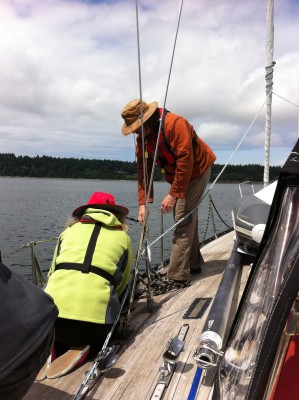
Leslie and I have been boating for a number of years now and I record pretty much all of our data. I finally got around to updating my electronic logbook from 2015 and the numbers are in.
To date Leslie and I have:
- logged 2967.5 nm (5492 km). That’s about the distance from Edmonton to the Dominican Republic
- been cruising a total of 163 days
- been as far south as the Strait of Juan (48°18’11.3″N 123°33’39.8″W)
- been as far north as Bull Harbour, Hope Island (50°55’05.3″N 127°56’07.8″W)
- been as far west as 10 km off Cape Scott int eh Pacific Ocean (50°42’19.6″N 128°34’19.8″W)
- and been as far east as Point Roberts (48°58’37.1″N 123°03’50.2″W)
In 2015 we managed 1678.15 nm (3107.9 km) and 97 days of cruising (not including our liveaboard time in Victoria). We hope to match that in 2016 before we have go home but it’s unlikely unless we take off in March.
But here’s hoping…

Instagram This Week


A Boater’s Guide to Victoria
When we first arrived in Victoria, I was mildly surprised to find it doesn’t especially cater to the cruising crowd; I mean it’s definitely not like Nanaimo, where the big three (food, booze and boat parts) are all within a short walking distance. But in retrospect it makes more sense to think of Victoria more as the tourist destination it is rather than a cruising mecca despite the numerous marinas. Still, there are a ton of liveaboards here, both permanent and temporary, and I bet the traffic is pretty high in the summer, so it must be a bit difficult for newcomers to find all the necessities.

A view of the Causeway docks from the museum
So here’s my contribution to the the cruising scene: my Boater’s Guide to Visiting Victoria. These are the places we frequent and all of the services we have found so far. Pretty much everything is accessible within walking distance, although it is good to have a cart of some sort if you are loading up on heavier items. In terms of traditional shopping, there is too much to mention, so if you are flush with cash and have an urge to spend, Victoria is the place for you. I have tried to locate as many as possible of the essentials and the complete, interactive version of the map can be found here: Custom Google Map.
Marinas, Groceries & Liquor

There are three main marinas you are likely to stay at:
A: Wharf Street • GVHA (Greater Victoria Harbour Association); very central; close to showers and laundry; right beside busy parking lot and floatplane docks.
B: Causeway (Ship’s Point) • GVHA; right across from the Empress; lots of tourist passersby; these docks are often closed to the public (during the Swiftsure Race, the Boat Show, etc.), so you might have to raft up at Wharf Street.
(w) Showers & Laundry • 4 showers (1 loonie for 3 minutes) with a wheelchair accessible unit, and two large washers and dryers.
(o) GVHA Office • The building on the corner of Wharf and Fort—6th floor. Great people!
C: Coast Victoria Harbourside Hotel & Marina • Use of pool and gym facilities; a bit more isolated; no locked gates – their link.
And there are three grocery locations, all reasonably equidistant from the Wharf Street docks:
1: Save-On Foods • Typical grocery store, a bit more of a hike than the others.
2: Market on Yates • Smaller store, great meat, produce and baked goods, smaller selection.
3: Thrifty’s • Full-service grocery, nice selection.
And of course there are three liquor stores (actually there are a lot more, but these are the three we mainly use):
4: The Strath Liquor Store • A bit touristy with slightly higher prices, great selection of BC wines.
5: Spinnakers Beer Store • An unbelievable selection of local and import craft beers with a small selection of wine and liquor.
6: BC Liquor • Good general selection and good prices.
Amenities

1: Trotac Marine • Full-service chandler for recreational and commercial boaters; too far to walk so take a cab or hop the number 11 bus on Douglas Street between View and Yates.
2: Capital Iron • There’s No Store Like It! Seriously, there just isn’t. A little bit of everything from housewares to marine stuff. A good selection of line, spares like light bulbs, fenders, etc.
3: Quadra Mohawk • A gas station with full propane services. A bit of a hike, but we use our grocery cart to haul the tanks and it’s manageable.
4: Marine Fuel • Diesel and gasoline as well as used oil disposal.
5: GVHA Pumpout • Uses tokens that can be purchased from the Marina Office, marina dock staff, the fuel dock or Grilligan’s at Fisherman’s Wharf.
6: Customs Dock • Manned during peak season, phone in at other times.
Other Services

1: Jeune Bros Tent & Awning • Not a boating canvas specialist, but they do have a good selection of material and can whip up a BBQ cover if you need one.
2: Post Office/Shoppers Drug Mart • An all-in-one stop for mail, sundries and basic food items.
3: Broad Street Dental • I had to visit an dentist and I highly recommend these guys. Friendly, quality service and they fit me in that day.
4: Monks Office Supply • All the regular stationery supplies as well as copying, colour printing and fax services.
5: GVPL (Public Library) • Lots of room to lounge around, free wireless and computer terminals if you have a membership.
Banks • All the major banks have branches on Douglas Street including (top to bottom) BMO, CIBC, RBC and TD Canada Trust.
A: MEC (Mountain Equipment Coop) • For all things outdoors.
B: The Bay Centre • A standard mall with lots of clothing stores, cell phone retailers and a Sport Chek.
C: 7-Eleven • Lottery tickets, junk food, cigarettes and really cheap hotdogs that aren’t half bad.
Entertainment
There is so much in reach of the docks, but a lot of it is really tourist oriented. Here are just a small few of our favourite haunts. But remember there are tons more things to do and places to eat and it’s well worth exploring.

A: The Joint Pizza • Eat-in or take-out or even by the slice. Great pizza any way you get it.
B: Darcy’s Pub • Not too touristy and live music most nights.
C: Garrick’s Head Pub • Fun brew pub with a rotating section of local craft beers. Real wood-burning fireplace in the back.
D: Ali Baba Pizza • Pizza by the slice. Our go-to lunch eatery.
E: John’s Place • Apparently a must-do for the breakfast crowd, we haven’t made it there yet. A dock mate of ours works there.
Coffee Joints • They are everywhere. Just head east and you will run into 100s of them. Give Murchie’s Tea and Coffee a try (right beside Munro’s) if you want the real old Victoria experience.
1: Crag X Climbing Gym • A great workout in a brand-new facility. Bouldering, top roping and lead climbing—awesome fun.
2: Cineplex Odeon • First-run movie theatre.
3: Munro’s Books • A traditional must for any bibliophile. And Russell Books is just a block and a bit down Fort Street.
4: Royal British Columbia Museum and IMAX • If you are here for a while, get a season’s pass and make it your rainy-day destination.
Destinations
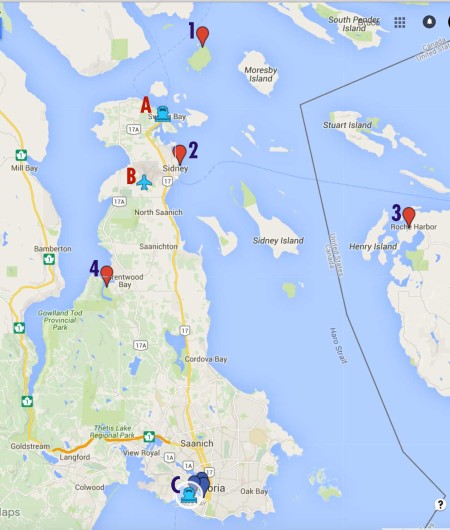
A: Swartz Bay (BC Ferries) • Ferries leaving to Vancouver as well as the Gulf Islands. About an hour bus ride ($2.50) from downtown Victoria. The #70 is more direct than the #72.
B: Victoria International Airport • Around $55 to $60 for a cab, or two buses from downtown.
C: Inner Harbour Ferries • The Victoria Clipper makes daily high-speed runs (walk-on only) to Seattle and the M.V. Coho (vehicles and passengers) crosses to Port Angeles several times a day.
Float Plane Dock • Right beside the Wharf Street docks, you can catch Harbour Air‘s flights to Vancouver or Gulf Island destinations or Kenmore Air to Seattle.
Some Easy Sailing Destinations
1: Royal Cove, Portland Island • A great anchorage that is an easy one-day trip from Victoria.
2: Sidney Marina • A nice marina in the lovely little town of Sidney. Home of a couple of charter companies and a great place to shop … especially for old books. Around the corner is Tsehum Harbour with fuel, haulouts and more.
3: Roche Harbor, USA • A short sail away and a wonderful place to overnight, either on the docks or anchored (we like Garrison Bay just a bit south from there). It makes a better stopover place in shoulder season when it’s not so busy.
4: Butchart Gardens • You can visit Butchart by bus, but a better way to do it is to sail there. Free private mooring balls and your own back door into this magical garden. Great for any season.

The Wharf Street docks
Wrap Up
Disclaimer: Victoria is still new to us. We’d visited as tourists but never really bothered to learn the city. I know that I’ve missed a lot in this brief list and I might just keep adding to it—minus the maps, they’re just too much work :-). I will keep updating the online version, though, to match any text I add.
Hopefully this will help someone else’s visit to this beautiful city go a bit smoother.
—Captain Why #Liveaboard, #Posts