Standard ebooks update
Wow. it’s been a while since I added to this ongoing list of projects I have worked on for Standard ebooks. I believe I am currently working on book #40.
As usual the full (and up-to-date) list can be seen over at astart.ca/publishing/ebooks/. I have managed to “finish” the entire Wodehouse short story collection. Of course the silly bugger kept writing until the 60s so I will have more stories to add every year as they enter the public domain. And it’s important to note that Mrs Dalloway was a collab between L and I—I did the mechanical stuff and she did the editorial.
I enjoy doing the plays and am aiming to have a complete sample of English drama through the ages. I am almost there and just need to add some pre-Elizabethan drama and maybe something turn of the 18th century (not that there is much to choose from). Things slow down a lot when I do fiction as I am a slow proofer (I tend to read instead), so that’s one reason for doing the short story collections—easier to do in fits and starts.
Here’s what I’ve added since the last update:


I really encourage you to go take a look and enjoy some of the books. And consider contributing if that tickles your fancy. It’s not really that hard once you learn the basics. I even wrote a beginners’ guide to help out: Standard Ebooks Hints and Tricks.
Spring Update: Sails and more
It’s been sooooo long! And so much has happened. The last time I saw our boat was June 2019. Three years ago!
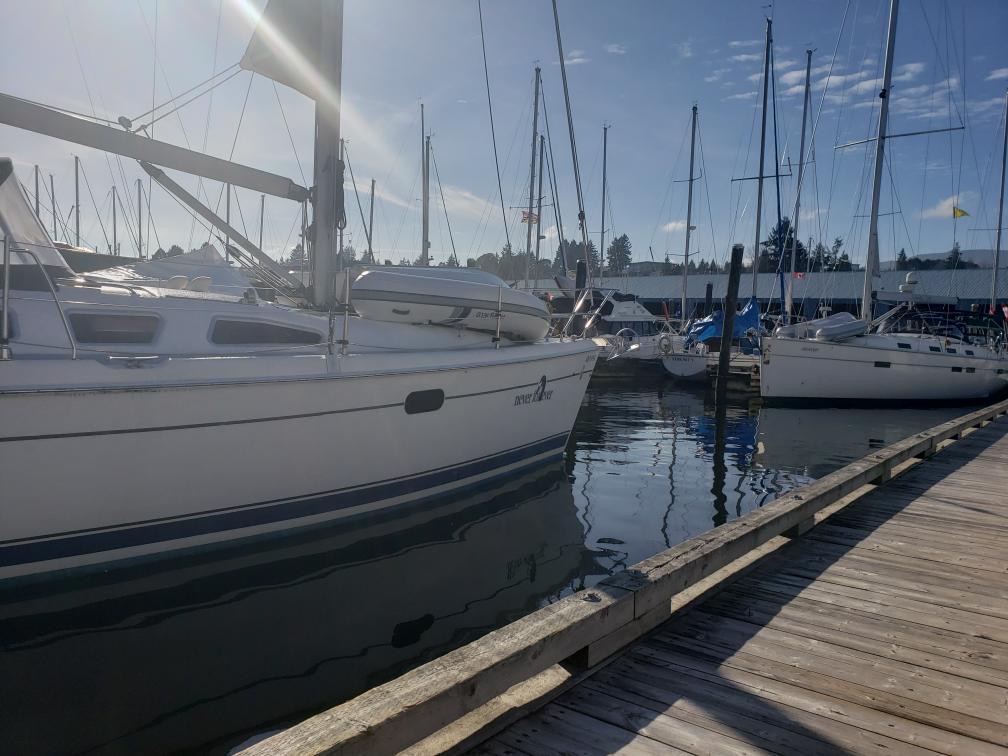
Actually the last time we “saw” the boat was in the winter as a friendly neighbourhood YouTuber (Sailing Floating Freedom) was nice enough to send me some pictures. They share the dock with us at Stones. Looks like winter was a tad chilly!

Things that are new
As it’s been so long and we were due to do some maintenance so I knew we would have to do some work. Just how much work was a bit of a surprise.
When we bought the boat I had fully intended to do most of the work myself because a) there is no better way to learn and b) it would be way cheaper. That lasted for the year we were aboard but as soon as we became long-distance owners that went out the window. Which really bums me out.
Just a note: at this point I have seen none of these upgrades/repairs. Sigh.
Windlass
Back in 2020 the seals on our windlass finally gave up the ghost and, as usual, parts were no longer available. We knew this was coming but it burned me to replace a perfectly functional windlass just because it leaked water into the the v-berth. then again I don’t sleep in the v-berth 😉
What we replaced it with was a Lewmar Windlass CPX3 Gypsy/Drum for 5/16” g4/bbb (~$2800). This gives us a drum to use—although I am not sure what to use it for other than maybe hauling the dinghy on board :-). The “downside” is they had to cut a hole in anchor locker lid to fit the drum. I will have to wait and see to judge how I really feel about that.

Dinghy
As previously mentioned we had to get a new tender. I picked up a Highfield 290 UL (with aluminum hull for less than $3000, which I consider a steal.

Sails
This was scheduled. We were going to replace them in 2021 but the dinghy took precedence, so this spring I started looking around for a sail loft. I started with the ever popular Precision Sails (they have an awesome marketing department). They are local to Vancouver Island although sails are produced overseas and they are the favourite of all the most popular YouTube channels. Then I looked at a bunch of local lofts: Leitch and McBride, Ballard Sails and a couple who didn’t get back to me.
 I finally settled on Zoom Sails who are associated with Jamie Gilford, husband of author Behan Gilford, and the owners of Sailing Totem. They are another overseas loft but distance didn’t actually seem to be much of a barrier time-wise. Partly it was a trust thing and partly it was a price thing. The price was pretty darn good. I am told the sails look good too, but no pics so far. In total the cost was ~$5000 cad for main and jib (fwiw, the highest quoted price was $7500).
I will write a bit more about the process after I have a chance to see—and use—the final product. Stay tuned.
Chartplotter
I mentioned at the end of our last trip back in 2019 that I had to replace our old e80 chartplotter as the screen was dying. I purchased a refurbished unit from eBay for ~$400. Unfortunately it didn’t last. I had reports last year of it stopping working and, in the middle of a cruise and learn this spring, it died again. You can imagine the instructor thought this was unacceptable.
After talking to the technicians at Stones and doing a bunch of research we decided to forgo replacing it with the brand new Axiom MFD (multifunction device) that is its natural successor and go for a cheaper Raymarine ELEMENT 9S for around ~$1400. It does most of what the old e80 did but is missing the touch screen and fancy network integrations, most of which would be useless unless we replace all the instruments as well. As far as I can tell the big thing I will miss is that that radar does not overlay the charts and I will have to use it in split screen mode.
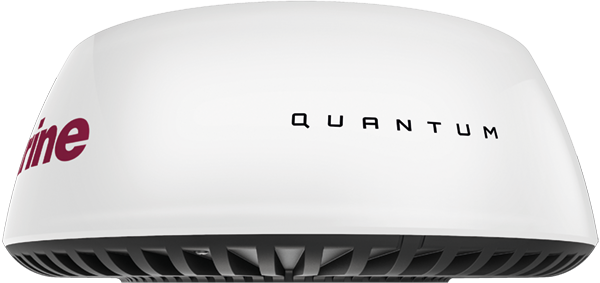
The big downside is that none of the new plotters will work with my old analog radar. So that meant upgrading that as well. So we also ordered a new Quantum digital radar (~$2200). Sigh.

Of course all the old system ( AIS, instruments, GPS etc.) is on Seatalk 1 (NMEA 0186) and the new stuff is Seatalk ng (NMEA 2000). So we will have to get a bunch of bridging hardware and hope and pray it all connects. More on that after we get it all installed and running. The device does have WiFi but I am currently unclear if I will be use an app to access it. So much to learn.
I do now how a perfectly functional e80 with a bad screen and a less than functional e80 with a good screen. The spring project will be to see if I can make one functional e80 chartplotter.
USB

More inconsequentially, since the guys are going to have to run some new cables to the binnacle I thought they could run few more wires and add a USB outlet so we can power our phones/tablets etc. in the cockpit. It’s something I keep meaning to do but haven’t actually gotten around to. So that will be nice.
Concluding…
So who’s counting. Since 2019, not including regular maintenance items we have forked out around $14,500 for a boat we haven’t been able to use. I will say that Covid, after a rocky start in 2020, was a big windfall for the charter industry and bookings have been really, really good. So how much this actually costs me out of pocket remains to be seen—but it won’t be anywhere near that, thank goodness. And of course hoping that nothing else breaks.
Future costs?
In the next bunch of years these sorts of things are going to keep poppin’ up. Off the top of my head:
- I think there is going to be some major canvas work in our future
- I also think the mattresses are tired and that certainly needs to be addressed; likely along with all the other cushions
- Eventually the rest of the instruments will need to be upgraded
- The batteries are getting on
- The running rigging is also going to need looking at
- And of course the standing rigging.
By which time the cycle will start all over again… The joys of owning a boat 🙂
Oh, and btw, our flights are booked. We will be back aboard at the end of April, and if all goes well, we might actually have 2 months aboard to make up for the all the non-sailing years.
W00t.
—Bruce #Equipment
Saturday Wordle Day
L boasted that today’s Wordle was a hard one. I haven’t played in weeks but it was a challenge I could not fail to meet.
Take that!

Apparently plenty of others thought it was hard as well:


(non)Sun-day poem day
I want a squirrel
not a sparrow, nor swallow nor swift
I need a squirrel
not a vole or a mouse nor a mole
I’d like a squirrel
to feed and ponder and tease
I’d love a squirrel
who chitters and scolds and scampers
If I had a squirrel
I’d squeal and leap and cavort
I’d climb and jump and twist
I’d eat and collect and horde
Nuts and seeds and cones and
Never mind,
I’d like to be a squirrel
Magic Mouse
I finally am making a commitment for moving from an Apple Mouse:

to a Magic Mouse:

So far it isn’t as painful as last time I tried, but I have been banging my head against the crappy scroll speed. I finally found the setting:

System Preferences > Accessibility >Pointer Control > Mouse options. .. Stupid place for it.
Hopefully I will get used to it. Now I need to head over to Photoshop and InDesign for the real test.
Sunday have you ever?
I’ve walked a dog, now that was a slog
I’ve fed a snake, and gave myself a shake
I’ve carried a cat, who only wanted a pat
I’ve chased a cow, it was time for her chow
I’ve startled a fawn, in a misty, dewy dawn
I’ve hand fed a jay, who admitted it was ok
I’ve cuddled a calf, just for the laugh
I’ve herded some pigs, who thought they were bigwigs
I’ve admired a buffalo, who put on a good show
I’ve teased a frog, I found sitting on a log
I’ve shoo’ed a bear, who gave us a scare
I’ve stared down a bull, that’s something to mull,
And I’ve ridden a horse,
of course.
But I have never, ever, ever,
ever,
hugged a whale
Now that would be a tale.
It’s Saturday
The State of Ebooks Update
Standard Ebooks
I continue to make ebooks for Standard although my rate has slowed down. This is mostly due to choosing longer projects instead of sticking to plays. I think I am on number 38 now (a collection of Wodehouse’s golf stories). I also do reviews of others’ submissions, which is this weird mishmash of proofreading, code checking and editorial oversight—a combination of skills I didn’t think would be all that easy to acquire.
All in all I enjoy it immensely and intend to keep participating for the foreseeable future.
Bright Wing Media
Back just before the new year I interviewed with Bright Wing for a job I hadn’t applied for. That didn’t turn out (afaik they just didn’t fill the position) but I kept gently reminding them of my existence and finally picked up some work. So far I have created/remediated four public domain ebooks for them: Theodore Dreiser – An American Tragedy, Charles Dickens – Bleak House, Elizabeth Gaskell – North and South and T.E. Lawrence – Seven Pillars of Wisdom. And it looks like I have another project in the pipeline for next week and it might even be something original this time. Hopefully this will turn into an ongoing gig.
It’s been interesting work, mostly for the understanding of different publisher’s systems and requirements and I was finally forced to learn to use Sigil (which I had played around with previously but ultimately ignored in favour of using a straight-up text editor).
The General State of Ebooks
This (different publishers’ systems and requirements) brings me to an important topic that I am trying to learn/participate in/promote. Just a disclaimer first, this is a huge topic and well worth a much, much longer post, but I am just going to give you a bit of a rant and leave the meat of the issue for later.
Ebook Accessibility
A traditional bound book sucks for accessibility. You need two good hands and two good eyes to read it. You could probably get away with one of each but the experience starts to deteriorate rapidly. But what could you do? But ebooks, ah, ebooks offer a world of possibilities, don’t they?
Way back when, when ebooks were in a fledgling state and sales were minimal, publishers embraced ebooks reluctantly and, quite frankly, poorly. But these days — sadly (to me) much under the influence of that monolith of capitalism Amazon — ebook sales have increased to over 20% of a publisher’s total book sales revenue. The books themselves are getting more and more sophisticated in design and format and the readers much more ubiquitous.
Industry standard programs lie Adobe Indesign has made great strides in their approach to converting a print book to digital format and many other tools have continued to progress to the point where creating an ebook is relatively simple for any publisher.
In conjunction with all that the issue of accessibility has also continued to be addressed and many working groups like NNELS here in Canada, Accessible Books Consortium, The DAISY Consortium
Creating the best way to read and publish, Benetech, and the World Wide Web Consortium have all been working together to develop and modify standards that will hopefully help the broadest swath of disadvantaged readers.
As a result there exists now a robust standard now that allows an ebook to be created in a way that helps various technologies to present the material to make the experience enjoyable and fluid for a broad range of disabilities.
Great stuff.
So what’s the problem?
The problem is change is hard and publishers are stubborn.
I know, I know, that’s not totally fair but it is a realistic overview of the situation. In order to create a born-accessible ebook certain jobs have to shift around, new skill sets have to be learned and priorities have to change. To remediate old ebooks to the current standard takes more money, more time and an even more specialized skillset. All this costs money and time and most small publishers don’t have either. The big ones — the ones who should be showing leadership and have a bit more money — are a bit more on the stubborn side if you ask me; although I admit shifting a production process is infinitely harder when you produce 1000 books a year than when you produce 10.
Still, you get the point.
What’s the solution?
Hah, if I knew that I would be a lot richer than I am now. But…
- First they need to look at the problem from a different angle. It’s all just code and if there is anything this world has a lot of, its coders. It’s not that hard to automate a lot of this — working Standard has taught me that.
- Second we need to stop focussing on profit. There is no profit incentive for wheelchair ramps, braille letters on elevators or TTY machines. Just invest in making the process easy and publishers will fall in line and someone will figure out how to make money from it later.
- Publishing needs to grasp that change is good and rearranging and retraining some key personnel will make this go a lot smoother — and they will eventually reap the benefits of that change. Personally I don’t believe it means hiring more people or spending more money. It’s no worse that the transition to desktop publishing from paste up — eventually the benefits spoke for themselves.
- And finally, and most importantly someone needs to conk the standard setters on the head and remind them that just because standards organization have been speaking in something even worse than legalese for decades, that it really, really isn’t helping anyone. In fact, even for me, it is a huge disincentive.
You’d think if the technology types could sit with the communication types to make the process clear and then the government types provided a bit of money then this would straighten itself out pretty quick. Right, I know. Lol.
But I watched a panel a while back talking about the issues surrounding ebook remediation and two things struck me.
- Someone said that publishers can’t expect to retain people with all the right skillsets. Granted he was talking about the broader idea of accessibility and that included braille, audio books, etc. as well as accessible ebooks but still… It’s not that hard to train/find people to understand standards, code and software as well as design and traditional production — we already did that once back in the 90s. It’s not hard or unreasonable, it’s just different and, again, I acknowledge change is hard. I don’t know what the design schools are teaching these days but this really should be a priority.
- The person who represented small publishers said she had gone through a back-and-forth process with NNELS to produce a fully compliant accessible ebook and she now has a template. As a result their ebook production time and difficulty has decreased significantly. Exactly. Set a standard and follow it. Any press could do that and if the template was freely available and easily customizable, well…
Of course it’s not always that simple. Especially if you are dealing with textbooks, or specialized publications that require a lot extra coding. But there is absolutely no excuse for producing a traditional fiction-style ebook that is not fully compliant with the accessibility standards. None. It’s just ignorance and/or laziness.
And we can fix both of those. So let’s…
P.S. My biggest issue remains the kind of communication and misinformation that surrounds the whole ebook production process. It’s just not that hard, and making an ebook accessible in the first place (or remediating old ones if you have to) is currently wrapped in some sort of mystique and arcane-ness — and a whole lot of mumbo-jumbo. Again, to me, it comes down to piss poor communication and misguided advocacy in an age where driving public perception, propaganda, and manipulating the message have reached a high art. I can’t help thinking it’s a matter of mistaken priorities.
P.P.S. If you want to learn more about ebook production, coding and even what’s necessary to meet the standards, I encourage you to take a swing at volunteering for Standard Ebooks. There is a great step-by-step and I have even written a guide on how to go about getting started for those of us more editor and less coder.
My Generation
Never look back in anger,
always look forward in hope,
and never, ever, ever, dream small.—Micheal Caine
My Generation (2018)
A documentary about the shift in England from the stodgy 50s to the mod 60s. Worth a watch if you ever wondered where all those colours came from. Also a pointed reminder that no matter how glum the world seems at any given point, this ain’t the first go-round and there is always hope.
The Kaiju Preservation Society: A review

John Scalzi had a problem and that problem was myriad: Covid, politics and a whole lot of writer’s block. So he decided to pull the plug on his current project despite contractual obligations. Then he had his own The Big Idea (The Big Idea is Scalzi’s vehicle on his blog that gives a platform to other writers to talk about what inspired their latest work.) And the The Kaiju Preservation Society was born (hatched? produced?). Don’t skip the Afterword on this one, it contains a lot of interesting tidbits and insight into the process.
The The Kaiju Preservation Society is set in a near-present-day period and features an aspiring academic who ends up in a go-nowhere gig-economy job during Covid. Until one day a “client” offers him an interesting proposition. What follows is fun, fast-paced and above all the signature Scalzi brand of clever. Throughout the book Scalzi plays with words, tropes and cultural references while weaving a delightful tale that is easy on the brain, yet satisfying and ultimately a darn good read.
In this book, Scalzi depends less on fancy technology or science-fictiony elements and leans heavily on his (admittedly slightly absurd) premise to force his characters to move the story along. It becomes one long string of what-ifs that, in aggregate reads more like a 70s adventure/spy novel than anything else. Given Scalzi was going for a “fun” read, I think that was an excellent choice. I certainly enjoyed the ride.
If this is your first venture into Scalzi’s oeuvre then you won’t be disappointed (unless perhaps you don’t like light-hearted romps) and if you are a long-time reader then, well, it’s 100% pure Scalzi.
Also posted on Goodreads
Poetry of the sole
If I had a wolf and he ate my shoe
What would I do?
If my pet was a tiger and he bit my toe
Would he have to go?
If I made friends with a croc who nibbled my chair
What would I dare?
If my support animal’s an eagle who eyes my chews
Who would lose?
If I ruled a hippo who coveted my crown
Which of us is going down?
If I was to ride a whale and he decided to dive
Would I even be alive?
Huh.
I guess I’ll stick to my cat who wrecks my books
And gives me dirty looks.