8:14
8:14
There were times the beaver wished he were a ruthless creature. A quick slash of a razor-sharp incisor, a bodily heave out into the cold sky, and he’d have a quick and painless solution to an unasked-for problem.
Unfortunately for just about everyone involved, the beaver, while irascible, was not homicidal, except maybe where a certain rabbit was concerned. That left the problem of the small boy currently staring at him without a quick solution. I don’t suppose I could just growl and him and send him scurrying for his covers? grumped the beaver, wishing not for the first time that beavers had a more wolverine-like reputation.
“Well, make up your mind,” the beaver snapped at the watching boy as he rose to his feet. “Are you coming or going?”
“Er, excuse me? Did you say something? Did you speak?” Albert moved excitedly towards the creature he had spotted. “Can you talk? Did you really say something?”
He slammed to a halt about a metre away from the large brown beaver. Suddenly what had seemed like a large stuffed animal took on a more ominous aspect.
“Um, are you a beaver? What’s a beaver doing on an airship? Did you talk to me? Can all beavers talk?”
“Oh, for god’s sake!” the beaver harumphed, cutting off the babbling boy’s steady flow of stupid questions. “Yes. I am a beaver. Yes. I am talking to you. And if you would just bid your flapping lips be still for a moment and let me get a word in edgewise, then yes, perhaps we could discuss what I am doing here. And, more importantly, what YOU are doing here.”
Albert paled suddenly at the reminder that he was somewhere he was not supposed to be. And that he’d just been caught. But … but … it’s only a beaver, right? He can’t get me into trouble, can he? He’s only fit for a hat; who’d listen to him?
Somewhere in all that rapid internal dialogue, Albert lost the thread of his thoughts and once again realized that a beaver was talking to him. And everyone knew beavers couldn’t talk. The very idea was ridiculous. If all beavers could talk, then they wouldn’t very well let us make hats and coats out of them, would they?
This thought seemed to prove a point to Albert. “Well, then. What is a talking beaver doing hidden away on a dirigible? Tell me that, then! Shouldn’t you be in a zoo now?”
The beaver took in the false calm of the boy and smiled to himself. Cheeky little bugger.
8:13
8:13
The beaver plopped down in an exhausted heap. Beavers, he mused, were not made for climbing. But this way at least the flight would be cheap. “’Cause I left my wallet in my other pants,” he snickered to himself.
Other than a sharp draft that wormed its way down from the mooring aperture, this was a comfortable enough spot to spend a day or two. The beaver wasn’t exactly sure how long the flight to Halifax was going to be, but the last he’d heard, the new aero-engines were chopping hours off the flight. He’d be snug here for now and, most importantly, out of the way and out of sight.
He wasn’t sure if he’d been followed to the aero field, but there was no point taking chances. There were enough ways this could get complicated without the rest of the world dabbling in his business as it had an unfortunate penchant for doing. Then, once he had left the overdeveloped conscious of the contingent behind, he might start getting somewhere.
Settling down against the silvery air bladder, the beaver decided a nap would while away a few hours and ensure they were well on their way.
And then he heard the distinct sound of a sharply indrawn breath.
8:12
8:12
Edward hated flying. It hurt his ears, clogged his sinuses and generally put him in a bad mood. It had, in his opinion, been a thoroughly bad thing when that French fellow launched his hot-air contraption and signalled the end of the steam engine as the preferred method of travel. And if these ludicrous dirigible thingies continued to grow in popularity, even the unutterable elegance of the mighty ocean liner might not survive the end of the century.
And that, Edward firmly believed, was a fate not to be considered.
And flying. The deaths that had resulted from such an unnatural act were unforgivable. On that account alone he would have refused to participate in such voyages. But it truly was the queasiness and underlying instability that made flying something Edward had vowed never to indulge in again. His first, and only, flight had been quite short, a day trip from Berlin to Strasbourg, but it was sufficient to confirm that no unnatural act would remain unpunished. And so Edward had not set foot in an aerodrome all these many years and found himself none the less for that.
But here and now Edward had been faced with a choice. Either remain on the ground and let the moment pass, or seize the day, as it were, and board this flying death-trap for destinations unknown but with an eye to finally making some progress with this latest wrinkle.
As the crew had slowly begun to cast off the coarse hemp lines and shift ballast aft in preparation for disengaging, Edward had sat at the base of the mooring tower and weighed his options. To balance Flaccus’s carpe diem there was always Demosthenes: “The man who runs away may fight again.”
“No,” Edward spoke suddenly to the vast iron and canvas flying behemoth, “there is no need. Either you will go crashing into the sea like a giant, misshapen Icarus, thus solving my problem, or I will catch up with you in the new world at a time more suited to my purposes.”
Edward turned away as the dirigible cast off, and headed off the field and back to his quarters in the city. There will be time. There is always more time.
8:11
8:11
Albert was not quite an orphan. It’s true he had parents and they were, as far as he could discern, his real parents. It was just that he didn’t much like them and so heartily, if a bit naively, wished that he was indeed an orphan. They didn’t neglect him or beat him or even cause him undue sorrow. It’s just that they were, well, rather boring.
Albert’s family was rich. They’d made their money as merchants and lived for the the trade. All of them. Even the women. Every day was filled with facts and figures, deals and the anticipation of new territories. Each meal was a strategy session, every family get-together a council of war.
Albert’s family had, as a school mate once quipped, more money than dirt, and all they could think of to do with it was make more money. No one suggested a safari to discover new lands; no one was interested in inventing faster and more powerful flying machines. There were no dashing uncles or mysterious cousins whose affairs were clouded in secrecy. They were, one and all, boring.
Now Albert’s eldest sister was of the opinion that Albert was much too infatuated with the farthing fantasies that he spent most of his ready money on. She further espoused, whenever anyone would listen to her, that Albert needed to be sent off to the trade college as soon as possible so he could learn a proper attitude. Fortunately for Albert, everyone mostly assumed that she was more interested in Albert’s suite in the west tower, a privilege of being the sole male heir.
She would have probably been shocked out of her petticoats if she had known that Albert would gladly give up the suite, the allowance and all the many privileges of being heir if he could only wrest control of his own destiny from his familial legacy. He knew beyond all possible doubt that he was destined for adventure and discovery. Albert was to do great things, and while his studies had not yet encompassed Quintus Horatius Flaccus, he was quite prepared to seize the day.
Which explained why he was where he wasn’t supposed to be and saw something he wasn’t supposed to see.
8:10
8:10
As the dirigible slowly lifted off the elegant ironwork mooring and turned its nose away from the wind, the crew were busy securing the lines and stowing the ground-side equipment that would be useless in flight and not needed for at least a week, if not longer. The captain was closely monitoring the instruments in front of him and occasionally emitting small huffing sounds while his navigator’s eyes shifted back and forth from his nervous lookouts posted on the two small fly bridges and scanning the horizon himself.
This was the most dangerous moment of any airship flight and no one could ever forget the daguerreotypes that had captured the destruction of the Graf Wilhelm and the loss of more than two hundred souls in that horrible flaming disaster. Without exception the entire crew’s minds were on the delicate task of guiding their ship swiftly up and away from the dangers of low altitude and into the wide-open skies that were the massive dirigible’s natural environs.
And that’s why no one was aware that the passenger manifest for this particular journey was not in fact completely accurate. This conscientious crew had missed the small furry shape that had slipped aboard from the mooring tower and moved swiftly into the spaces between the gas-filled bladders that provided the tremendous lift needed to raise the ship high into the sky. And no crew member was likely to discover that shape comfortably settling in for the journey as these spaces were where all suspected the disaster of the Wilhelm had begun and most believed had been caused by careless off-duty crew. No one was likely now to violate the spaces. At least no one from the crew.
The young boy, however, had both disobeyed the brass sign warning him away from the lift chamber and been comfortably placed to watch the takeoff and observe the last-minute addition to the crew.
8:9
Scene 1
[scene: a cramped corner space with a small cluttered desk and two computers]
[camera starts tight on a grubby white keyboard and pulls back to reveal disheveled middle-aged man staring at keyboard]
Man: Fuck.
[Man’s eyes scan one of the screens as a computer game flashes by on the other. He distractedly hits a few keys on the keyboard partially hidden under food wrappers and pieces of crumpled paper]
[He rocks back in his seat and rubs his eyes]
Man: Fuck.
[Fade out]
Scene 2
[scene: a meticulous, Martha Stewartesque living room with an antique writing table in the corner and a small, expensive-looking laptop]
[camera enters from the hallway and discovers a young woman whose dress looks at odds with the style and neatness of the room sitting on a beautiful carved chair and staring down at the small screen on the laptop]
Woman: Still nothing. What’s taking him? He’s already a day late. [long pause]
Woman: Maybe he’s ill? Rancid oil? Bad pork?
[she sits back in her chair and stares sullenly at the screen]
[fade to split screen showing both man and woman from reverse angles, similar looks of desperation on their faces.]
Scene 3
[CGI-generated bright, overpowering light appears, becoming brighter and brighter engulfing the two characters.]
Scene 4
[outside a couple of townhouses]
[the light grows and grows and the cameras zoom into the second-floor windows cutting back and forth from Man to Woman until they simultaneously explode in a moment of self-generated spontaneous combustion, thereby cheating society’s attempt to immolate them in the nuclear holocaust cause by its uncaring and self-absorbed system of laws and morals]
[Fade to black]
[roll credits]
8:8
Sun set
Cool wind
Heat escapes
Big yawns
Air escapes
See my teeth
Long days
Energy gone
Eyes so heavy
Time slows
Inches away
It too escapes
Night comes
Wait for morning
Then renew
8:7
8:7
Edward turned slowly, trying to get comfortable on the now damp paper. He hopped over to a nearby discarded Times and settled down to wait some more. Glancing down, he saw this:
Word of the Day
Sloth
NOUN
1. Reluctance to work or make an effort; laziness.
2. A slow-moving tropical American mammal (genera Bradypus (three-toed sloths) and Choloepus (two-toed sloths)) hang from the branches back downward, and feed on leaves, shoots, and fruits
Bloody, stupid creatures they were, too, he mused. Can’t trust them and you certainly can’t get a decent day’s work out of them. Ought to be banned from the union, but oh no, can’t have that, can we. That would be speciesism…
At least they aren’t as bad as the damn beaver, though.
8:6
8:6
The spider sat in in its intricate web and stared. All those eyes, all those evil little beady eyes. Staring. Thinking evil little spider thoughts. You could just hear the thoughts, full of poisoning and sucking and the juicy slurping noises.
And it sat there. Staring. Beady beady eyes.
The beaver hated spiders.
8:5 An Adventure in Diversity
On a crumpled bit of paper that Edward used to keep the morning dew off his delicate bottom, he read the following:
The morning started as it is wont to do, with an annoying alarm.
Directly she said, “Well? Are we still going?”
“Might as well I suppose.”
“And her? Is she still in?”
“Facebook seems to think so. I sent her a message last night. She agreed with 8.”
“Well then.”
“Yup…”
We were on a mission. A slightly altered, cut down and duly revised mission, almost governmentesque, but a mission nonetheless. It was the first official canoe hunt of the season. In past seasons we had haunted boat shows and retail outlets searching for the elusive canoe but we had always come up empty. This time we had a plan.
Rumours had it that somewhere in the vast Southern Alberta prairie there was a canoe, abandoned and desperate for water, that might suit our needs. All we need do was find it. And of course navigate the treacherous pathways and byways of rural Alberta. And of course somehow contrive to retrieve the canoe if it proved willing.
We set out provisioned with peanut butter cookies and a jug of water and a vague idea of which direction we were going. First up: a full tank of fuel, as we knew instinctually that there was a big chance that we might need it all. Alberta was a big place. And we would need all the advantages we could get. It was decided that since L was the only Doctor amongst us, she would take the lead and (wo)man the helm. C sat shotgun and second seat, alert to the changing environments and eager to see us through byzantine labyrinth of secondary roads. I, as reserve pilot, remained in the ready seat, catching what peace I could so that I would be prepared in case of urgent need.
As it turned out, the most felicitatious route seemed to be by way of the Anthony Henday and Number 2 highways, major traffic routes both, and fraught more with the risk of encountering less than able travellers than the risk of mistaking our intended route. Thus C was relieved of the more arduous duties of plotting our course and took the reins of entertainment director and head of the security directorate. The pathway soon found us exiting Edmonton and environs and heading almost due south.
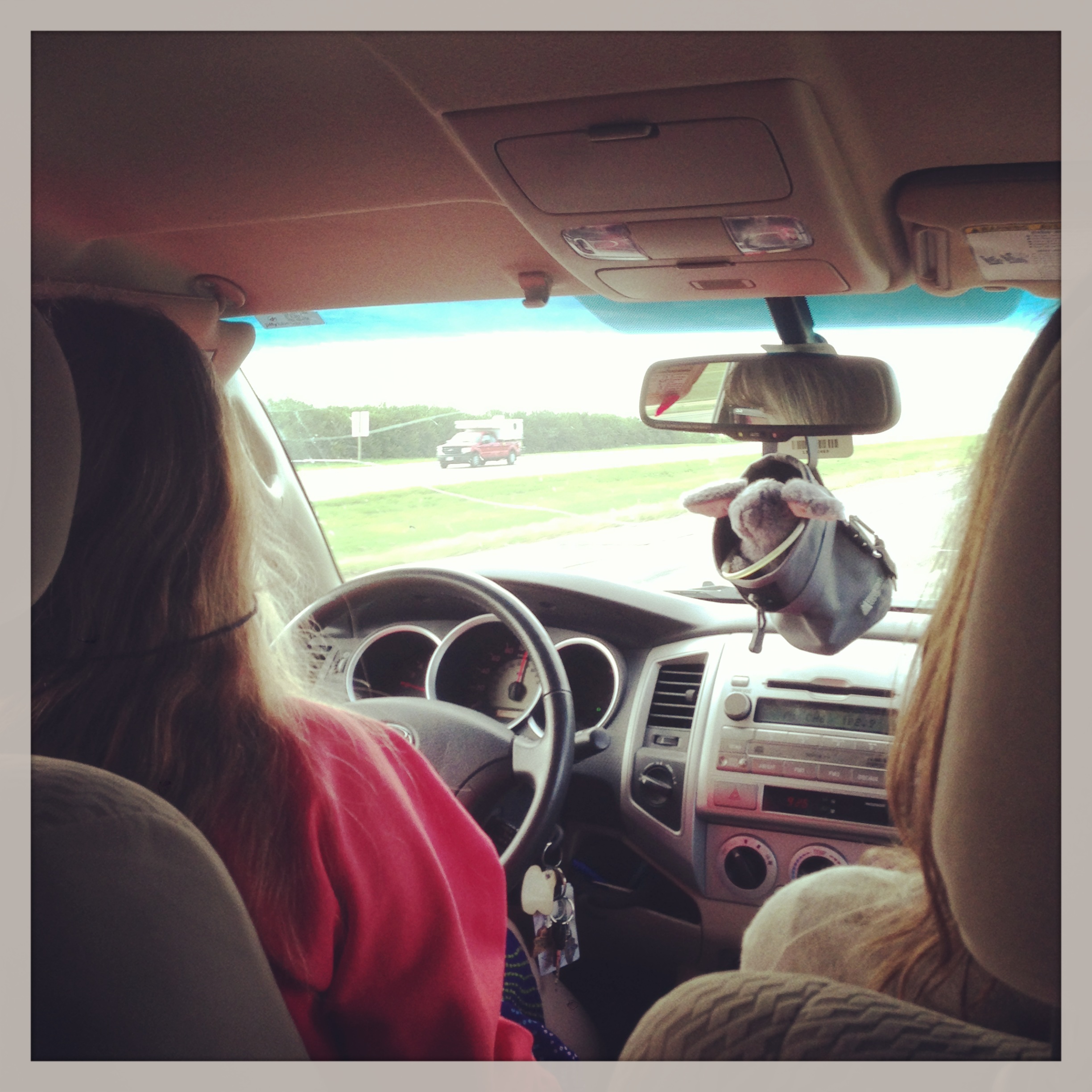
As we shifted temporarily eastward to enter into the infamous Gasoline Alley of southern Red Deer, I checked the plotter and digital mapping systems and informed the good Doctor of an alternative route leading eastward from Penhold with a goal to shifting on to the 21. She readily agreed and we soon found ourselves heading to the infamous secondary roads of the Alberta countryside. C redonned the mantle of lookout and the true adventure had begun.
South on the 21 we began to drink in the changing landscapes. Here, far to the south of Edmonton, the rolling hills still harkened back to the vast aspen parkland familiar to denizens of central Alberta, but it was oh so subtly different, as if hinting at the changes to come. All too soon the signage indicated the upcoming appearance of Three Hills, that eponymous town famed for its Bible College and home to the wise and wondrous Glen Reigel of old. And true to its predictions, the horizon soon revealed the three hills jutting up from the growing prairie, the landscape of which had gradually been smoothed out as if by the hand of a coy mistress inviting the attentions of a bashful suitor.
Yes the prairie landscape was upon us; the vistas long and the distractions few. But all around remained the out of place remainders of what the locals called an unusually wet season. Instead of the golden hues of a quickly approaching harvest, the fields and hills were a verdant green and ponds and rivers overflowed with life-sustaining moisture and a foreign abundance of plant life and water fowl. Eventually these distraction faded to normality as we continued south and drank in the sights of the southern edges of parkland in Alberta. Soon enough we knew, the desolate and empty reaches of the semi-arid desert would be upon us.
Upon encountering the intersection of the 21 and the 1, the famed and transcontinental Trans Canada Highway, we turned eastward, once again upon a well travelled and less fraught route. Through 13-mile corner and sweeping south for a moment, I elected not to suggest the back way into the environs of Cluny’s farm settlements. Far better for our determined helmsman to skirt past Gleichen and alight atop the hill before turning back south into the rural roads and gravel back ways. For well I knew the chances one took when choosing the gravel. Never could it be know what condition the recent rains or vagaries of graders had left the roads. Better to remain on the more familiar hardtop than to chance miles of washboard, ruts or worse, fresh gravel, just for the sake of eliminating a few miles from the journey.
And so south from the hilltop we travelled, entering a landscape both familiar yet greatly changed. For it had been a few score years since last I entered these environs and much had it suffered from the unyielding forces of entropy. Desiree’s place cleaned out and all but disappearing back into the landscape. New houses and road signs dotted the road whose condition now rivalled the more cared for of those under of Alberta Transportation’s purview. Eventually the correction line hove into view and we turned westward once more, finally onto the gravel.
A short stint past the familiar farms of family friends and relatives and we sighted the family homestead ahead. I directed that we pass the main entrance to the yard in favour of approaching cousin Anita’s more recent entrance to inform her of our intentions. And so after hours and miles of travel we unfolded ourselves from the truck and breathed in the clean rural air awash with the smells of agriculture and rurality.
As it turned out, there were no human occupants to greet us. The house dark and locked up and no sign of anyone about. I was however, standing at the back door, greeted by the remaining householders who took it upon themselves to perform what portion of the duties that they could. At first a small sealpoint kitten of brash nature and determined assurance announced her presence and presented herself for scratches. I swiftly acknowledged the greeting and scooped her up to introduce her to the rest of our party. Upon presenting her to C and L who had remained by the truck, the rest of the household caretakers emerged: a small black with white marked agemate of our Siamese friend and an older sibling perhaps, wearing the same black and white markings. Thus invoked a frenzy of greetings, cuddles, scratches and a photoshoot or two. At length I showed my travel companions the old garden of my grandmother’s nestled between rows of daunting carigana hedges, now sown over with grass. On the other side lay the family home, sitting empty since the recent illness of my aunt.
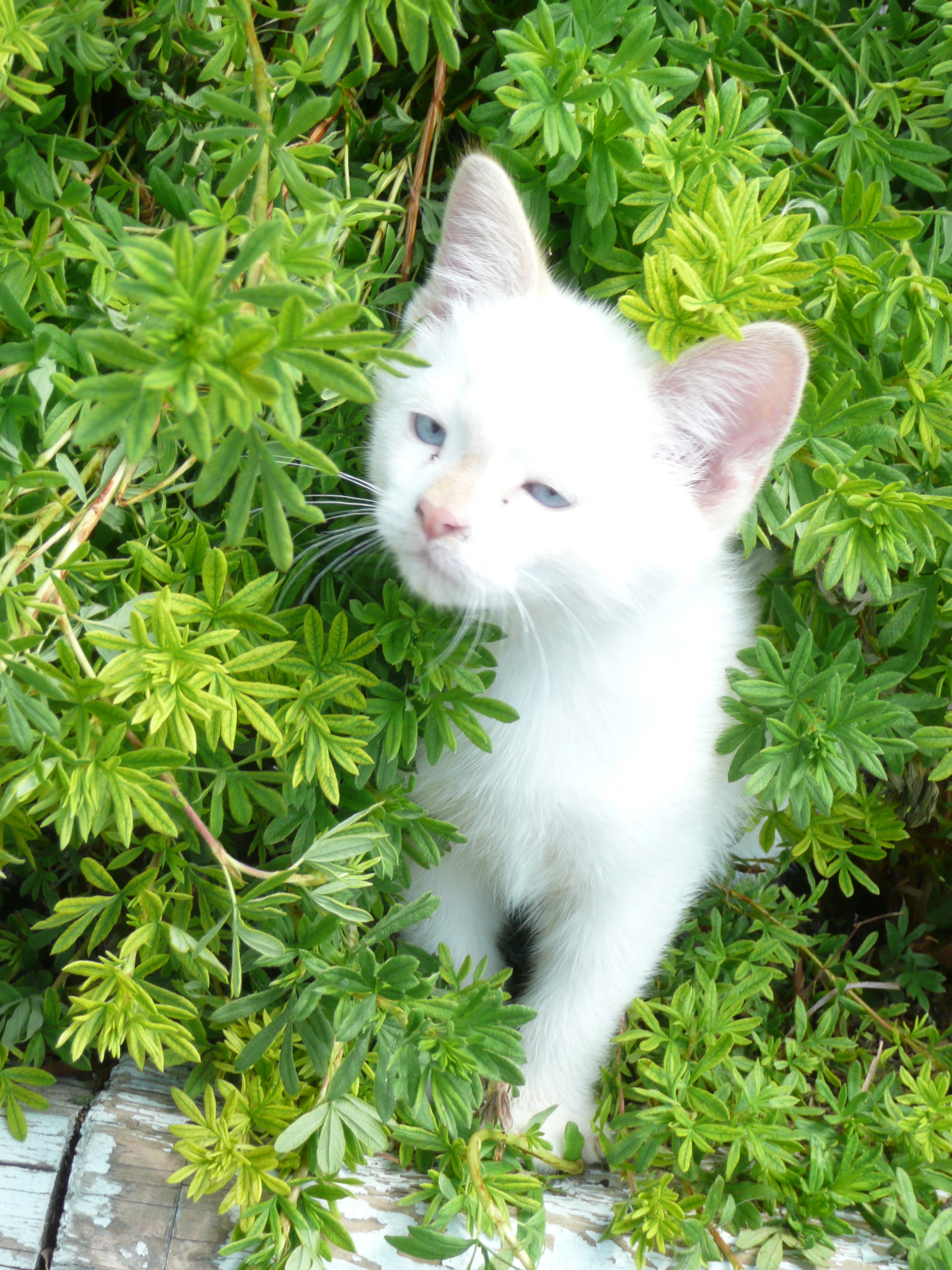
After a few more moments with the cats, we assured ourselves that they were well away from the vehicle and I climbed into the drivers seat to take up my portion of that duty. My companions bid a sad adieu to the kittens and we backed out of the yard to travel the few hundred yard to our final destination.
The main house was, as I said, now empty, but it remained in good condition. Alas the rest of the aged buildings that formed the farmyard of my youth and indeed the youth of my own mother, had fallen into a state of extreme disrepair. It had been decades since they had seen their intended uses and now their future remain uncertain as there no longer remained anyone to take up the mantle of farmer. Still, the yard looked better than it had last time I had seen it at the funeral of my uncle. Anita had embarked on a project of cleanup and much of the decades old debris and clutter had been removed. Still, a sad sight and one not likely to ever improve.
This project of Anita’s was in fact the reason for our presence here. Now the sole caretaker of the home property, she had decided to rid it of the detritus that any farm of age and worth collects over the generations. Old cars had been hauled away and ancient wooden granaries full of the brik a brak of family storage and long forgotten auctions were being cleared out. The word was out: remove it or lose it. Rumour was that my brother’s old canoe, for many years in the hands of cousins, was once again housed in the sheds behind the homestead and we had confirmed with my parents that this was in fact true. And so our mission was to investigate and potentially retrieve this mythical canoe from the middle of the dry and waterless prairie so that it might one day be returned to its rightful home upon the waters of Alberta’s lakes and rivers.
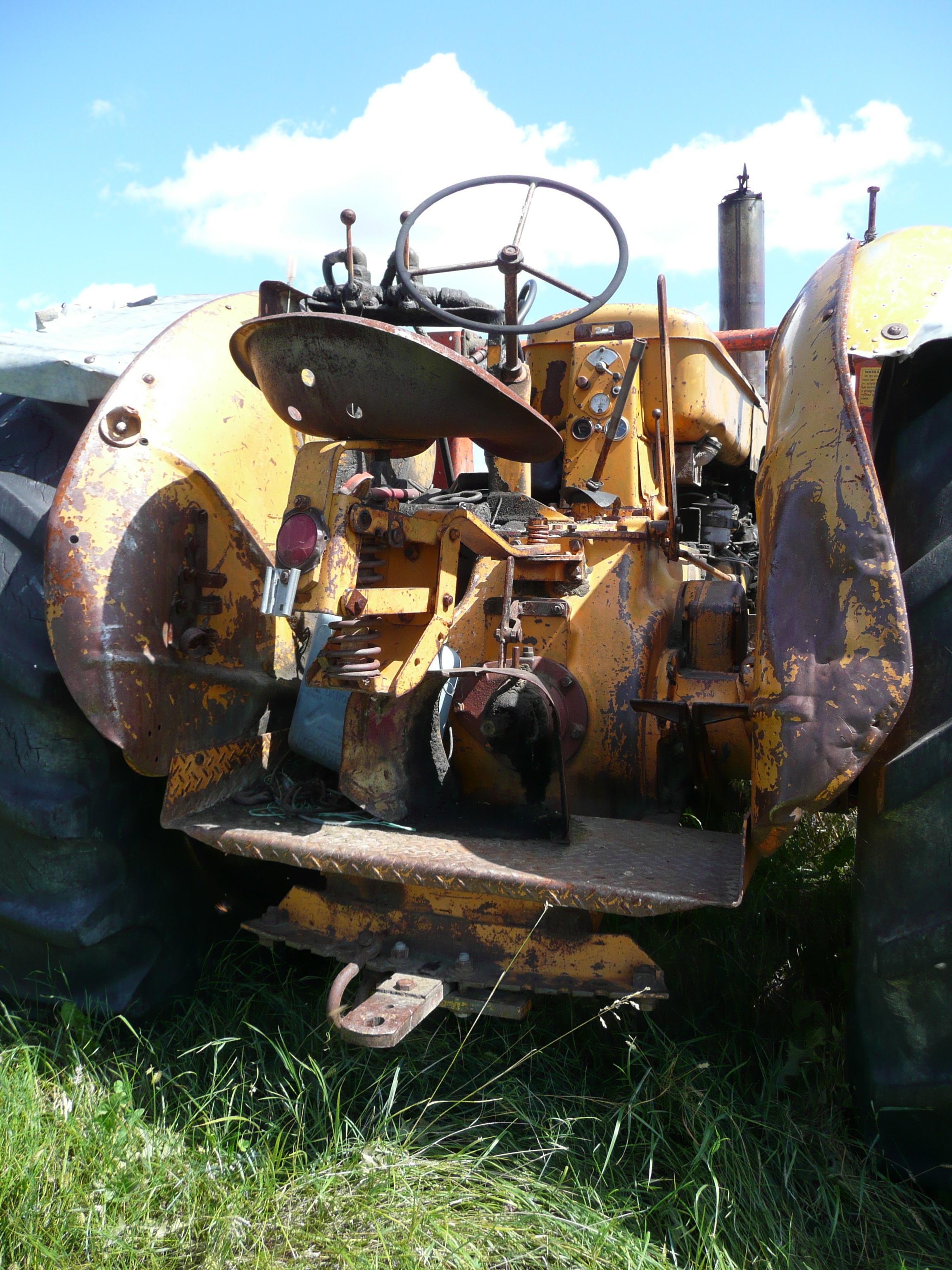
I drove slowly through the yard and past the old barbwire gate. Swinging past the old dugout we entered into the back yard once filled with rusting chassis of cars of a bygone era and now mostly emptied of it’s historical wealth. Still, a few reminders of youthful explorations remained. The old Minneapolis tractor was there; the air frame of of the old Avro Anson that had long been lingering in the yard was still prominent in the long grass, and a few of the old cars remained against the edges of the old wooden corrals. Most of the more recent cars —those of the 50s and 60s— were gone, off to an unknown fate but Gerard’s old stepside Dodge was still evident. Stripped down and missing its motor, it served as a poignant reminder of our days of youthful abandon and fearless foolishness.
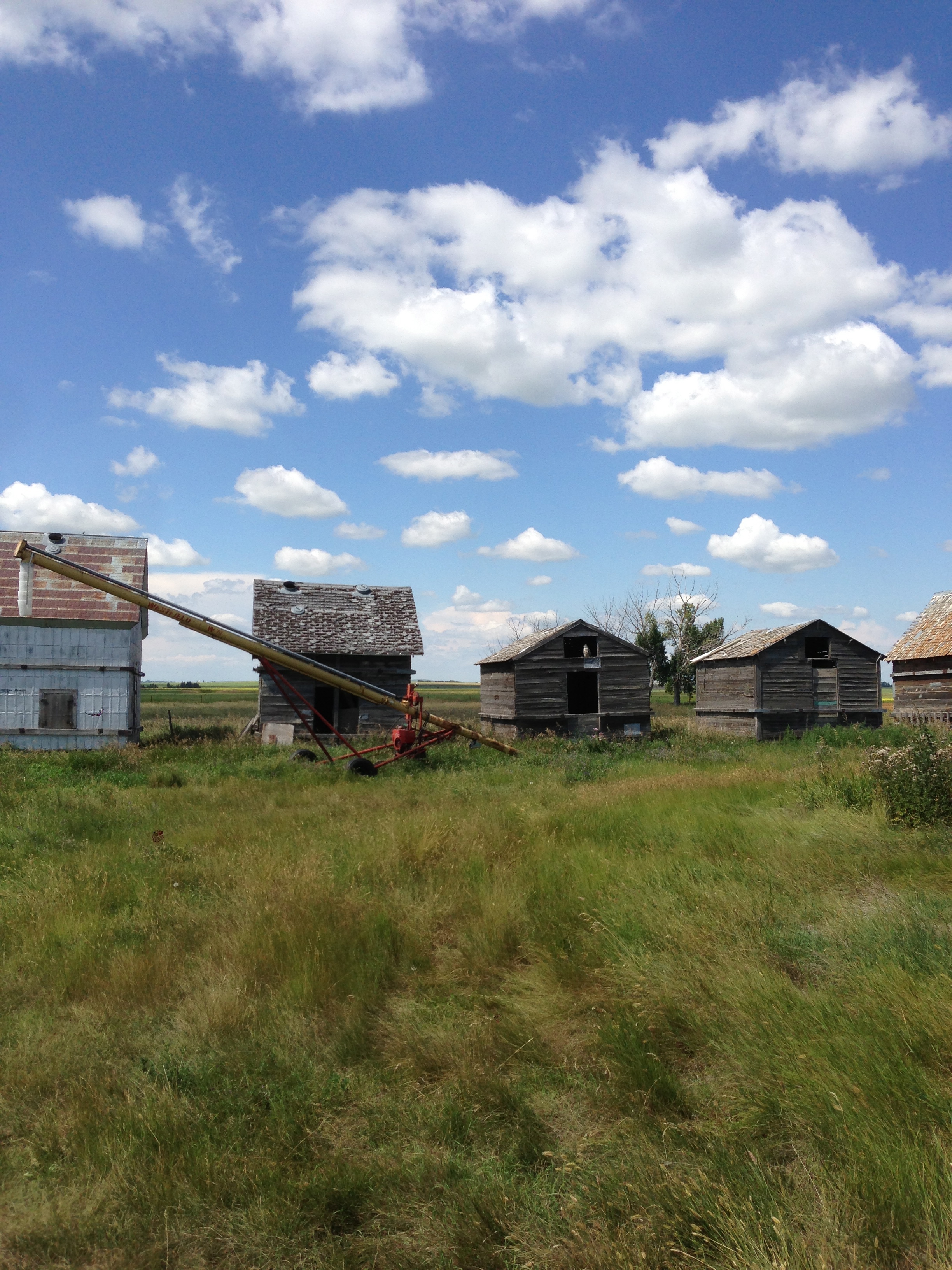
Emerging from the truck we wandered in and among the granaries not recognizing the shed that I had assumed was there. At first it seemed that the canoe was not to be found, the deteriorating granaries housing nothing more interesting than a few old dressers and an unusual collection of old computer monitors and peripherals. Not wanting to have to call home and enquire just yet, I set out to investigate more closely each granary in turn and assure myself that the canoe was indeed missing for its supposed resting place. And so, in the back of the field, behind a row of broken and disreputable campers that seen more useful days, I discovered a wooden granary with a series of loose slats that might have once resembled a door and removed the worn and weathered 2 x 4 that barred my entrance to discover an old, white canoe, encrusted with bird droppings, propped up in a corner.
I called over my fellow adventurers and we sat staring at this foetid apparition in dismay. Had it been so many years? Had it merged with its surroundings and become part of the faded history that surrounded it? After a moment or two of contemplation we approached it more closely and decided to haul it out into the light. C flexed her mighty arms and slowly dragged the bow of the canoe between the trailers, while I negotiated the stern of the vessel off the piles of detritus upon which it sat. Once in the light of the hot prairie afternoon, we quickly reevaluted and saw that the dirt and grime had hidden a canoe still of worth and value. The woodwork would need care and attention, but the metal fittings and fibreglass hull seemed intact and capable of functioning as originally intended.
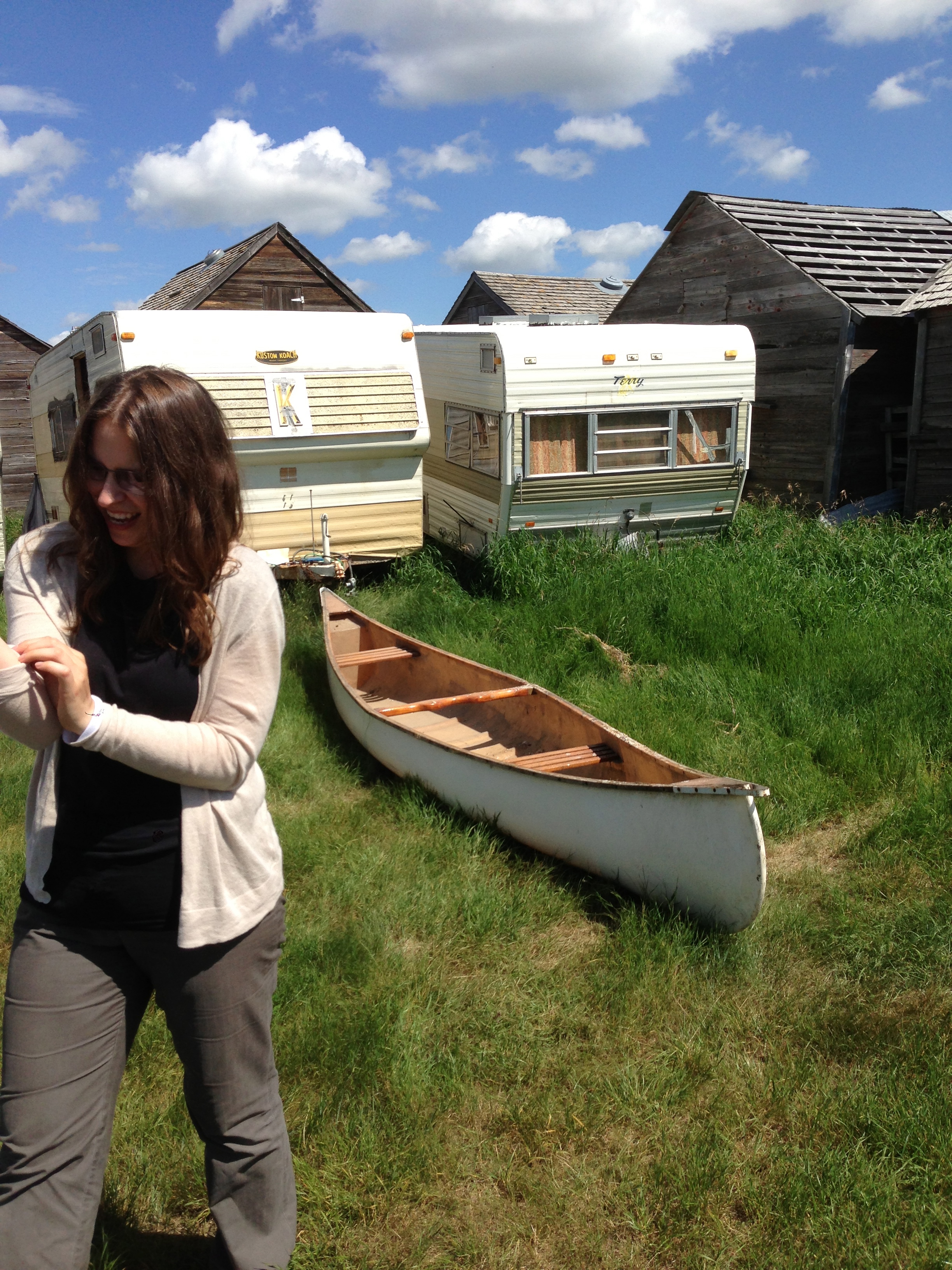
We decided it was a thing worthy of our attention and so embarked on phase two.
While I had stocked up on various accessories intended to facilitate the transportation, I had no real plan for transporting the canoe hundreds of miles north. As we were examining our find, C decided that Redwater and her family homestead there would be an appropriate and useful destination for our new canoe. There lay the facilities for cleaning and repairing it as necessary and it was an easy journey from our Edmonton homes. There too resided her father, a man steeped in the ways of fibreglass and refurbishment. And finally it seemed fitting that the next stage of this canoe’s journey should be to a familiar location; in Redwater it could once again temporarily lay near the familiar sight of worn granaries and the parked cars of bygone days as it readied itself to take up its original purpose.
First we decided to fit the canoe to the truck. The six-foot box of my truck would be too short to house the canoe entire, so it remained for us to try it on the roof of the cab. I laid out the old bubble mattress from bygone camping days and we hauled the grimy and disgusting-to-the-touch boat atop the roof. It was not a perfect fit. Too far forward and it was not balanced on the cab, too far back and any lines securing it to the front of the truck would not serve to hold the bow down in the face of the 100+ km/hr turbulence that any timely journey home would demand. After much experimentation we arrived a good compromise and secure the vessel fore and aft to the the convenient tie points that Toyota had so helpfully supplied. My 6mm accessory cord, previously used only to secure myself to the sides of mountain, sufficed to accomplish this purpose.
A few wraps of my all purpose line provided some security against lateral movement of the stern as I secured it to the tie points in the box of the truck, but I stood uncertain about the efficacy or desirability of trying to secure the middle of the canoe to the top of the cab. A complete wrap of the belly was counter-indicated by the presence of the hot exhaust pipes within a centimetre of the rope as it wrapped around the truck body and of course by the resulting inability to open the doors of the truck. Deciding that the lack of function of the rear doors might be an acceptable compromise, I set about trying to fashion a method or securing the rope to the frame with a series of hooks and carabiners. In the end, while I managed to create a jury-rigged system of some complexity, it did not seem to add to the overall security of the canoe’s attachment to the vehicle and I abandoned the effort completely and decided to put my faith primarily in the fore and aft ties.
I might mention that during the aforementioned activities, C soon noticed that we were under scrutiny. So although we were seemingly alone in the back field of an all but abandoned farmstead, we were not in fact operating in a place of privacy. This first came to light when C enquired if the static outline of an owl sitting in the upper opening of the old granary to the west of us had been there all along. I suggested it had and was naught but a decoy used to scare away the ‘bad birds’ that were a farmers bane. After a few moments of observation I repeated my assertion and prepared to move back to the task at hand. Then the decoy moved. It seemed I had made an erroneous assumption and that in fact we were currently under the scrutiny of the resident owl.
Cameras were produced and pictures hastily taken. Then we slowly approached with the intention of getting ‘the shot,’ owls being a rarity in all of our experiences. Alas, owls, like most royals, are not big believers in the ways of human paparazzi, and, unlike the royals of a human bent, have wings to facilitate their escape. He flew away. Unusually, though, he flew into the granary, which prompted me to continue my approach. I was warned by my traveling companions that being dived bombed by an angry owl was not an acceptable outcome and that caution was advised. Luckily for all concerned there was no cause for me to ignore their advice because as I approached the granary I could see quite clearly that our camera shy bird of prey had merely switched to the matching opening at the back of the granary. A few more pictures, and since there was no danger of facing down a trapped and desperate aerial predator, I continued my cautious approach. Once again, the owl decided to exercise his feathered prerogative. He flew away.
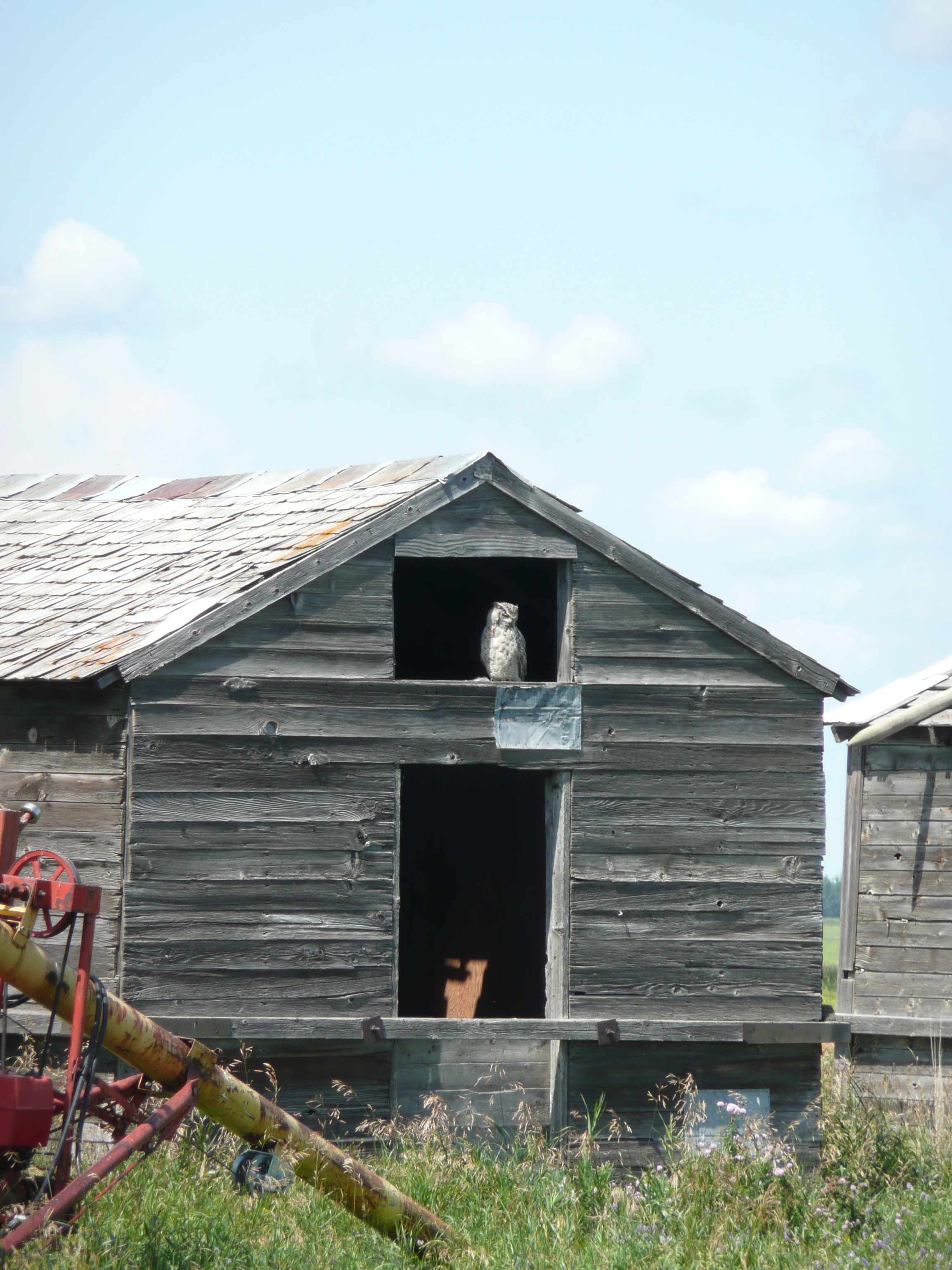
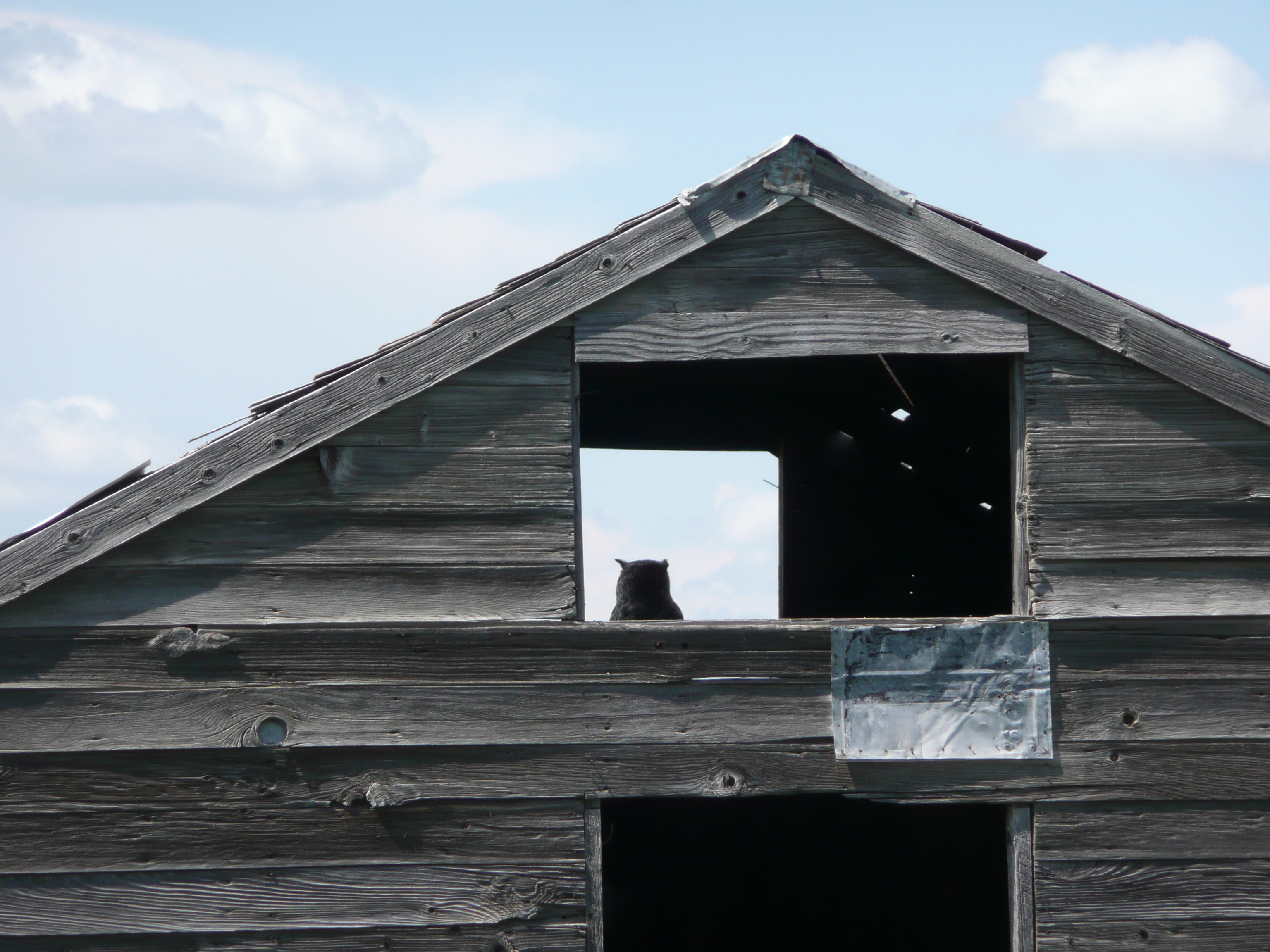
We sighed contentedly amongst ourselves and then returned to the intricate weavings that were intended to prevent our canoe from emulating our former observer and becoming airborne. A few moments later, C, whose currently eagle-eyedness seem to indicate some affinity for our previous scrutineer pointed out that our silent friend was once again watching us from the vantage of a nearby dilapidated metal shed. It seems we were not continue our efforts unobserved. This time we merely tipped out heads in recognition of its dutiful resilience and returned to our primary task.
At last we came to the point where we could do no more and resolved to road test our efforts. We embarked: L to the reserve position in the rear, C maintained her role as second seat and I assuming the helm for the next part of the journey. We started the engine, engaged the transmission and started forward. We had gone mere feet before a small Honda emerged through the opening to the main farm yard and headed towards us. I turned the truck to come alongside and stopped us a few feet from the intruding vehicle to observe my cousins Emil and Claire, come to look over the back pasture. We once again disembarked, introduction were made and we chatted of family and times past. Emil and Claire, being of my parents’ generation, caught us up on the comings and goings of family affairs. And so after a friendly visit we bid farewell to family and resumed our planned path though the yard, with me pointing out bits of historical interest to my companions.
We set course back to the main highway to top up our fuel at the Hilltop and lay in a few travelling supplies. I checked the various tiedowns and attachment points after our brief trip and declared them satisfactory. Then it was off back down the secondary roads we had just travelled as we made our way to our next destination which was Drumheller. As we turned the curve north of the farm the Oueletteville Cemetery came in to view. The site of my recent uncle’s burial, I decided a brief visit was in order.
There we discover the gravestones of family and family friends, names that I had heard all my life, although many were not much more than that to me. It was less full than I imagined and bereft of a few names that I had expected to find there. C, a newcomer to the prairie landscape, discovered that we did indeed harbour cactus as a native plant. This small patch of unturned ground thus allowed a brief introduction to some of our southern Alberta flora.
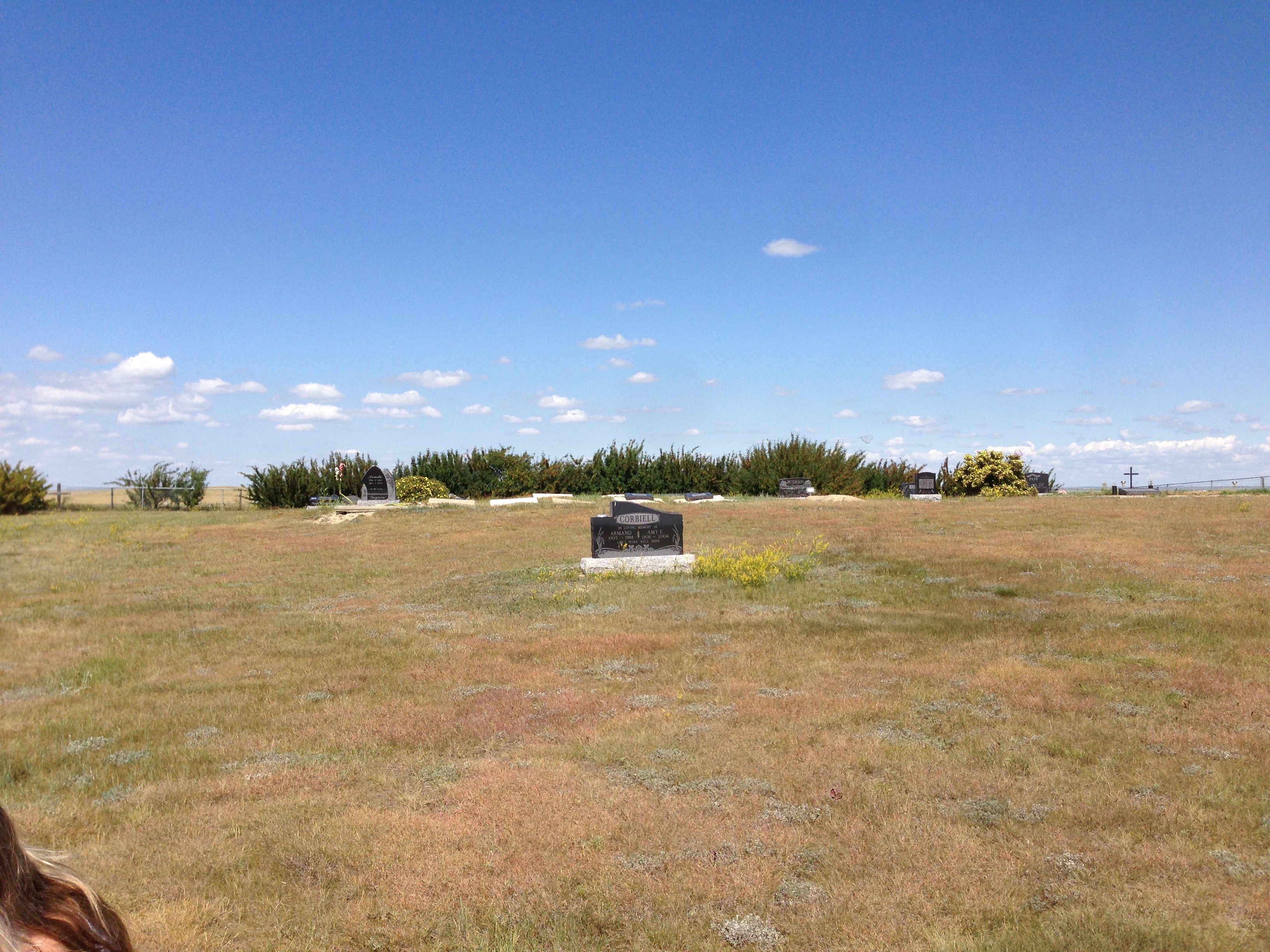
Once more on the road we headed off.
North then east along the back roads of rural Alberta we enjoyed the grand vistas of the Alberta prairie and beautiful blue sky dotted here and there with white clouds. Passing through Hussar, we turned north again along the edges of the true prairie grasslands where Palisser’s Triangle and a land once declared barren and unsuitable begins. North then towards the badlands of Drumheller and a planned stop to eat, stretch our legs and check the ropes again.
One of the many topics of discussion that C, in her guise as entertainment director, brought to the table was a recent commercial we had all seen announcing Cottonelle’s new Clean Care routine. The commercial had been sufficiently vague as to appease the North American audience yet appeared to promote the introduction of water to our our bathroom hygiene and we readily speculated as to what they were exactly promoting. We suggested and discarded a few impractical notions, my favourite of which was some sort of sponge like paper towel that exuded moisture when squeezed, before settling on the idea of some sort of wet wipe (which upon later investigation turns out to be fairly accurate). This topic however morphed when an offhand attempt to be clever suggested combining this new cleaning feature with the growing practice of anal bleaching. I offered that this in fact was a million dollar idea, one that rode on the coattails of such modern innovations as tooth whitening strips and easy to use waxing kits. It took some insistence but eventually I won the group to my new concept and we spent many a mile throughout the remainder of the day refining our new product and building a marketing campaign.
I favoured Martha Stewart as our official spokesperson as the clean, white simple theme seemed a perfect fit. C was more inclined to approach Khloe Kardashian as being more representative of the target demographic and already espousing a profound and vocal appreciation of her own womanly bottom. We also disagreed on the many suggestions for our new product’s nomenclature, although I early on fell in love with Poop & Shine. I felt the name was simply perfect for the requisite jingle: sure to become an instant earworm. The Doctor was silent through most of this, likely reserving her opinion for the final, fully developed concept as was her prerogative as an esteemed scholarly critic.
In the midst of this we arrived at the Red Deer River valley and the eroded banks that form the beginnings of the badlands. Descending into the valley we ooh and awed as tourists are wont to do before we turned west towards Drumheller. A few miles down the road I turned off and suggested we visit the suspension bridge and indulge our inner tourist. Parking in the lot we were reminded that this in fact was a holiday weekend and the lot was filled with tourists of every stripe and colour. C visited the facilities and declared them almost unusable and I checked the tiedowns and canoe, afterwards glancing at my dirty hands and prompting me to wonder if the facilities or my hands were more disgusting.
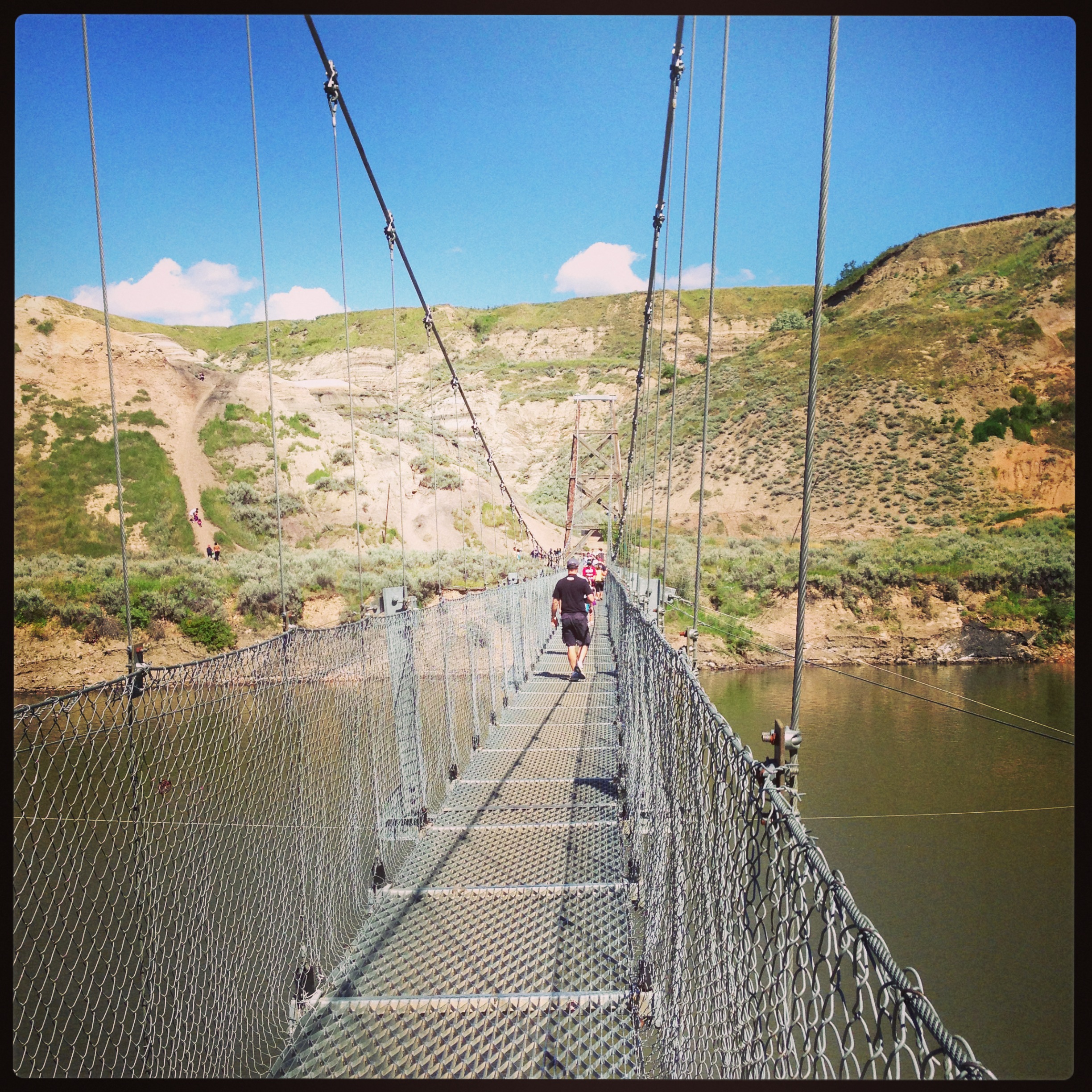
We made our way across the parking lot and joined the hordes that were crossing onto the bridge under the sign that said maximum 20 persons. It is always nice to see such safety notices so blithely ignored. It make me feel a part of the herd. We crossed over and enjoyed the sway of the bridge, the view of water rushing below our feet and the inane chatter of our fellow tourists. Somewhere around here C declared her intention to back track and rescue the Siamese-esque kitten from what she now assumed was tragic circumstances. It was, she espoused, imperative that this kitten be rescued and transported at once to the safety of Griesbach. We acknowledged as this might be so but pointed out the legal issues that arise from kittennapping and advised patience.
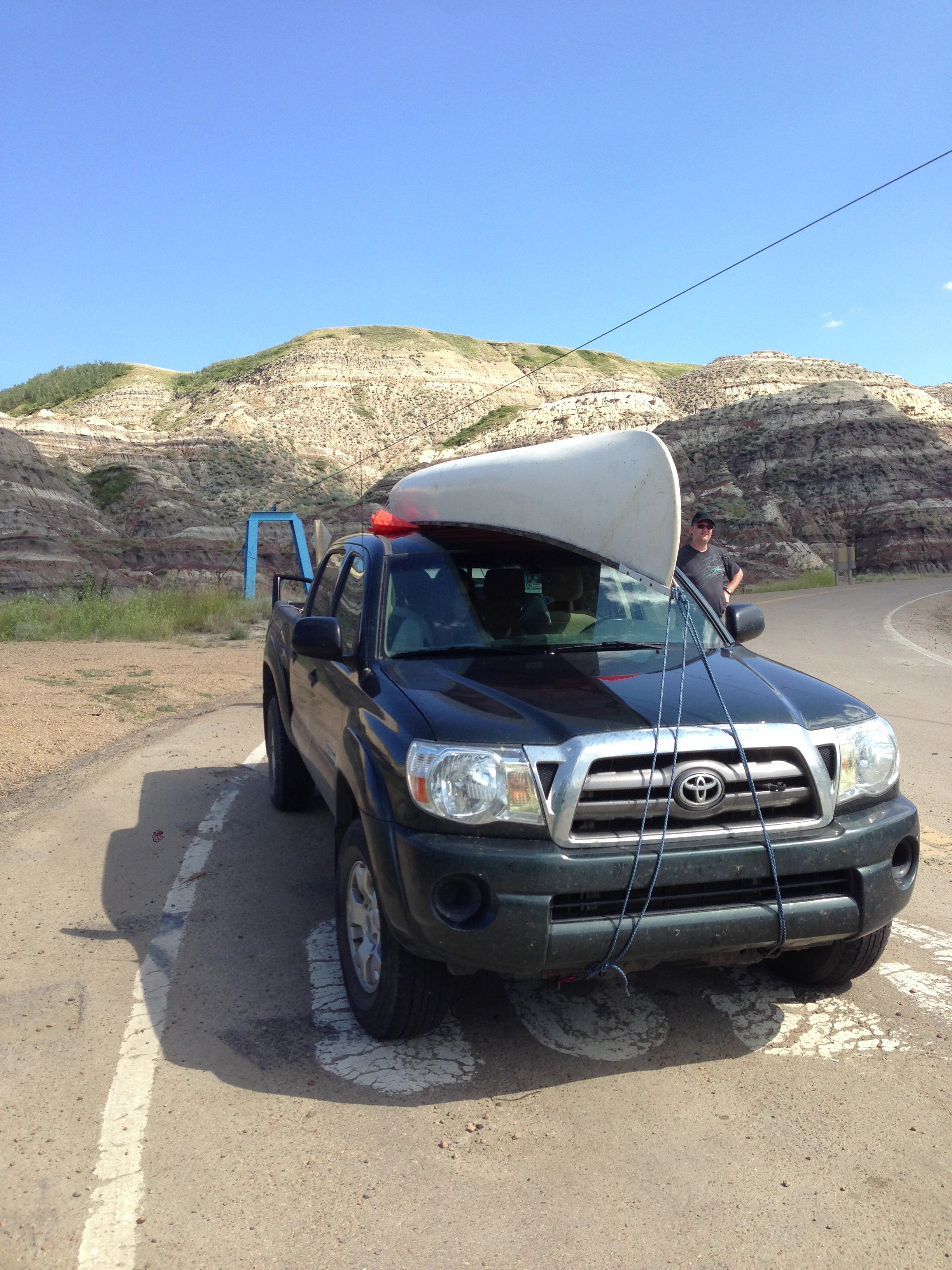
Back at the truck we adjusted the tie downs and, in the attempt to tighten up one of the lines, I snapped a weakened part of the wooden gunwale. Now I was worried. We readjusted again and tried to compensate then once more set off. Through Drumheller and up out of the river valley we slowly wound our way, stopping several times at the side of the road to check if the now less-than-solid side of the canoe was likely to crack or collapse. All seemed well as could be hoped and it was agreed that we would swing west again and attempt our first river crossing with the canoe. Of course we meant to use a ferry, but still it was deemed sufficient to be noted as the inaugural crossing of our new vessel. Through Munson and past the largest stop signs ever devised by mankind, we headed toward the mighty Red Deer River and the famous Bleriot ferry.
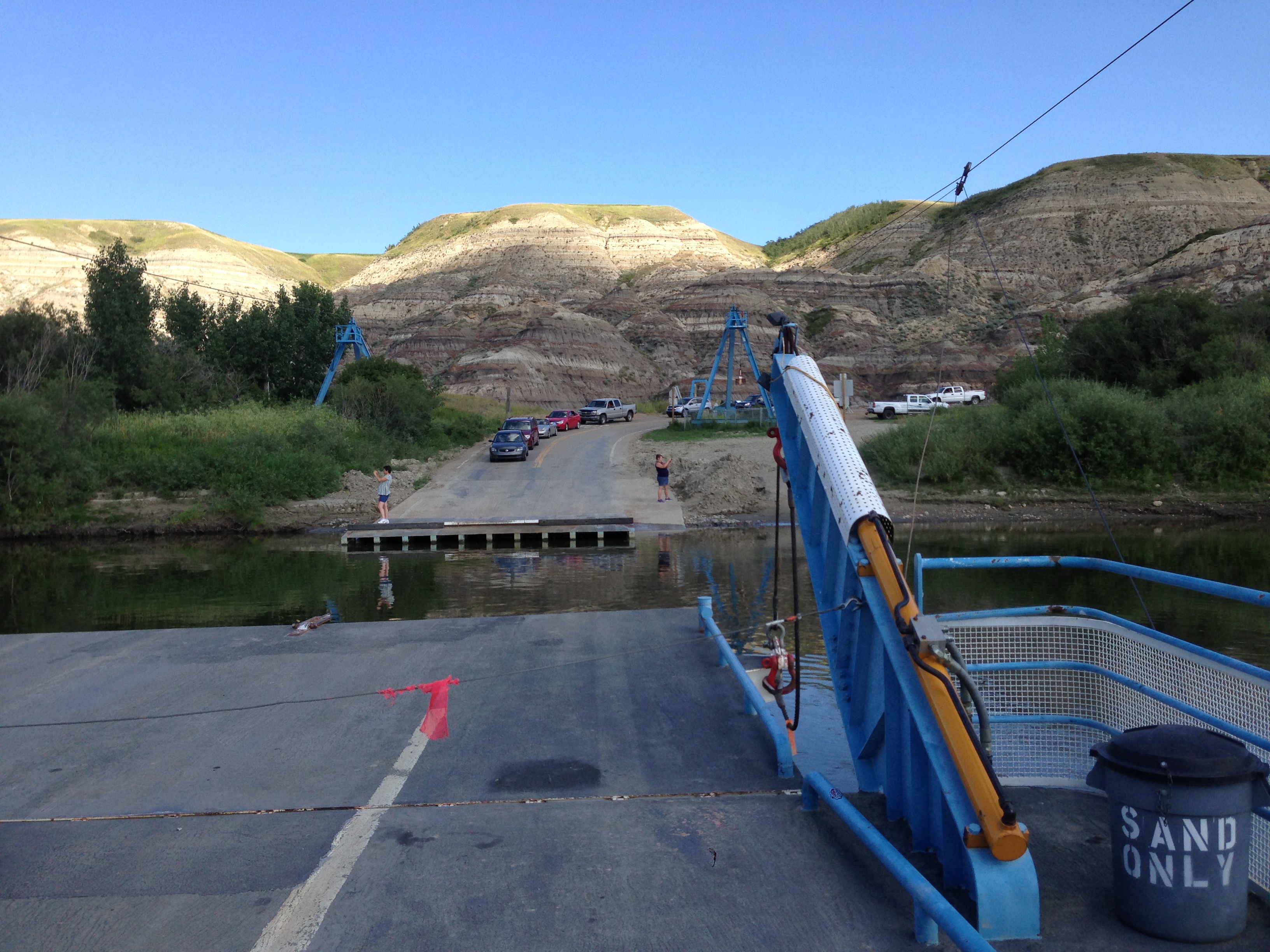
As we rounded the curve to espy the recently departed ferry making its way across the river C was heard to remark “That’s it?” It seems that a ferry crossing that was less than 3 boat lengths seemed a bit underwhelming to her. Still, it was an official ferry and her first in Alberta so we made the most of it. We were first in line, and the crossing being, as previously noted, so short in distance, we were soon ensconced safely on the deck and slowly floating across the river. The canoe did not sink so its first voyage was deemed a success. Up on the back on the other side, we pulled off one last time to check the canoe and then headed west for the 21 to resume our northward passage.
Soon the miles were sliding by and conversation slowly disappeared into what I thought was a companionable silence. Eventually from a muttered aside C not-so-subtly directed to herself, I realized we had failed to stop to eat and it was coming 4 o’clock. It seemed that my two companions were beginning despair of being in the control of one whose body chemistry was comfortable with one meal a day. Thus enlightened we resolved to stop at the next town we passed through. Unfortunately being without my map I was unaware that the 21 in fact skirted such major settlements as Stettler, Red Deer and Ponoka and the miles fell away as the hunger grew in my erstwhile friends’ eyes. Eventually I could no longer hold back the growing panic and fear that I might be the preferred protein of the day and I turned off the 21 and headed east to Camrose. There we settled on the aptly named Fatburger and I could visibly see the potential for violence and mutiny fade from their eyes.
Back on the road the conversation picked up and we celebrate our multicultural heritage by counting in my various native languages, those being French, English and Scottish. My invitation for my companions to join in with Ukrainian or Russian was met with silence; I can only assume their pride is of a quieter sort. Talk also resumed of our soon-to-be million dollar idea and the possibility of bringing major companies into the mix. I suggested that Swiffer would be a good partner with their mix of disposable and reusable mechanization. C maintained that the addition of any non-dispoable implements was counter-indicated. I disagreed and reminded her the Poop & Shine brand was my brain child. It now appears a possibility that we shall market competing product that approach the problem from widely disparate angles: sort of a whitening strips vs whitening toothpaste dealio.
It was at this point that C suggested that our new canoe could be named after our new product and she revealed her choice to us: Pinkhter (or would that be Pinkter?). I admitted as how it would be fine name for the vessel, especially if we painted red with polka dots it as she was keen to do, but that it really could not compete with Poop & Shine and my proposed jingle. Again, our differences seemed irreconcilable and I fear that conflict may sink this idea before it is fully realized.
It started to rain and the wind was up prompting me to stop once again and retie the canoe. As C and I had jackets and L was ill-equipped it fell to us to do the work, the rain making the process even more grody than before. Once more we set off. C then phoned ahead to inform her parents of our impending arrival. An hour more on the road and we were making our way through the backroads of Fort Saskatchewan and Hu Havens in an attempt to shortcut our path to Redwater.
Up the road and soon turning into town C took up the duty of historical interpreter and informed us all of the significance of what we were passing as I had earlier done in my own maternal homeland. As we passed the golf course and prepared to turn by the newly built hotel a moment of profound silence was followed by the loud outburst “It’s Redwater!” It seems some ill-edited copy had made its way onto the prominent roadside sign declaring the hotel as a new addition to the town of Red Water. This profound lack of exactitude was not appreciated in any way by my travelling companions.
At the foot of the driveway we stopped the truck and unloaded our prize. Despite the mishap with the gunwale, the long-sought-after canoe had arrived safely and was ready to be cleaned and prepared for its future as flagship of the Veterans Way Fleet. We dragged it up onto the lawn and headed for the back 40. C’s father,the inestimable Fred, emerged from the gazebo cum man cave, to greet us and help remove our new toy to a place of honour among the classic Mustangs and Firebirds who were the current occupants of the yard. We also visited the home of a newly discovered kitten horde, although they were not in evidence at the moment. Back at the house we were effusively welcomed with grace by the lady of the house and offered all sorts of refreshment and respite. Alas it was coming on 9:30 and it had been a long day.
We demurred and set our sights on Edmonton; beds we were beckoning and I was desirous of a shower to wash away the day’s grime. So we said our goodbyes, promised a swift return and drove off into the sunset. What seemed like moments later we arrived at home, said our goodnights and very soon a long, but fulfilling day was declared finished.