Instagram This Week


Boat Cleaning, Gear Moving & Goodbyes
We decided to spend our last few days at anchor in Nanaimo Harbour, which has become one of our favourite places. It has good holding, nearby hiking, washrooms with showers on Newcastle Island, access to groceries, booze and boat parts wishing easy walking distance and is a great place to simply sit and people watch. The weather turned out to be glorious and we enjoyed the warm sun and ran errands without thinking too much about the next week.
Over the next couple of days we had a visit with Leslie’s parents, enjoyed a beer/cider with an old high school chum (Hi Katie!), filled the propane tanks and hike some new trails on Newcastle Island. But all too soon it was Sunday morning and time to move onto the next phase.

Get Trucking
In the meantime however, we did need to make plans to move off the boat. We had no vehicle in British Columbia and I had sold my truck in January. Flying home to get Leslie’s car and driving it back would have cost too much and the and the little Pontiac likely wouldn’t hold all our stuff anyway. The next option we looked at was flying home and shipping the rest of our stuff. This was my referred solution. But I looked at the cost of flights out of Vancouver (we try to fly by seaplane to YVR and then home on Westjet or Air Canada, as it usually saves time and costs roughly the same as a taxi ride to Nanaimo’s airport and a direct flight) and then started to add in the extras. Shipping our stuff by truck wasn’t too much but it would mean I had to find a pallet and boxes and packing material and then get the all stuff to a depot. Total cost of around $1200. Another option I looked at was to leave a lot more stuff in storage and just ship 3 big boxes via Loomis — they would pick up and deliver. But the cost was pretty much the same and we would have ended up leaving behind way too much stuff that I wanted to take home.
Then we looked at booking a van one-way. The rental from a traditional rental agency was going to be at least $1100. A U-Haul was more like $500 but then I had to drive a big, half-empty cube van across the Coquihalla and pay for all that fuel. Not my referred option. In the end, we settled on renting a full size car which would likely fit most of our stuff if we crammed, and only cost around $800 all-in. With ferry, meals and a hotel half-way that worked out to around $1200. Roughly the same cost as all the other options and Leslie’s preferred solution. As I was booking the car though, I discovered my license had expired back in April (Alberta decided to stop mailing out notices while we were away) so it looked like Leslie was going to have to drive — another good reason not to go with the U-Haul.
Up Anchor for the Last Time
On Sunday morning we hauled up the anchor and headed into the pumpout to give the holding tank a good flush. For once it worked—we’ve had a lot of bad luck with the Port of Nanaimo’s pumpout. We pumped it out, flushed and pumped it out again. Then we cast of and headed to the Gas and Go right by Stones Marina to fuel up. Once we had topped off all the tanks, Ian from Nanaimo Yacht Charters and Sailing School met us on the fuel dock and directed us into one of their slips at Stones and that was that. It was time to start getting ready to go.

On the bow the last time for a least a year.
As soon as we hit the dock we started by dividing the boat into three zones. The v-berth became the place for things returning Edmonton. The salon housed things going into storage and lockers were strictly for things remaining aboard.
 In less than an hour the boat was a disaster area and remained that way until the very last minute. After nearly a year of an orderly and tidy boat it didn’t take long for us to start losing, misplacing and more importantly, miscommunicating, about everything we owned. Living in such a small place for so long relies on consistency and cooperation and once we started disassembling our little world, it didn’t take long for the clutter and the differences in our methodologies to create havoc.
But we had many, many reviews and reconsultations and the occasional moderate dispute and we kept moving forward. Step by step we made slow progress using what I like to call the box-step method. Two steps forward, one step sideways, one step back. Repeat. We tried to make lists of everything we packed and to make sure things were labeled so that we weren’t going to be sitting in Edmonton wondering where things had got to or if we needed to bring it out with us on our next trip. And while we didn’t expect to actually clean the boat to “charter” status, I wanted to get it unloaded, cleaned up a bit and then get at a few things I hadn’t been able to do in the spring. This included scrubbing the outside lockers, cleaning some hard-to-get-at spaces and rewaterproofing the canvas
Keeping it Clean
Keeping a boat clean while living on it is a test of skill, ingenuity and good systems. And I have to admit, we seemed to have failed. Most of the things I had scrubbed in the spring, inside and out, were even dirtier than after the winter and the things I hadn’t scrubbed were downright disgusting. The aft locker especially was a mess. I hadn’t done it because it was hard to get at on our old dock and frankly it was crammed full of so much stuff that I kept putting it off. But since we were tied stern to at Stones I had no more excuses. Out came everything and then down I went. The locker is a bout 2 and a half feet deep with and opening wide enough for more torso but not wide enough for my shoulders to easily pass through. By slipping one arm and then the other in I could hand from the waist and almost reach every corner of the dirty, mildewy locker. But getting out again was an exercise in controlling my mild claustrophobia as the leverage was just not there. But I got it cleaned out and all the junk was sorted and then the stuff that was staying aboard was restowed. Ian agreed to take my old plough anchor on consignment so was one issue I didn’t have to deal with.

The non-skid was another thing that seemed to collect dirt and grime at an excessive rate. I had scrubbed it all back in March April but it seems to get much dirtier, much faster when we are cruising. I tried a number of products from regular deck soap to special “corrosive” noon-skid cleaner but my best results were by using liberal amounts of FSR (fibreglass stain remover) and letting it soak in. Amazing stuff, that FSR. I also smeared it all over the small rust bits on the stainless plate mounted under our arch and it cleaned up all the rust in all the crevices and corners.
Over the course of the next few days we scrubbed the canvas again, although the rain later in the week prevented us from waterproofing more than than the dodger and connector. We cleaned out the fridge again (another thing really hard to keep clean when living aboard) and dug as much accumulated grunge out of the seemingly infinite crack and crevices that exist in a boats interior.
Although we had tried to keep up with the mildew over the winter and spring, as soon as we started unloading our stuff it became apparent that there were a lot of places (mostly the aforementioned cracks and crevices) where mildew had taken hold. I am not sure how one would deal with this long term other than to constantly shuffle ones belongings from space to space and cleaning as you went. But that would mean always having an empty space available to shuffle things to and that’s not really feasible.
Nanaimo Yacht Charters and Sailing School
 I’ll do a separate post later on the wrap up of turning the boat over to NYCSS but Ian, Lorraine and Shari were their usual friendly and helpful selves, offering us use of their car and access to all the services. We discussed the repairs the boat needed (the d@mned Webasto heater stopped working sometime in the last 2 months among other things) and cleared up some details. On Tuesday we did the haul-out, pressure washed the bottom and replaced the zincs. The zincs were mostly gone and I really should have replaced them much earlier. But other than that everything looked good.
 I had a chance to chat with the owner of Stargazer who was just returning from his cruise. He has had his boat at NYCSS for a couple of years now and was happy with the arrangement, which just reinforced our decision to give it a try. He said one of his deciding factors when choosing Nanaimo was their integration of a boatyard, service people and haul-out. Since everything gets billed back to the owners I can see how not having to pay the extra costs involved in moving the boat to a separate location for any work would be desirable.
We also met Selma, who is one of the local liveaboards’ cat and a bold and bossy little girl. But it was nice to get a little cat love again.
NYCSS also provided us with locker space on site (at a cost of course — tanstaafl), which was a great bonus for us during the week. We slowly hauled out everything that made the boat our comfortable home up and stored it in big, labeled rubbermaid containers. That way, when we come back we can just move what is appropriate for the length of our cruise. The charters are called bare boat and they mean bare boat. We were provided with a list of gear that needed to be aboard and they really didn’t want any extra things like the percolator or dutch oven unless we were willing to bear the risk of loss or damage. So we packed it all up and moved it ashore so we would have it for our own use later.
We stored things like our nav equipment, charts, and pfds as wells as sheets, comforters and pillows—Leslie even left a bunch of clothes. There was also lots of extra galley gear, some reference books and cleaning stuff. All in all, there was a lot more than I thought there would be.
Saying Goodbye

Our last view of Never for Ever for 2016.
We didn’t get it all done. It was too much, having to sort, move and clean at once and when we finally stepped off the boat on Thursday morning it was still a mess. But they have over a week to work on it and were going to go over it bow to stern anyway. All the cushions were going to be steam cleaned, bilges scrubbed and all the surfaces and lockers cleaned out by their experienced and well-equipped crew so I didn’t feel too bad about leaving it half done. We’d worked hard all week and it was time to go.
Thursday morning we packed up our last bits, stuffed the sheets in a laundry bag, hauled the pillows up to the storage locker and walked through the boat looking for forgotten items. Then we walked the keys over to the office, said goodbye and jumped in the car.
And like that our adventure was over.

Back to the old way of getting around.

Horsehoe Bay from the ferry. The last view of salt water for a while.

We were greeted with a lovely double rainbow just outside Valemount
—Captain Why #Posts
Instagram This Week


The Last Few Days
We spent two nights stern tied at Deep Bay on Jedediah Island but by the second morning our stern seemed to be distinctly closer to the shore than when we had originally dropped anchor. The wind blew fairly strongly from the NW all afternoon the day after we arrived and our stern spent most of the time lined up with the chains that Chinook had been tied to. And we knew the bottom was rocky rather than mud. How? Well Chinook had had a bit of trouble with dragging when they arrived, and when they left, he’d pulled up that basketball-sized rock. So we figured we had dragged — mostly sideways — enough to move us about 6 to 10 feet closer to the shore. We were still fine for depth but the dragging had made us nervous.

Since time was running short and we were already thinking of resetting the anchor we decided to just go. South through Bull Passage brought us to the Strait and some 15 knot winds. We pulled out the main with our version of one reef and headed east in the SE wind until we cleared the south end of Lasqueti. Then we turned almost due south and sailed for a few hours in a variable wind. Another of the things we have yet to master is finding the balance in the 10 to 15 knot winds. IN 16 knots it is way more comfortable to have a small reef in and when the winds were gusting to 16 we would make 5.5 to 6 knots of speed with 15-20° of heel and hardly any weather helm. But when the winds settled to 12 or 13 knots the boat speed would drop to 4.5 to 4.8 knots and we found ourselves wishing we could shake the reef. Since we spent more time at 13 knots than 16, logic would dictate we sail without the reef and just weather the gusts. But comfort (and my anxiety levels) are better served by reefing for the gusts.


Try as I might I just couldn’t pick enough to clear Ballenas Islands so we went deep and then tacked. And as per usual the starboard tack is just a bit slower, so I was keen to tack back as soon as possible. But all my impatience meant was that we ended up having to tack two more times to clear the various islets that lie offshore of Schooner Cove.
 I had phoned ahead and they had a spot for us at the marina so I had also texted my friend Darryl and enquired if he had some free time. He invited us to his house for dinner and some wine and we gratefully accepted. Once we hit the dock we cleaned up and relaxed while we awaited out ride. Darryl and his wife Loretta had just moved from the Edmonton area the year before and had been fixing up a lovely A-frame on the hill overlooking the Strait. Lovely place. We ate, drank and visited until it was time to head back to the boat. It’s a nice area and one well worth considering if you want to move to the coast.
The views from Bravo dock are pretty nice. All in all Schooner Cove is a nice place but it is starting to feel its age. The showers etc are great because they are mainly used by the Yacht Club. No cheapo paper towels or toilet paper there. And the shower are free which is a great bonus. They have gutted the main building and have plans to rebuild it as a sort of Granville-Island-esque market. We will have to see how that turns out.

The next morning we cast off and motored south straight into a 20 knot wind. The waves started out pretty small but built as the morning progressed and we were bashing into 6 or 7 footers by the time we approached Departure Bay. We thought about raising the sails but decided to just get it over with and spend the afternoon cleaning and organizing instead (of course that turned into putzing and relaxing instead). We motored into Nanaimo harbour and dropped anchor in lovely open spot amongst the crowd of boats. Thursday’s Child was still here (or back) and it turns out we dropped anchor right beside My Second Wind fresh from her refit on Gabriola. I haven’t seen any of Curtis’ videos since we pulled out of Victoria, but I would have thought he was half way to Alaska by now. I guess I will have to catch up watching to find out the story.

Then we spent a few days doing chores and kicking back. We got a ride from Leslie’s parents to top up the propane tank (Nanaimo is a horrible place to try and find propane). We bought some rubbermaid containers, cleaning supplies and scammed some boxes from the liquor store. And then generally enjoyed our last few days on the water. The rain made for some lazy days but that was all right.

Today we head to Stones Marina and 3 or 4 days of cleaning and packing. Then it’s home to Edmonton and the end of 11 months living aboard. But at least we can start having showers every day again 🙂
—Captain Why #Posts
Size is Relative: A Cruising Update
We spent 4 nights at Grace Harbour. At one point, for the briefest moment, we were the only people there and then suddenly there were 13 boats swinging on their anchors. The numbers varied the rest of the trip, but at no point did anyone resort to stern tying. I figure with boats stern tying, the harbour could easily accommodate another 20 boats.

It does highlight one of those cruising things that I have yet to get used to, that everything is relative. When we pulled into Grace there were only 4 boat there and, of course, the marked rock in the centre. It felt crowded. We slowly motored amongst the current occupants in search for some clear space. The next day two other boats joined us at the far end in a space we had originally estimated as only holding room for one. And so the next four days went. These sorts of distances, for me, are proving very hard to estimate and I am constantly astounded by how much in my perception size changes as the perspective does. When we left Grace Harbour there were only 10 boats but most (including the previously encountered Emerald Steel) were all crowded down at our end where I had previously sworn there was no room for more than 3 or 4.
After a pleasant night in Lund to top up tanks and batteries, where we met Alan and Charlene from Rugosa — a midnight blue Tartan 3400, stocked up on some groceries, visited the wonderful art gallery at the old hotel and had delicious cinnamon buns for breakfast, we cast off heading south down the Malaspina Strait. And for those of you paying attention, yes, we were heading into the wind. Again.

We had decided against making the six to seven hour run to Lasqueti Island and decided to break it up with a visit to Blind Bay which lies between Jervis Inlet and Agamemnon Channel. We, as usual, timed it wrong and fought the current for the first 4/5ths of the trip barely making 5.2 knots until the very last bit when it finally turned and were making 6.2 for the last few miles. There are two main anchorages in Blind Bay: Ballet Bay which had previously been recommended to us by R Shack and Hardy Island Marine Park. We decided to check out Hardy Island first since it more likely afforded someplace to go ashore and explore.
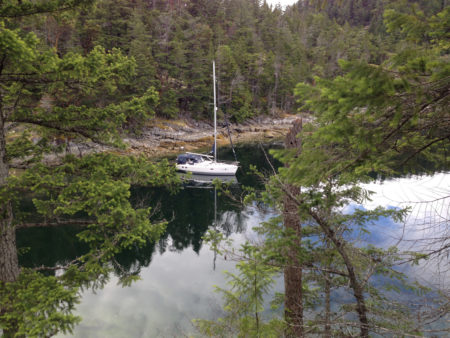
From the charts it looked like there was one notch behind Fox Island where maybe two or three boats could stern tie. As we approached there was already a lovely double-ender anchored at opening of the notch and it seemed that we’d likely only fit in one more boat. But after we dropped anchor and were settled in, we jumped in Laughing Baby to visit the oyster-laden shoals at low tide and I had a chance to reevaluate the anchorage. Now that we were tied up seemed we could easily fit another 3 or 4 boats even with that anchored sailboat taking up extra room. There were no rings or chains but the angle of the rocks made going ashore easy and there were plenty of trees to tie up to. Several other boats did come into the park, but all chose to anchor in the deeper (50ft) and more exposed water in the middle.
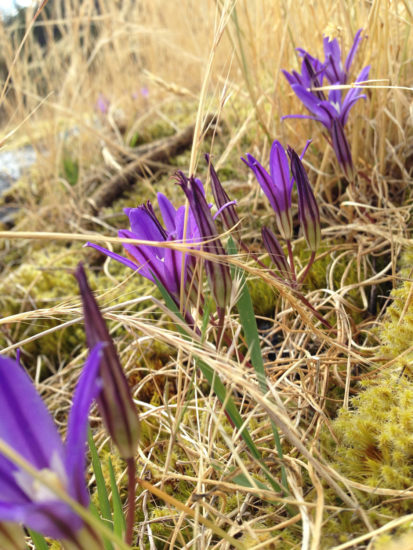
We wandered around the shore, took plenty of pictures and admired yet another crop of unknown wildflowers (turns out they were Broderiaea). Leslie emitted the most girlish squeal I have ever heard her utter when a sizeable garter snake decided her shoes were a tad bit to close. This set off a chain reaction, as I was bent over peering at some wild creeping raspberries and, startled, hopped up with extreme alacrity on the nearest rock like the storied farmwife menaced by a mouse. The snake decided we were too, too much and left.
The next morning we headed south again and, with wind (15-20 knots) and current against us, we made barely 4 knots, turning a 3 hour trip to one almost 5 hours long when all was said and done. Again after we turned around the bottom of Texada, our speed increased dramatically and we entered the small group of islands between Texada and Lasquesti that was our destination doing in excess of 6.3 knots. It would have been gterat sailing if we weren’t barely a nautical mile for our first destination. Rugosa had recommended an “unmarked” anchorage on the east end of Little Bull Channel as being especially convenient and beautiful. On the charts it looked small but as we approached it, it actually looked too open and exposed so we decided to give it a pass this time.
The Desolation Sound chart book shows some aerial photos of our next choice, which was Deep Bay on the NW side of Jedediah Island. From the air it looked like there was room for maybe 4 or 5 boats if all were stern tied on the north shore. As we rounded the corner I could see there was one boat already tied up and 2 more sets of chains on the outward side of the bay. It really didn’t look like there was much room for anymore deeper in. But, after we tied up to the outermost chains, we dinghied in and counted a total of 10 sets of chains with a couple of more on the south side. You could never convince me there is enough room for 10 boats in this tiny bay but… I guess we will have to visit in the high season to see it in action.

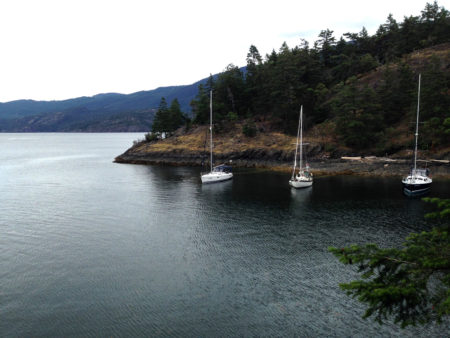
A few minutes after we were settled in a lovely Westsail 32 named Chinook came in and tied up between us and the Hunter Deck Salon that had already been here. That made three boats tightly clustered at the outside end of the bay.
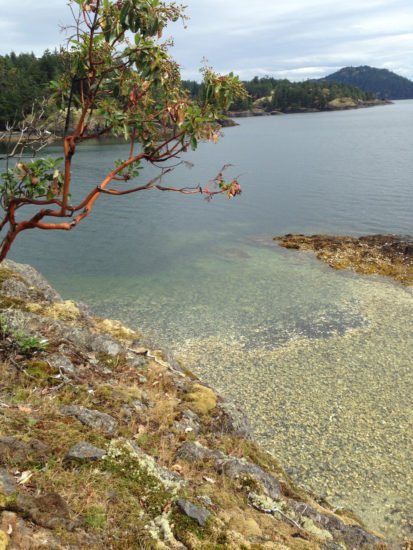
We hit the shore for a short hike to stretch our legs. The whole of Jedediah Island is a park which had been bought for the province in the mid nineties. Until then it was an active homestead and still has feral sheep and goats roaming the place. There are lots of trails and a few old buildings and the forest is relatively untouched, at least compared to most of the public lands we have hiked on the BC coast. Suffice it to say there were plenty of trees with girths exceeding 3 feet. On our way back I misremembered the map and we decided to do some bushwhacking to meet up with the trail again. This brought us to the top of Mount Jenny and then down the other side until we finally found the main trail near where we had started.
Back on board a beer was definitely in order and we availed ourselves of the hot water to shower and clean up.

The next morning both our neighbours pulled out and we had the bay to ourselves as the NW winds built. This isn’t the most recommended anchorage in a NW but since we are alone and since they are supposed to turn again this evening, we will stick it out and keep a watch. One interesting episode was when Chinook pulled up their anchor (by hand as the Westsail didn’t have an electric windlass) they also pulled up a sizeable rock (the size of a basketball) nestled in there plough anchor. This obviously made pulling the anchor that much harder and then left them with the problem of how to get it off the anchor. After 5 minutes of jiggling and poking with the boathook it finally dropped back into water with a splash and they were off to start their northward cruise. Seems they were aiming to hook up with tow of the boats we had encountered in Grace Harbour: Chatham II a powerboat that had been there when we arrived and the aforementioned Emerald Steel.
As for us, as I type this it is June 13. We have six days before we are due in Stone’s Marina to start the process of packing up. I’d still like to visit some friends in Schooner Cove on our way and also to spend some time in Nanaimo Harbour decompressing and mentally preparing for the big shift. And there just isn’t that much time left on the clock.
—Captain Why #Posts
Instagram This Week


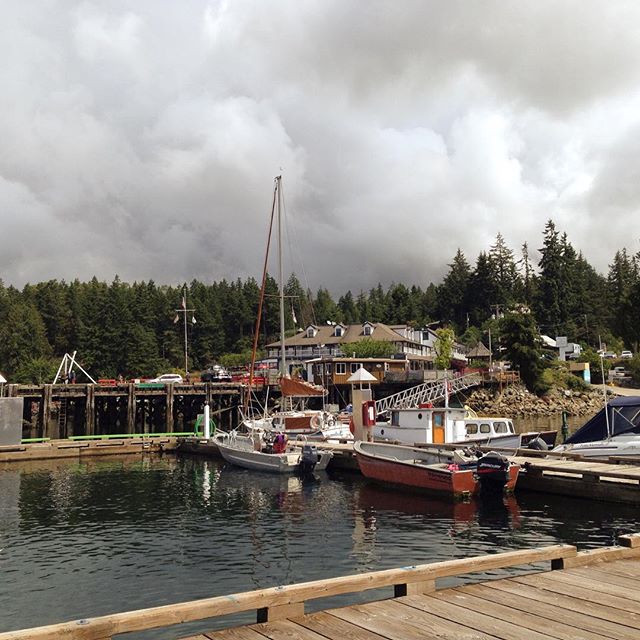
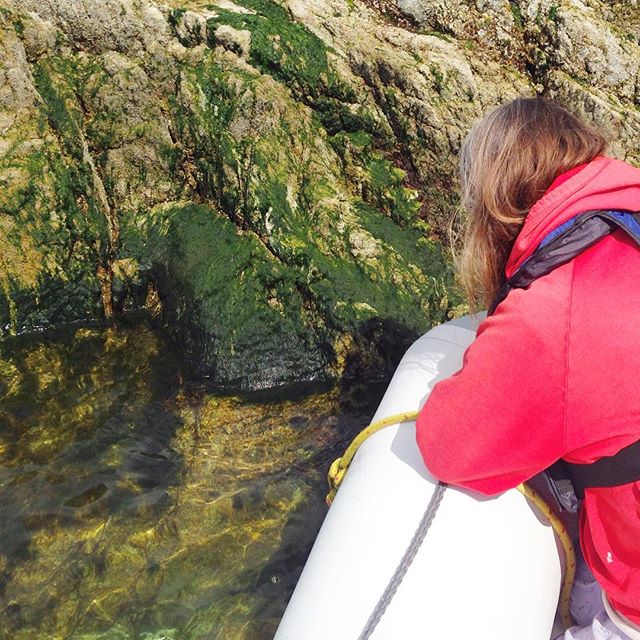


Manual Boating: a putting-your-boat-in-charter update
As we worked our way north we had stopped in at NYC (Nanaimo Yacht Charters & Sailing School) to check in and make arrangements to turn the boat over to them before July.Previously I have discussed putting Never for Ever in charter and that time is fast approaching. In fact, after talking it over with Lorraine when we stopped in, we all decided we would bring the boat in on June 19th and be completely off her by the 23rd. That would give everyone time to clean her top to bottom and make sure any remaining things on my to do list were done before the first charterer boards on June 30. Last time I asked, Never for Ever has been booked for about 6 of the 8 weeks available in July/August. Not bad for a new boat in the fleet. That does mean we have less than 2 weeks left to explore Desolation though.
We also need to haul her and survey her as much as possible to ascertain her state of being as she enters charter and avoid any possible conflicts in the future. There are a lot of little details like that that I want to take care of to avoid having any fuss later on. I have a lot of trust in the crew at NYC and we have a good working relationship, but the more we have documented the less potential for conflict there is.
 So as we hung on the hook in Von Donop Inlet, one of our tasks was to finalize the revisions to the official charter manual. This manual includes all the standard charter info and then details the systems on our particular boat, as well as documenting any how-to’s or processes we deem necessary for safe, fun and easy use by people who will be aboard for as little as a week. It is an amazing exercise to think through all the systems and steps and then try and record them in a coherent and orderly manner. I found it particularly fascinating to uncover all the small routines that we had internalized and reexamine some of the unconscious habits we had gained. While for most owners it would be a lot of work for little gain, I would almost want to suggest that everyone go through the exercise. Certainly if you were selling your boat it would be an massive boon to the buyer. Take a look at the end of this post to see the Table of Contents as it stands now.
Also as a result of this exercise, my next task — not specifically meant for the charterers — is going to be discovering and recording all the vestigial systems that previous owners had added or removed, things like the breaker marked “Battery Charger” that does nothing as far as I can tell. And hopefully we will remove some of the old wiring while we are at it.

I am also trying to finish off as many of the outstanding chores as I can, working on the dinghy (fixing the oarlocks), repairing dings and gouges and cleaning some of the accumulated dirt. One of the things about charter companies is that they are so helpful and accommodating you forget that everything has a price tag and it all gets billed back to you. We do get discounted rates on labour, but I want to do as much as possible myself to avoid unnecessary charges. And frankly I want the boat to be in as good a shape as possible for the charterers. Nothing is more frustrating than the small annoyances that could have been avoided. It’s relatively easy to forgive or at least accommodate major issues like breakdowns — there are always established mechanisms to resolve those — but having to deal with piddly things like broken latches or flaky equipment is just annoying and rarely comes with any recompense. So I want to avoid that as much as I can and hopefully build up some good will.
And I really am hoping that we can make enough money to invest in a few things as well, like upgrading the canvas or adding a TV back to the boat (it used to have one and wiring is still there). But I guess we will see.
Battery Update
We spent 4 nights at Von Donop and left with 11.5 volts and 53% of capacity showing on the battery monitor. According to the “amps used” meter we had used 217 amps of our usable 225 amps (out of 450 amps available). For those of you who don’t already know, the health of a lead acid battery is best maintained by not running them below 50% capacity or 12.2 volts. Unfortunately an accurate voltage can only be measured after the batteries have rested with no load for 12 hours or more — something virtually impossible to do if you are actively using them. When we installed our battery monitor last year it involved placing a shunt in the main connection from the battery which allows the monitor to measure the amount of current that flows through the system. Theoretically this gives you a more accurate way to gauge the state of the batteries. Previously we would only go three nights without at least running the diesel for an hour or two as the voltage would be reading 12.2 or 12.3v. Now, given our total 450 amp/hr capacity and more accurate measurements, we are able to go for 4 complete days without any sort of charging.

So when we left Von Donop, we decided to head back to Gorge Harbour (approx 2 hrs) rather than make a run for Lund (approx 4 hrs) to pick up some supplies and charge the batteries. As a result we ran the diesel for around two and a half hours and our 50-amp alternator managed to put 76 amps (30.4 amps an hour) back into the batteries and bringing us back to 70%. Pretty good considering the alternator isn’t really meant to work that hard. One of the options we are considering is upgrading to a 100 amp alternator with a smart regulator. This would put more amps faster into the batteries and allow us to get a few more nights without having to go to a dock for a full charge. The other plans include adding some solar or buying a portable generator. Oddly enough all three methods of getting more juice involve roughly the same investment: around $1200.
So right now it appears one full day/night is 12% of capacity or around 55 amps which mean running the diesel for at least an hour and a half. I am not sure how much the revs need to be to maintain that but we ran at 2400 rpm most of the way to Gorge. That gives us 4 solid days which is pretty good and we can likely street that if we do some travelling in between.
The next few days
We ate the Floathouse Restaurant while we were at Gorge. It’s still early season so the food is a bit more pub that it is in high season where the menu is much more sophisticated and pricey, but that suited us just fine. The dock also had a few more visitors than when wed been in the harbour the week before. The season is stating to pick up.
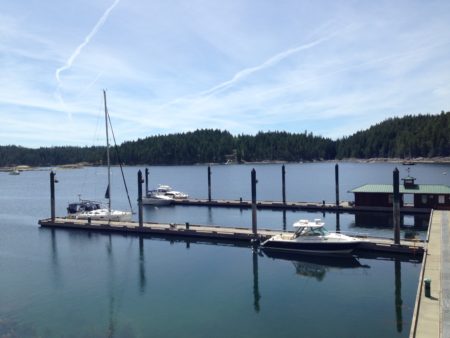
The next morning we cast off and motored (still no wind) into Desolation Sound proper and headed for Grace Harbour. As we entered the harbour there was only one big powerboat and two other sailboats — no need to stern tie as there was still plenty of room. We tucked into the far end of the bay as far from everyone as we could and settled in to enjoy a couple of days of hot weather and sunshine.

Over the next few days a few boats came and went and they inevitably anchored as close to us as they could. This is a well-documented and (and bemoaned) phenomenon in the cruising world. People always want to cluster rather than spreading out and enjoying a little solitude. It reached its peak on the third day when 4 sailboats arrived from the Gibsons Yacht Club and immediately dropped anchor beside us. Then a fifth one came in a few hours later and hemmed us in on the other side. This last one made us a bit nervous as the wind had built up and shifted south; our anchor and rode had spun 180° so we weren’t too sure of where everyone’s anchors were and were a bit apprehensive about the possibility of dragging. That stormy night we had 13 boats for company in the harbour, but thankfully they mostly left and were only 5 the next morning to enjoy the sun that came back out.

Desolation Sound means it is warm enough to swim. Still a bit chilly though — Brrrrrrr!
One bright note was the boat that anchored closest to us from the Gibsons flotilla turned out to be Ocean Grace (Larry and Sheila) whom we had met on the Broughtons flotilla a few years ago. We’d also run into them last August in Squirrel Cove — just another one of those ‘small world’ episodes. They came over in the afternoon for a visit and we caught up and got to show them the boat as they hadn’t seen it last year.
We plan to stick out the full four days and leave for Lund to hopefully pick up some produce, as we are down to one onion, one clove of garlic and half a root of ginger — I’m not sure what that means for dinner tonight, but I am guessing it will be something pasta-ish.
And of course we need to charge the batteries again.
Never for Ever Operation Manual
Table of Contents
- THINGS YOU SHOULD KNOW
- NAVIGATING AND SAILING IN TIDAL WATERS
- AREA WHISKY GOLF
- QUICK REFERENCE GUIDE
- VESSEL SPECIFICATIONS
- SAFETY EQUIPMENT
- Life Jackets
- Flares & Air Horn
- Wooden Bungs
- Flashlights
- Fire Extinguishers
- First Aid Kit
- Emergency Tiller
- Life Ring & Floating Line
- Lifesling Rescue System
- ENGINE AND TRANSMISSION
- Engine
- Starting And Stopping The Engine
- Engine Salt Water-Cooling System
- Changing The Raw Water Pump Impellor:
- Operating The Gearshift/Throttle Control
- Engine Alarm Systems
- Tool Kit /Top Up Oil Spares 14 Batteries
- NAVIGATION AND ELECTRICAL EQUIPMENT:
- Speed And Depth Sounder
- Speed Log
- Autopilot
- Garmin FishfInder
- GPS
- Radar
- AC Panel And Shore Power
- Battery Monitor & Inverter
- Troubleshooting Low Batteries
- VHF Radio
- Stereo System: Sony Media Player
- ON DECK
- The anchor windlass
- Spare Anchor
- Propane
- BBQ
- The Water Tank
- The Diesel Tank
- Holding Tank
- Tank Systems Monitor
- The Outboard Motor
- SAILS AND FURLING MECHANISMS
- In Mast Furling
- Mainsail Reefing & Furling
- Downwind Preventer
- Genoa Furling
- BELOW DECK
- The Stove
- Smoke Detector
- Microwave
- Refrigeration
- Water Pressure System
- Cabin Heat
- Hot Water
- Bilge pumps
- Shower Drain Pump
- Toilets
- Holding Tanks and Macerator
- Dinette Table
- GENERAL SAFETY ISSUES AND INFORMATION
- Locker Lids
- Propane
- Barbecue
- Outboard motor gasoline:
- Thru-Hulls & Drains
- CONTACT INFORMATION
- RETURNING THE YACHT
- DE-BRIEFING AFTER THE CRUISE
- Photographs
—Captain Why #Charter, #Posts
Instagram This Week



Early-Season Cruising In Desolation Sound
Our cruising career, as short as it’s been, is notable for one somewhat atypical feature. Our first cruise and learn was at the end of April, we’ve spent June in the Broughtons, circumnavigated Vancouver Island in late May and are once again enjoying May — and now June — cruising Desolation Sound. Sure, we have done some chartering in July and last year spent August in the Broughtons, but all in all it seems we have spent an unusual amount of time avoiding the high season and crowded anchorages.
And you know what? I am beginning to think I like it that way.
Leaving Sturt, we decided to head up to Rebecca Spit on Quadra Island. It seemed we might still need to stay in cellphone/internet range and I also wanted to check in on Peter and his boat Kismet. Peter is a young fellow we shared the dock with in Victoria. He spends his summer guiding kayaks with an outfit out of Heriot Bay, so he had bought a small sailboat to live on while he was there. He’d left Victoria a week before us, and I wanted to check in, catch up and maybe buy him a beer. The day after we dropped anchor off Rebecca Spit, I motored over to Heriot Bay to find Kismet tied up to the government dock but no sign of Peter. I left a note saying we’d be around for a few days, but he never got back to us — likely out on a multi-day trip. Or maybe he didn’t like free beer.

A very quiet afternoon at Rebecca Spit
We were one of only three boats at Rebecca Spit. And all three of us stayed at least three days. This, I think, is one of the things I like so much about early-season cruising. Last year on our way up to the Broughtons in late July we stopped for the night in Squirrel Cove. It was packed. We actually cruised around for almost half an hour trying to find a spot to anchor that suited our sensibilities and my poor ability to judge distances. And then, once we hit the Broughtons a week later, we were sharing anchorages with one or two other boats at the most. Much better. I may not be getting much practice making decisions on where to anchor in busy anchorages, but I think the benefits of having anchorages to ourselves outweigh the losses to my skill set.
On the way back from my visit to Kismet, I saw a parade going up the spit toward the picnic grounds. Turns out it was the local May Day celebration and the town was out in full force despite the slight rain. I collected Leslie and we wandered around and enjoyed the festivities that seemed to have a steampunk theme. We briefly considered (and then thought the better of) challenging the locals at the greased pole climbing contest. After a bit we climbed back into Laughing Baby and headed back over to Heriot Bay and had a coffee at the local shop in order to use their wifi to move some files around.
I love and miss small towns. While I waited in line, the barista ran out of whole milk, so the customer in front of me volunteered to walk over to the store and get some. “Sure,” said the barista, “tell them to put on my account.” That just doesn’t happen in the city.
After three quiet nights on the hook we wandered over to Taku Resort — again we were the only boat on the dock — and enjoyed another benefit of early-season cruising: their low-season rate of $1.15/foot with power included. Considering their regular rate was around $1.75, it was unlikely we would stay there without the discount. Actually, I also checked at the Heriot Bay Inn and Marina and their low-season rate was an amazing $0.50/foot. After we tied up we hauled our accumulated laundry up the hill, charged up the batteries and topped up the water tank. One last trip to Heriot Bay to get a few fresh provisions and the next morning we were ready to go.

All alone at Taku Resort.
Next we made the short trip through Uganda Passage on our way to Gorge Harbour. Either our chart plotter is wrong or the green buoys have drifted south, but our track through the passage off Shark Spit had us on the wrong side of the buoys as we negotiated the s-turn. When we came back the next day I kept an eye on the depth sounder, and if I had to guess, I would say the chart plotter was correct and the buoys had moved — but I wouldn’t put any money on it.
At Gorge we motored into the far west end to drop our hook. The docks at the Gorge Harbour Resort were empty except for one boat, and it looked like we were the only transients at anchor (one sailboat did join us at anchor later that evening). Leslie had had the helm from castoff to arrival so we (I) decided to switch our usual roles for anchoring as well. Normally she “mans” the windlass and I look after the helm, but we both need practice at the other’s jobs. What made this anchoring more difficult than usual is that the bay was crowded with moored boats — some swinging and some moored fore and aft — and even more empty mooring buoys. We needed to judge the distances so that our greater swing wouldn’t send us into these static targets if the wind came up. And of course the anchor decided to drag for one of the first times ever. Eventually we got a good hold, but then wind or current or something decided to move us over our chain and we ended up on the opposite side of the anchor. But it was all good and we had a quiet night — albeit a bit closer to one moored boat than we had anticipated.
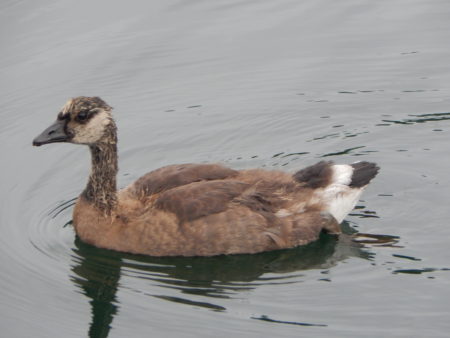
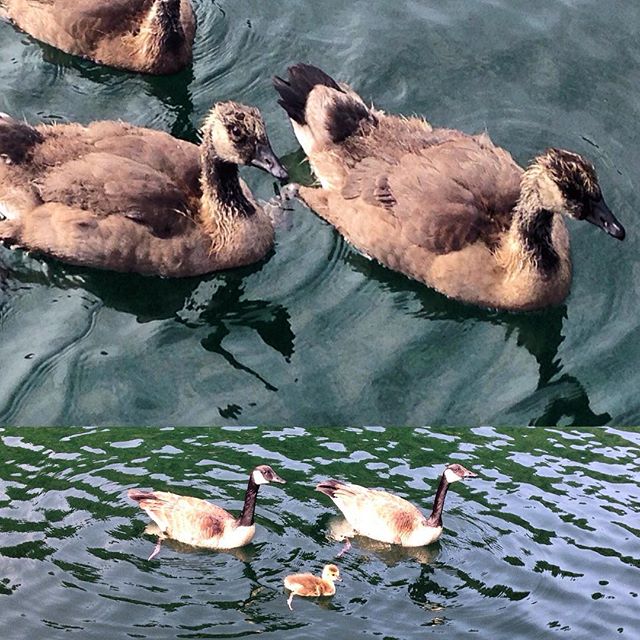
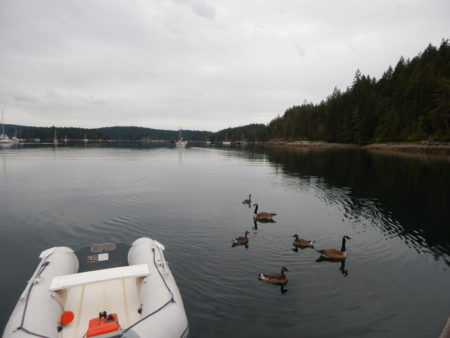
The harbour was populated by a family of geese with goslings in that awkward teenage phase. I can’t say I have ever seen Canada geese in such a disreputable state before, with half grown-in feathers and a seemingly sun-faded colouration. We were also entertained by both a kingfisher and the local otter fishing for dinner — the otter seemed to have much better success. Speaking of dinner, the highlight of ours was when I dropped the ceramic bowl of tomato salad, laden with onions, garlic and olive oil, on the companionway steps. It, predictably, shattered and the bowl shards, salad and oil exploded, managing to land in three separate cabins, just as I need to get the chops off the BBQ and the orzo out of the water. I treated myself to an extra glass of wine for dinner. Desert was still-warm brownies that Leslie had whipped up, so with that, and the wine, in the end all turned out good.
Before dinner we did row up to the resort, but the restaurant was closed and the store held nothing appealing except Leslie finally found a copy of The Curve of Time. Everywhere we went last year people asked if we had read it and we had seen copies for sale at every stop. But after we had decided to buy it this spring, it was out of stock every place we checked from Sidney to Desolation. The bookseller in Madeira Park had copies backordered and figured it was because Whitecap had put out an anniversary edition hardcover and it must have sold out. But we finally have our own copy.
The next morning we figured Gorge just wasn’t where the cool kids were, so we decided to move on. I had wanted to visit Von Donop Inlet, and it has a reputation as a must-do that was often crowded. It seemed perfect for an early-season visit. It was only a short two and half hour motor, so we raised anchor at around 11 am and, after fuelling up at the resort, headed back toward Uganda Passage and then turned north to follow the coast of Cortes Island. There was one sailboat boat anchored at the lagoon, two in the next small bay and we joined three others and two powerboats in the bigger bay at the far south end. Plenty of room for everyone.
I did notice that all of the sailboats here were outfitted as serious cruisers. Actually since we left Nanaimo we haven’t really seen very many Hunters or Beneteaus or other boats of that ilk other than ones from charter companies. Still, Never for Ever, Hunter that she is, is serving us just fine, even if she’s not as fancy or well outfitted. We are grateful for the “full” enclosure to keep the wind and rain out of the cockpit, and I find myself wishing we had invested in a generator or some solar to extend our visits at anchorages. Even a larger alternator would help, because after 3 or 4 nights on the hook, motoring is not enough to put charge back into the batteries for another extended stay.

Jellyfish photography is hard!
It’s beautiful here in Von Donop and we are getting a bit of rain that transforms the hilly scenery into a misty and mystical place. The other bays are worth exploring by dinghy and there are trails here as well so we plan to do some hiking. And oddly enough, we have a better cell signal here than we did at Gorge.
The plan as it stands now is to stay here a couple of days, then head off to Grace Harbour. But who really knows what we’ll do? We don’t.

Exploring the entrance to the lagoon in Van Donop

Our version of a quiet evening stroll
—Captain Why #Posts
A Hot Time on Texada
The Texada Boat Club is one of my favourite places to visit — despite its creaky dock. We’ve been lucky enough to get the same, stern-in spot almost every time we’ve visited; it backs up onto their small covered float with two picnic tables, flower pots, a tent to keep the rain and sun off and a small book exchange. There is water and and 15 amp power available and garbage can be dropped off for $3/bag. Bob and his wife Maggie, the wharfingers, maintain a database of visiting boats so if you’ve been there before you might get greeted by name, which can come as a bit of a surprise to those not “in the know.” All this for only $.70/ft!

The flowers at our favourite spot from our last visit to the Boat Club.
This year we shared the dock with a little 27 footer on its way to Victoria. The older fellow was going to join up with his son and daughter, both of whom had boats, and they were going for a family cruise. I think I need to get my extended family cruising, as that plan sounded just grand. The small bay (the inlet part Sturt Bay) across from the Boat Club usually has one or two boats hanging on the hook and I have always assumed that’s all it had room for. Well last night there was a trimaran really far in and 6 other sailboats as well. And there still looked like there was plenty of room for more. We will have to give it a try. I am noticing that this early-season cruising is popular with the more salty crowd and the anchorages are more popular than the docks.
But if you do come to the Boat Club for a visit, just grab a spot on the most westerly dock which generally has plenty of room and Bob will come by in the evening to settle up.
When he came down, Bob let us know that tragedy had struck that afternoon. The Texada Island Inn, a short walk from the docks, had burned down. I walked up today to survey the damage and the hotel looks completely gutted, although the restaurant section seemed better off. The fireman I talked to said he figured it was a write-off but it would, of course, be up to the insurance companies. Meanwhile that means the only restaurant and bar in town is closed indefinitely. He did mention that this might be a boon for the local Legion and hopefully they would extend their hours. Not much help for visiting boaters though.

 I cruised the town on my way back. Not much to see although they had a nice sized market and an interesting direction sign post; all in all a typical small, small town with lots of personality. I also came across a hummingbird feeder with more hummingbirds than I can count buzzing around it like bees. For a prairie boy like me this counts as a most amazing sight, and I stood there amongst the barking neighbourhood dogs for a few minutes staring. The local cat on the porch just through disdainful glance at me and then continued to ignore all the activity in fine cat fashion.
We had motored up from Pender the day before straight into the 12-15 knot winds, staring enviously at all the boats running downwind, making better time than us with just their genoas flying. Despite the number of times I have travelled up and down the Malaspina strait, I have yet to do it with the wind anywhere but on my nose. I have had some fine sails beating into the wind, but it would be nice to be able to have it at my back just once. At least the decks got a good washing.
And now we are pausing here briefly so we have a good cell reception to allow Leslie to finish some work on her book. Then we will likely head for the wilds of Desolation Sound — Grace Harbour or Roscoe Bay — to hang and drink in the rugged beauty and, hopefully, solitude.
—Captain Why #Posts