Category: D’autres
A Call for Comments
I restarted my Google analytics because the tracking code had gotten lost in my redesigns. So far I have peaked at 13 visitors in a day (and they were probably all me) but I need more data for any more significant figures. Last year I had slightly over 1000 unique visitors with about 55% of them returning at least once.
I need more feedback people, so I am going to post a picture of me and all of you readers are going to comment on it…
Right?
Suggested topics: the haircut; the cars, Dale’s shirt, Dale’s Keds, my mother’s cruelty in giving the leash to my brothers, the look on my face, make up your own! Hell, comment on past posts if you must, but comment. Even if you have no idea who I am…I like mysterious strangers too.

An old picture of us boys in what I suspect was the Steinberg’s parking lot.
Light bright, they made things with light

Shabu shabu, boozy chocolate and snowy girls,,,

11:23
11:23
When Edward was younger he had toyed with automobiles. He had obtained a sporty car and modified it to suit his needs. A convertible, the roadster had quite managed to addict him to the wind blowing his ears back and the roar of the modified 12 cylinder making his blood boil.
This infatuation had lasted for a couple of seasons until maintenance had started to outweigh the time he had available to enjoy himself.
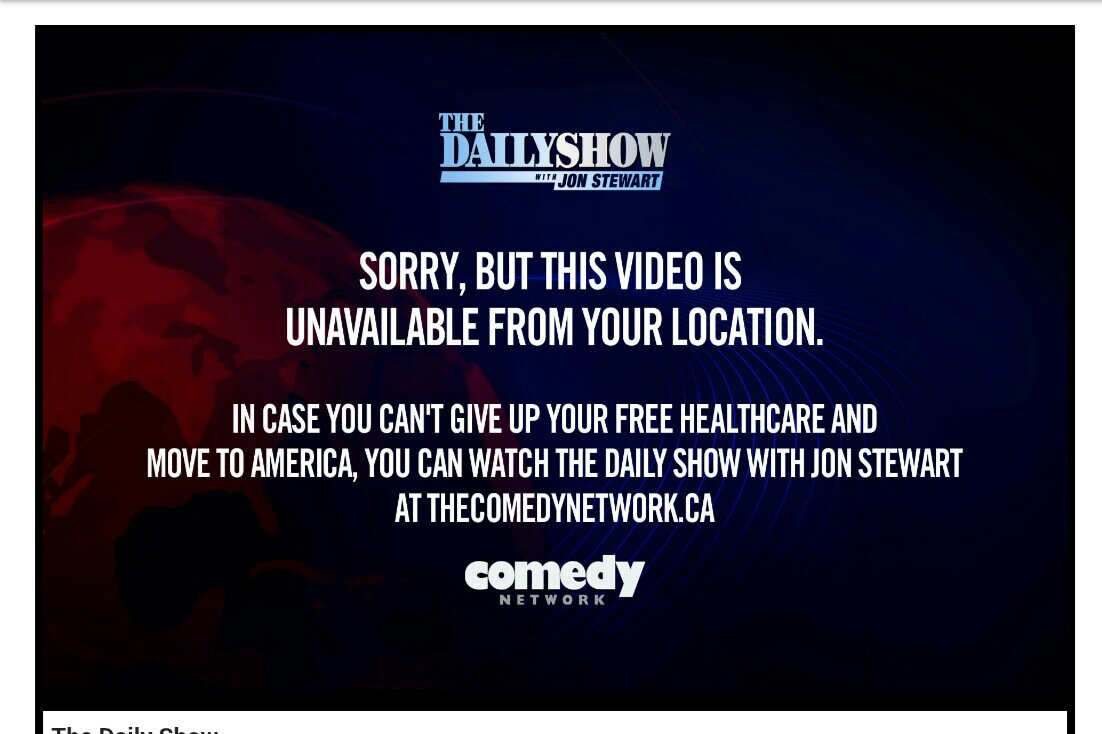
Jon Stewart is fun-nee
Hail Ceasar
I guess this mixer suits my imperial ambitions: Imperial Red!
Take the quiz:

The Mosel

Meaty meat meat

Huh, so that’s what a good BBQ pork butt looks like…
I wonder if Gowan ever played here

RCAF revisited
A few months back (well 2 years ago anyway…) I mentioned I had come across a CF-100 at the Alberta Aviation Museum and subsequently discovered my Father had flown it a month or so before he died. Zak had texted me and said he saw a Golden Hawk CF-86 fly by on Wednesday, so after leaving downtown today we decided to see if it had landed at the museum. It had.
They were letting people tour it so we paid our fee and wandered in. Dan Dempsey (the pilot) was there and While I sat in the cockpit we discussed the history of that aircraft and a bit about the RCAF. This particular Sabre had been in Marville (441 Checkerboard squadron) but a few years before my father.


This was a bit more exciting than the last time I sat in one as it was still flying and of a reasonable comparable model to my father’s (he flew Sabre 6’s, this was a Sabre 5). I also chatted withe mechanic for a while. He said that the Orenda engines are still being serviced because the oil industry uses them in pumps… huh.
While we were there an old Stearman took off on a joyride and a P-51 mustang landed, all here for tomorrow’s festivities.


I had mentioned to Dan that my father had often flown from Gimli to Calgary to date my mother and he said a lot of that happened back then and it was likely a T-33 (which I had known) and gestured over to the two on the tarmac. That got me thinking.
On the way out I took a look at the tail numbers and when I got home I checked the log books. He’d never flown the one but T-33 21533 had been stationed at Gimli while he was there. He’d never flown it to Calgary, but had flown it on at least 11 different occasions.

It’s parked right beside CF-100 18476.
**********
Of course as these things go, one google lead to another and I came across this listing which I had never seen before: The Canadian Virtual War Memorial and its link to my father. Even mentions me…
It also has an image of the page in the non-virtual memorial.

For Posterity: e-books
Clipped from the comments on a post in John Scalzi’s Whatever, Patrick Nielsen Hayden (an editor at Tor) explains e-book territorial rights:
Claudio Morais asks: “Why is the ebook version not made available worldwide considering there are no physical constraints that may apply for the hardcopy version?”
This question gets asked all the time. Not surprising, since it is in fact a perverse outcome of inputs which, considered individually, don’t necessarily seem perverse.
The entity that published REDSHIRTS last week, Tor Books, has the exclusive right to sell the book in the English language in the US, Canada, and the Philippines, and a non-exclusive right to sell it in English in all other countries of the world–_excluding_ the UK and a long list of Commonwealth and former-Commonwealth countries. A list which includes South Africa.
John and his agent could have sold us the “World English” package of rights, which would entitle us to publish the book in English everywhere–we would certainly have been willing to offer for that–but instead they opted to take the slightly riskier path of selling us rights only in our core market, reserving the “UK-and-a-bunch-of-Commonwealth-and-former-Commonwealth-countries” package to themselves, in order to try to sell it separately to a British publisher. (This is a slightly riskier path for most genre writers who aren’t top-level New York Times bestsellers, because British publishers don’t really buy very much SF and fantasy from the US below that sales level. This wasn’t always the case but it certainly is now.) After a period during which I imagine John’s agent shopped the book around to various British publishers (I don’t know the details because it’s, literally, not my business), they accepted an offer from Gollancz. However, that deal was concluded just a month or two ago, so it was vanishingly unlikely that Gollancz was going to get their edition out simultaneously with ours. I believe their edition is scheduled for November.
(Footnote here: An exact inverse of this situation is why Tor’s edition of Hannu Rajaniemi’s debut novel THE QUANTUM THIEF appeared in May 2011, several months after Gollancz’s edition in September 2010.)
The more interesting question you ask is: Why can you, in South Africa, buy a copy of the US REDSHIRTS hardcover from (for instance) bn.com in the US, but you can’t buy the US e-book edition? Why do online retailers pay attention to your address and credit card when assessing your eligibility to buy an e-book, while being willing to ship any edition of any print book anywhere?
The answer is a little arcane, but bear with me. The fact of the matter is that, when it comes to traditional printed books, neither the retail booksellers nor their customers (that’s you) are party to the contracts between John and his various publishers. Our contract with John says that _we_ won’t sell our editions of his book outside the territories in which John grants us exclusive and non-exclusive rights. Gollancz’s contract with John says that _they_ won’t sell their editions of his book outside the territories in which John grants them exclusive and non-exclusive rights. But if Amazon buys a bunch of copies in the US and someone in South Africa says “Hi, here’s my credit card, send me one,” no contractual agreement has been violated. Amazon owns those books, not us. They can do what they want with them, including selling them to people in South Africa, Shropshire, or the moons of Jupiter. Amazon is not John Scalzi, Tor, or Gollancz. You are not John Scalzi, Tor, or Gollancz.
(Another footnote: It has been perfectly possible and legal for regular people in the US to buy British editions for decades longer than the Internet has existed. For years one of the absolutely standard ads in the back pages of the NEW YORKER was a little panel ad offering “BRITISH BOOKS BY PHONE.” There’s nothing new about this.)
But the agreements under which online retailers sell our e-books include restrictions, imposed by us, which require them to keep track of where orders are coming from, and require them to refuse to sell to individuals who seem to be trying to purchase from outside the areas in which we have the right to sell. Effectively, in this case, Amazon (or bn.com, or Apple, or Kobo, or whoever) _is_ a party to our agreement which John. So they can’t sell you that e-book, because we don’t have the right to sell copies in South Africa.
(Two footnotes. First, yes, everyone knows that there’s a limit to how thoroughly anyone can police these restrictions. Get a VPN connection that makes you look like you’re online from a country where we have the rights, and a credit card with a US or Canadian address, and you can probably buy the ebook with no problem. Second, the agreements I referred to concerning ebook sales, between us and the online ebook retailers, have nothing in particular to do with any current arguments over “agency models” versus other models of ebook retailing. These restrictions were in place before the “agency model” and they’re in place now.)
Does this sound like a lot of bullshit gobbledegook? Probably. Is it true? Absolutely. Did it happen because everyone rolled out of bed one morning and said “Let’s make global ebook retailing baroquely complicated, because annoying our customers is fun”? No. Does the book industry need to be rethinking how it handles this stuff? Yep. Is it? I think it’s starting to. Meanwhile, you wanted to know why–and that long explanation is the “why.”
Just goes to prove my own point that the book is dead and we need to reinvent the book. From the text right through to the sales and distribution…