Category: Posts
A Holiday Monday Sail
Monday was a holiday in BC. It was warm, sunny and blowing 5 to 15 in the San Juan East Entrance so we decided to go for a sail. Actually it turns out it wasn’t much of an original idea as several other boats cast off as well and we all went out to enjoy the day. It took an hour or so to get the boat ready, but eventually we cast off. Once we cleared the Victoria harbour entrance we rolled out the sails and decided to head dead downwind and try and make it out to Race Rocks.
 Red line for our trip out downwind; Blue line for the close hauled trip back (rough approximations)
I’d recently gotten my preventer situation all sorted out, so I was eager to give the new system a try. The winds were blowing about 12 knots just off the dock, but by the time we were clear of the harbour they had settled down to about 8…perfect for some wing on wing action. Once we got it rigged correctly (I managed to forget about going under the jib sheets and tried a few variations on which winch I was going to use), Leslie sailed for a couple of hours with little or no effort required. It’s amazing how much easier it is to sail downwind when you only have to worry about luffing the jib.

Now Hunters aren’t known for their downwind performance due to the B&R rig (our spreaders are swept back so you can’t put the mainsail out as far and our small jib doesn’t help much—see the image above) but I have to say, in light winds we do pretty good. We were doing 2.5 knots in about 6 knots of breeze and 4-ish in the 8 to 9 knots.
The HMCS Whitehorse (a Kingston class coastal defence ship) popped out of Esquimalt as we headed south and eventually got on our track before veering to port and then coming up along side. Since Leslie had gone below and it looked like I would have to jibe anyway, I also went to port to see if I could scare them. After all I was a sailboat and had the right of way. I let go the preventer from the cockpit, centered the main and jibed all by myself much to L’s consternation. Still, it proved the system worked. Unfortunately for me, I had misjudged the Whitehorse’s speed and she passed by without really noticing us. Eventually she crossed back in front of us and went to stooge around in Pedder Bay.

Victoria from about half way to Race Rocks. If you squint really hard you can see Mount Baker centre-right)
As we approached the lighthouse on Race Rocks we decided not to run the passage and simple came in close. The water was starting to churn up so we decided to tack around and start heading back upwind. The winds had start to slowly build so by the time we hit Race Rocks the apparent wind was around 11 knots. As we swung around and headed up wind it banged up to around 15 knots and of course the current had changed so we hit really choppy water where minutes before it had been calm and peaceful. So we decided to try a reef.
I had been doing a lot of reading about reefing Hunter’s big roller furling main and decided to try out a few of the theories. All in all they worked like a charm:
- first, rather than trying to judge how much sail we had reefed by trying to look a the boom which is mostly obscured by our enclosure, I used the mast. We rolled in the main until the top of the sail hit the top spreader which, as it turns out, is about 6 feet in.
- second, rather than turning up into the wind, we just loosened the mail sheet and vang and let the boom swing out. This allowed us to maintain some way with just the jib.
- third, rather than screwing with going on deck and engaging the furling ratchet, we controlled the sail with the furling lines. I tailed the outhaul, while Leslie, leaving the furl-out line uncleated, pulled on the furl-in line until we were a bit past the top spreader. Then we locked off the furling lines and tightened the sail with the outhaul.
- Then we pulled in the main sheet and powered up the main, going from about 2 knots to almost 6.
It all went pretty smoothly. At least smoother than a lot of our previous reefing scenarios. I think there is something to be said for the “simplicity” of a traditional main when it comes to reefing. At least in the process. But I imagine with a bit more practice this too will start to seem simple. And it turns out the top spreader is a perfect reef point for about 14 to 18 knots of wind. We were heeled about 10–20° most of the time the winds were in that range and the weather helm was pretty negligible.

Of course the winds weren’t going to be that cooperative. After our first tack, they started to climb and now ranged from 19 to 21 knots. Another reef was looking necessary. But since we weren’t really going anywhere and we had cleared Albert Head, we just tacked again and settled into steady 17 to 19 knots which was pretty comfortable with the reef we had in.
By this time we and all the fishing boats had been joined by the HMCS Ottawa, one of our Halifax class frigates. She came out of Esquimault and also started stooging around, mostly off our starboard. When I turned towards her she scurried off so I guess we’re just plain scary. Or my sailing is… On one of our tacks she did get close enough to our stern that we got a good impression of her size. I am not sure what the two RCN ships were doing but they were tracking back and forth in a definite pattern so it was some sort of training exercise.
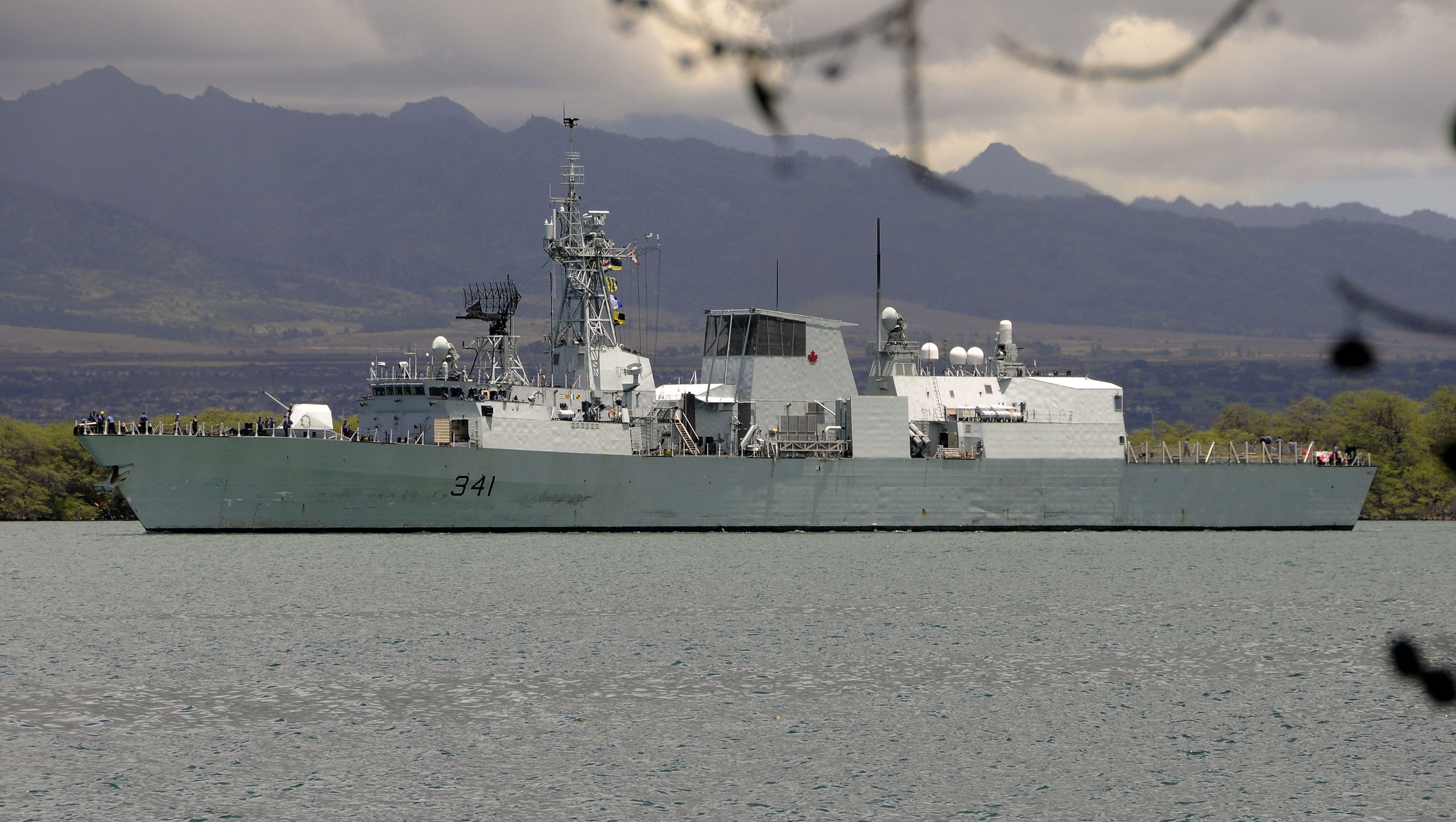
(image courtesy of Wikipedia)
As we came back towards Victoria we crossed paths with a Nauticat 33 with all three sails up and (I) immediately started racing. I certainly have a career in racing slower boats because we caught up and passed them in no time at all. It must be weird sailing one of those from high up on the stern. We tacked back and forth a couple of times still experiencing winds anywhere from 16 to 21 knots but the Nauticat tacked a lot less and plodded along quite steadily. For us, it was a lot of fun and a 25–30° heel doesn’t seem so bad if it’s not happening because of gusts.

(image courtesy of nauticat.com)
They eventually dropped their sails outside the breakwater while we tacked once more and sailed right up to the coast guard station. On the way in we spotted SpringTide which is the big whale watching cruiser that is normally tied up off our bow, so I knew we had an easy docking ahead of us with lots of extra room. We fired up the engine and pulled down the sails in the outer harbour and slowly motored back to our berth.
As we pulled into our spot the wind was pushing us off the dock which was a first for us in Victoria. I muffed it a bit so was glad for the extra room courtesy of the missing SpringTide. One of our dock mates was also on hand to grab a line but Leslie wisely demurred from handing him her midship line and tossed him the bow line instead. It never pays for us to vary our docking routine and while I am pretty sure this guy was way more salty than I will ever be, we’ve had a few bad experiences with dockside “help”.
It was a great day on the water followed by a couple of cold ones to close it off.
A Word on Dock Gravity
It seems we haven’t done as much sailing as I had intended when we got to Victoria. One of the reasons why is that a liveaboard boat in the marina quickly becomes unsailable without a lot of work. We have an electronic checklist that goes through all the major tasks to get her ready for the water, including untying all the things we have tied down and tying down a bunch of things we don’t. We put everything away and clear off all the tables etc. but inevitably, as soon as you start to heel, all hell breaks loose and all the drawers and cupboards you haven’t latched come flying open and things that you thought were stable suddenly gain momentum and bang and crash down below.
On our trip today this was pretty incremental. A few bounces in the 10 knots, a few bangs and crashes in the 18 knots and a couple of monumental clangs in the 21 (that was mostly the tea kettle breaking loose and, I think, a couple of cans from the forward locker). I suppose we will learn, but it never fails that something goes for a ride no matter how much we prepare.
Coming back in you have another good hour or so of battening and organizing to do to get back to liveaboard mode. Running rigging need to be secured against banging, extra dock lines and fenders put out for those stormy nights, enclosure needs to be all snugged down again, sailing gear stored out of the way, cushions piled and tucked out of the way and of course all the books need to come out from the nooks and crannies we had stuffed them in. After a great sail like that it does all seems worth while, but after a few days or weeks have passed you get more and more reluctant to go through it all just for a few hours of fun. I’ll have to be sure to come back and read this post again the next time I get wingey about wanting to go sailing…

—Captain Why #Posts
Preventers
In an old post I mentioned the importance of preventers. But given the nature of the Never for Ever‘s B&R rig and our cockpit enclosure, I have never managed to rig one the completely satisfied me. A preventer, in case you are wondering, is a method of preventing the boom from swinging accidentally and sometimes violently from one side of the boat to another. When sailing downwind your mainsail is generally out as far as possible and when gybing (moving the sail from one side to another as your stern moves through the wind ), one always centers the boom before turning the boat to ensure the boom is moved from one side to the other under control. But in the case of an accidental gybe, the boom can fly across the cockpit generating line-snapping forces and being a huge danger to anyone in its path.
There are all sorts of fancy boom brakes available but the simplest way to rig a preventer is by tying the boom into position. The issue on our Hunter 386 is that the only place to tie off a preventer that I have access to is midway down the boom and it isn’t easy to tie that off to anyplace except the chain plates (or worse a stanchion). The angles involved don’t give me much reassurance about the rig’s ability to handle any of the massive forces an accidental gybe can generate.
Well I decided the other day to shake off the old Google-fu and see what the internet had to say. And lo and behold Selden’s website pointed out the obvious solution. Their downloadable Hints and Advice Guide from the rigging section spelled it all out and also solved a minor mystery for me.

One of the lines that came with the boat (that I had previously used to try and rig a preventer with) was a length of about 8 feet of braided line with a eye splice in one end. I could never figure out why this line was a part of the boat’s inventory, but used it as a handy line when I needed a short length. Turns out it was used as part of the preventer but not in a way I had imagined.
The line was meant to be pre-tied to the outer end fitting of the boom and then temporarily attached spliced eye end to the kicker slider. This means you don’t have to worry about accessing the end of the boom when at sea (something that due to our bimini I gave up on almost immediately).

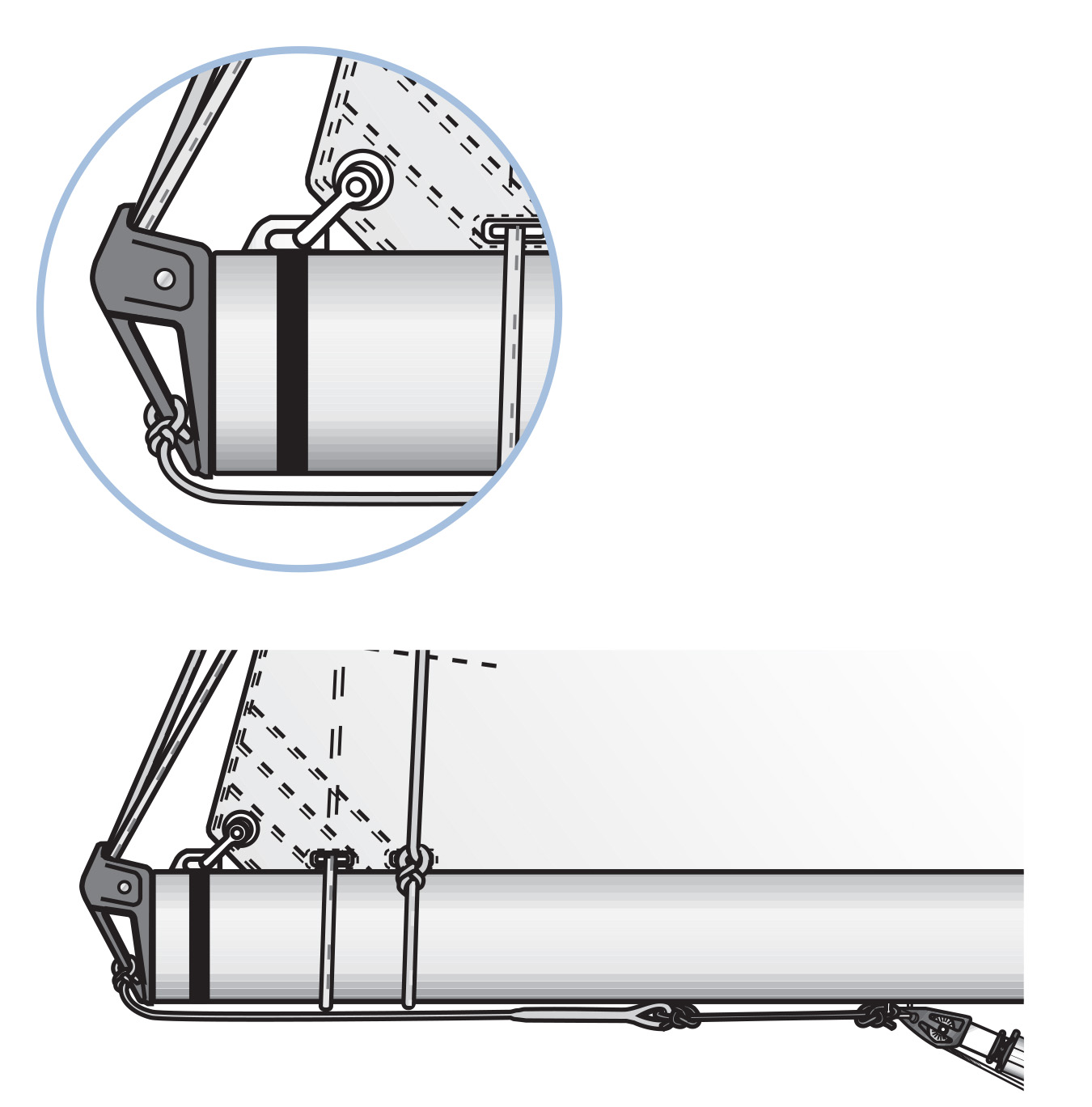
Then, when rigging the preventer, you tie off a “preventer guy” to the loop and lead it forward to the bow cleat (or a snatch block if I ever get a spare). If the line is long enough you can lead it back to the cockpit so you don’t have to go forward to release the setup.

The manual also stated “The preventer guy must not be fitted to the centre of the boom since that could cause damage, especially if the end of the boom goes into the water as a result of rolling” which is what I had been doing and had been wholly dissatisfied with. Turns out I am getting some good sailorly instincts after all…
—Captain Why #Equipment, #Posts
My Three Kinds of Cruising
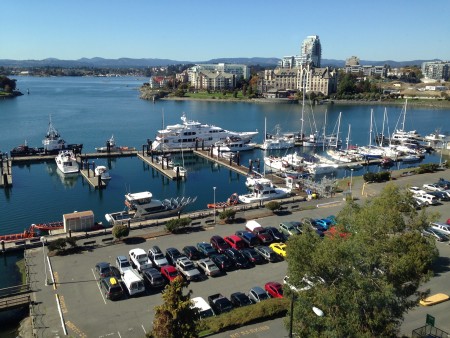
In my, albeit limited, experience, boating/cruising in the PNW has seemed so far to come in three distinct varieties. The first, the kind the beginner most often sees and the vast majority of our experience so far, is the short cruise. Hop on your boat (or charter), tour the Gulf Islands or visit Desolation Sound and then be tied up at home a week or two later. The second variety is the long trip. Stock up on provisions and head out for a few months or even the whole season and you’ll be back when you are back. And our newly discovered third boating experience is life at the dock. It’s cold, you have to work, or you just plain don’t want to be away, so you are tied up and enjoying all (most) of the conveniences of home. We have been lucky enough to experience all three of these varietals this year — one and a half weeks in the gulf islands in the spring, 2 months Vancouver to Victoria via the Broughtons in late summer and 2 months and counting tied up at the inner harbour in Victoria. So I thought I would do a bit of compare and contrast.
Planning
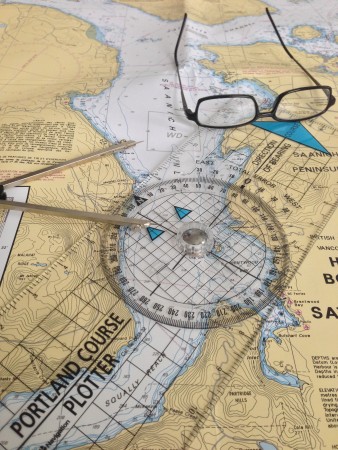
Short You’ve only got a week and you want to make the most of it. So you spend time online and with the cruising guides and either come up with a specific plan and loose itinerary or schedule the bejeezus out of each and every day before you ever get to the boat. If you are chartering, you even factor in departure and arrival times to maximize your dollar. You know where you need to be and how far from home you are, and despite inevitable changes, you are pretty much committed to sticking to a plan.
Long When taking off for the season, the planning is just as intense, if not more so, but the execution is a lot more fluid. Maybe you just have a direction and a list of wants. You need more charts and more cruising guides and anchorage books, because who the hell knows where you will end up this time. You might meet someone and decide on a bit of buddy boating and then there goes any preplan out the window. So plan hard and remember the old adage, “the most dangerous thing when cruising is a schedule.”
At the Dock Well, you need to do you research, do some cost analysis and look into the location of amenities like groceries, propane and the all-important liquor store, but after that it is just the little things that you may or may not care about. I will say a little effort put into researching slip location and prevailing winds isn’t a bad idea and taking a look at available coffee shops and libraries can make stormy days a lot more enjoyable. The biggest question for us was: could we get high speed internet at the dock?
Power
Short The boat has batteries right? And a way to charge them too? Then don’t worry about it. Most charterers don’t even get a lecture on battery conservation or power usage beyond “it isn’t advisable to use the microwave at anchor.” On a short trip you are invariably at the dock more often and motoring between locations every second day. And when you are on the dock you will pay up for power with very little thought. It’s a short trip, and power’s cheap. We rarely paid much attention to power beyond minimizing light usage.
Long This is the trip where a little learning is a dangerous thing. The things you hear: NEVER run you batteries below 50%! Your puny alternator can’t top up the batteries fast enough! Anchor lights are a huge draw! All lights are a huge draw! What do you mean you didn’t replace them all with LEDs? Turn down your fridge! Sure,the iPod speakers are crappy but they use less power than the boat stereo, Sheesh! No you can’t recharge you laptop today! Did you check the specific gravity of you batteries yet? Sure it’s a diesel heater, but the fans consume power…are you sure you are cold?

The advice you get in respect to your power usage is plentiful and often terrifying. And if all you have is a volt meter, trying to figure out the state of your batteries to avoid the ever-looming 50% level is impossible yet all-consuming. Don’t let the batteries dip below 12.2v. But don’t trust the meter reading if they batteries haven’t rested for x hours with no load. You just kind of get caught up in trying to balance the flaky math and visual input and are never sure of just where your batteries are until you’ve been at dock and plugged for a full 24 hrs. Personally, our battery monitor was the best couple of hundred bucks we ever spent. Unfortunately we did it near the end of the trip.
On a long trip you need to conserve cash and an anchorage is your best friend. Power is expensive in some of the out-of-the-way marinas (up to $20 for 30amp service), so even if you do tie up to reprovision or top up the water, chances are you might forgo the expense. Day to day you don’t go more than a couple of hours without thinking about power consumption, generating more power and which light is on and for how long. It can be stressful, especially if some of the crew aren’t on the same page. You also might find yourself buying very expensive LED bulbs or pricing out generators in faraway places to try and relive the strain of constant worry.

At the Dock How long is your power cord? And how much amperage do the two heaters use, because we hate tripping the damn breaker. That was pretty much it. We still maintain some discipline when it comes to how many lights are on at once, but the fridge and freezer are cranked up to high and the stereo is on whenever we are aboard. And after a couple of weeks of this you even start using the microwave. But then again, we still turn the breakers for the lights off every morning…
Water
Short You start the trip with a full tank. You will likely top it off once during the trip. You fill it up when you dock the boat at the end of the trip. Thats’s pretty much that. Chances are you will pay for showers at the marinas and swim a time or two. It’s likely you will pack along some bottled water to drink, but we’ve never actually managed to drink it all on a short trip. And with all the motoring and staying on docks, hot water is rarely an issue. Just be sure to shower before you go to bed rather than in the morning while the water is still hot.
Sunny afternoons at the dock are a perfect time to scrub the boat and cool down and the dodger is always clear of salt spray and bird droppings. Sure the occasional marina might try and restrict your water usage, but what the hell, there’s another one just 10 nm down the channel.
Long Water usage is another one of those constant worry points. Not as complicated or arcane as power, but still fraught with its own idiosyncrasies. To start with, a long trip often includes visits to places and islands that other have no supply available for visitors or, if it does, it’s potability is usually suspect. So right off the bat, you have to start thinking about water vs. drinking water. And once you’ve “contaminated” your water tanks, you pretty much have to empty them again before trying to go back to using them for a drinking supply — which seems like a horrible waste since you’ve been doing everything you can to conserve water.
Because you probably will have to conserve, especially in the drought-prone islands of the PNW. You find yourself filling up old 2 litre pop bottles and milk jugs “just in case.” And don’t even think about washing the boat. Just don’t. Dishes once a day, baby wipes not washcloths, and maybe I will just skip the shower since the $5 the marina wants just isn’t worth it.
One of the first things we bought was a solar shower. Then we bought another. Our head has a shower stall with an opening hatch right above so the solar showers were great for nights two and three… at least until it got to cloudy. The baby wipes turned out to be the preferred alternative to the not-quite-freezing, barely-warmed output of a solar shower on a cold day in the PNW. And due to the power costs mentioned above, we often didn’t have hot water even at dock. I actually took to washing up right after we got underway. The motor would have run a little bit even if we mostly sailed, and then it would reheat whatever I used to be saved for others or dishes.

Marina showers cost money and again, the further off the beaten path you go, the more they cost. Still a hot shower and shaving with hot water are treats to be enjoyed despite the cost.
At the Dock Once again, a lot of our conservation habits stayed with us at dock but are generally much more relaxed. We still don’t fill the sink to wash dishes and showers are still a two stage process to conserve water. But we fill the tank about once a week from the dock and don’t think much about it. I still have back-up bottles of water stashed away in case it freezes and the dock water is cut off unexpectedly but it’s more of an emergency back-up.
Hot water is plentiful and we’ve taken to actually showering on board more often than we did when cruising. Showers at the marina are $1/3 minutes so they aren’t much more luxuriating than being on board. And walking up the dock before you are entirely awake is ok I guess, but why not just stay in your PJs and lounge around the boat with a coffee. That’s not to say I don’t load up with loonies once in a while and indulge, but that just makes it a special treat—who needs a spa anyway?
Provisions
Short Short trips are often a provisioning nightmare, especially if you don’t own the boat or your trips are too separated in time to keep much aboard. For us, being without a vehicle, the location of a grocery store and access to liquor was always part of deciding where we would charter from. Nanaimo Yacht Charters was pretty distant from any convenient grocery stores, but they had a loaner car free to use. Granville Island had a great market within a stone’s throw, but it was a longer slog to make it to a store for buying staples. And without a car, groceries (and booze) can get pretty heavy, which often necessitates either a cab or several trips.
And then there’s meal planning, the available sizes of products and the waste at the end of the trip. It’s hard to justify a 5 lb sack of flour or a 500ml bottle of syrup but what’s cruising without pancakes? And a short trip means you should try and account for every night aboard, even though you don’t know how often you will eat out. You plan for the best and keep your fingers crossed. And keep in mind a short trip doesn’t always involve a lot of urban stops, so resupply sometimes won’t be as easy as you think if you’ve forgotten something.
We liked to make sure we brought things like spices and dried goods like pasta or rice from home, even peanut butter (in a small container) was a good thing to pack if we had room since it was unlikely we would use enough to warrant buying any. I’ve taken to premixing my dry ingredients for pancakes so all I need is eggs and milk. But resign yourself to tossing food at the end of the trip. It’s especially sad when you didn’t get around to eating those salmon steaks or pork chops, but even tossing half a pound of sugar or a three-quarters full box of granola seems like such a waste.
Long I think provisioning things for a long trip is actually the easiest of the three. If you make sure that the beginning of the trip has several stops near grocery stores, you buy provisions in smaller increments and, since time is on your side, making a run to the market every day—even if you have to get there by dinghy—is more of an adventure than a problem.
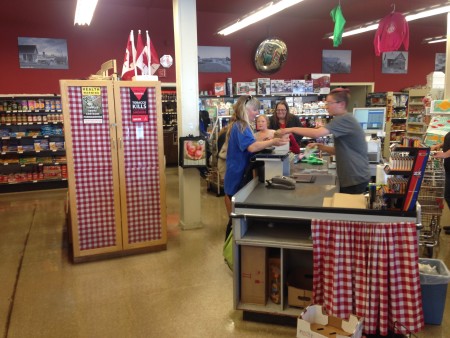
And since you are stocking up for the long haul, what you buy is determined more by storage than anything else; so go for the jumbo bags of flour and rice and don’t worry about it. We did have to balance meat and bread against freezer space and power consumption. The freezer never really kept things completely frozen when we had the power dialled down. If possible we would buy meat when we were at the dock and crank the freezer up to freeze things and then they would stay frozen longer after we dialled it down again.
I think the biggest issue for me was bread. I like bread and I like it fresh (i.e. not Wonderbread or it’s ilk). At home I always keep bakery bread frozen and defrost as I use it but aboard a boat this methodology doesn’t work all that well. We therefore usually buy the preservative-laden “wonder” breads that I grew up with or heavier breads like raisin bread and eat a lot of toast after things start going stale. But that doesn’t help with BBQ staples like hotdogs or hamburgers and I think we ended up eating a lot less of those sorts of things. I did eventually learn to make a fairly easy no-knead bread, which helped me get my fix of fresh bread.
Still, the long trip was easiest to handle provision wise as you tailored your expectations and forwent fresh produce when it wasn’t available and pigged out when it was. We had whales after all, so who needs fresh spinach? And I lost 10 pounds so that was a bonus.
At the Dock The problem of living on the dock is the temptation of all the local restaurants and the expectation that you can eat like you always have ashore. But as spacious as our boat is, it still doesn’t have the pantry or refrigerator of our condo. And the budget really doesn’t stretch to eating out every night…at least after the first few weeks have gone by.
One of the downsides of our Victoria winter location is the three major grocery stores are all approximately 1.5 km away. And since we have no car it makes buying a lot of supplies a challenge. So we bought a small two-wheeled cart at try and to shop several times a week; but bags of flour, cases of beer and jugs of juice all weigh enough to start to make it a bit of a grind. We are constantly balancing what our eyes and taste-buds want, with what we can manage to cart back to the boat on any given trip. Overall it’s not much different from short or long trips but after a while the frustration kicks in and it seems a bigger deal than it actually is. But perception is everything…
Laundry
Laundry is the same chore on a boat as it is everywhere else. You just do it with a different attitude. In all three scenarios, the common factor is that you likely only have a quarter of your normal wardrobe and tend to conserve and reuse much more than you ever would at home. The big difference is in the perspectives.
Short Laundry? Just wash a pair of shorts in the sink, don’t wear socks and don’t worry about it.
Long Have I worn these socks two — or three — times? Hmmmm, maybe one more go…
At the Dock Laundry? Again? Sigh. Let’s go buy some more socks.

Garbage & Recycling
Short Simple. Find a place to stow it temporarily and then dump it all each time you get off. Most marinas offer at least a free bag of garbage along with moorage, so why sweat it.
Long Like water and power before them, garbage is the bane of the long trip. We try not to throw anything besides chicken bones overboard but occasionally the composting goes. Marinas in out of the way places can be reluctant to take any garbage they can’t burn so sorting becomes an issue. And stowing garbage for weeks starts to take up valuable space in cockpit lockers.
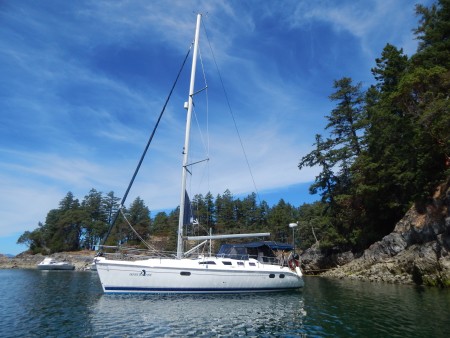
Even recyclables with deposits can be hard to get rid of once you are out in the Broughtons. Cans over bottle, boxed wine over glass—it’s easier to cope with if you make better choices before you leave the store.
At the Dock The marina has garbage cans, recycling bins and even a compost bin so managing it is pretty easy. The only predicament is do we wander around in search of a bottle recycler or just donate them to one of the many, many, local collectors that wander the wharfs. So far, donate, but that might changes as the purse strings tighten.
Gear in General
Short What you bring along on a short trip is usually based on what you can carry and what you will likely need giving the season or cruising grounds. Some warm clothes, hats, maybe one pair of hiking shoes, an inflatable pfd if that is your thing, a knife maybe, and a camera. I have also been known to lug along a small inverter just in case the charter boat doesn’t have one.
Long The long trip is a three-way balance between transport, storage, and stowage. How much can you carry to and from the boat? Is there room on the boat for it? And can you find a place for it that will survive 30 knot winds and a 30° heel?

We brought quite a few things along that we had plenty of room for — for example books — but soon discovered that they flung themselves around the boat cabin because we couldn’t find a place to secure them. And while I wanted to bring my entire tool kit, there was no way to actually get it to the boat, even though I had ample locker space to store it. And where do you keep all those expensive charts you bought which is both away but accessible—especially if you are using half a dozen different charts a day?
On a long trip, electronics was surprisingly high on the list of must-haves. Two cell phones, a camera, an iPad for secondary navigation, two ebook readers, a laptop, and external hard drives with movies and music seemed like pretty basic equipment. We also brought several headlamps, safety gear, comfortable pfd’s, several extra pairs of shoes, extra warm layers, the aforementioned books, cruising and nature guides, our recipe books, spare sheets, spare pillows, extra blankets, some nice clothes, and a host of other things that seemed necessary for an extended trip.
At the Dock We have tried to get out sailing even after reaching our winter home, so the addition of clutter has been minimized — but it creeps in. More books, another laptop (because we don’t share so well), more clothes and jackets, some new cookware, heaters and the day-to-day detritus like piles of paper, and casual purchases are among the few things that have appeared around the boat since we docked in October. We might add a dehumidifier as it gets wetter and more blankets if it gets colder.
We’ve lost two pillows to mildew so far—they were stored/pushed up against the cold hull for a few weeks without moving—so we have tried not to just shove things in the v-berth like a giant garage—which is the daily temptation—and with such a small space , the necessity of putting things away every day makes any accumulations of stuff pretty noticeable and easy to contain. But I recognize it’s early days yet…
Propane
Short Did you fill the tank(s) before you left? Don’t worry about it.
Long Are both your tanks still certified? No. Oops, well that is going to be a problem. The only thing harder these days than finding a place to refill your propane tank is finding a place to recertify your tank. Luckily local family members with a mini van were able to drive us from Nanaimo to Chemainus and Viper Fuels: the only place I could find on anywhere even close to our route who could do the work.
Refilling tanks these days is a huge pain. All the local gas stations have gone with the exchange system so they don’t have to get training for their staff. And that means the places that can do refills are usually not anywhere easily accessible. Luckily, in more remote areas like Port McNeill there are still some facilities near the docks where you can top up your tank. But in populous areas like the Gulf Islands or the Sunshine Coast? Forget about it.
We have two 10 lb tanks, one of which was used for the BBQ. But after the first tank ran dry and we were literally weeks before I could refill it, I started using the disposable 1 lb bottles on the BBQ and keep the second tank as a spare for the stove. It was that or stop baking, and I like baking.
At the Dock So far we haven’t had to fill up, but according to Google there is a place about two kilometres away that will do it. I guess we will load up the empty tank in our cart and wheel it there. One of out dock mates suggested if I could round up enough tanks that needed filling we could get a truck to come down, but I don’t think that kind of coordination is likely. And I stuck with the 1lb tanks on the BBQ so I am confident we won’t run out of propane at an inopportune moment.
Maintenance
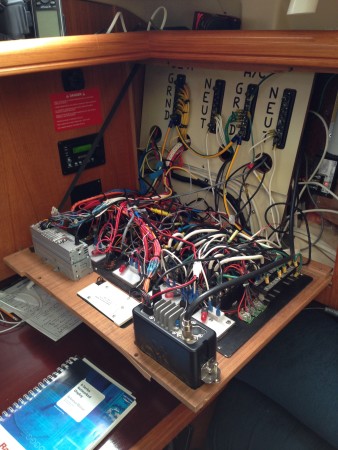

Short Check the oil. Every day. Keep half an eye out for worn or wearing bits and just enjoy.
Long Be prepared. If you are new at this like we are, be prepared to buy things. Stainless slit rings, bolts and screws, a rebuild kit for the head, glue and sealant, new light bulbs, some line, even a few tools. We tried to prepare ourselves as best we could, but there are always projects and time to do them. We definitely found it easier (and cheaper) to tackle multiple small things as we went then to pay for the big things once we were back.
And if you are away long enough in our wind-less summers be prepared to change the oil. Which means you need more tools, buckets and a place to safely dispose of the used oil.
At the Dock Maintenance is more of a intellectual problem than a physical on once you are on the dock. You have to budget time and money and prioritize. Since a lot of the thing you need to work on won’t affect you if you stay at the dock there is a tendency to put them off. Ever seen the skit on Sesame Street where <a href=”https://youtu.be/JBDlQJMkOlw” target=”_blank”>Ernie doesn’t want to fix the window?</a>
And if you add up the costs of all the projects you need/want to do, I guarantee you will find it exceeds your budget. So I find myself second guessing where I want my limited funds to go. I think this is the point where the reality of boat ownership really starts to hit home. The definition of a boat is often stated as “a hole in the water you pour money into.”
Downtime
Short On a short trip there generally isn’t much downtime. Or depending on your perspective, it’s all downtime. You flit from destination to destination and relaxing is as simple as the cold beer after the sail with the occasional brilliant sunset thrown in. Staying more than 2 days in one place is a waste of good cruising time so let’s cast off and do it again.
Long I think, in this regard, that long trips are basically a bunch of short trips strung together with downtime scheduled in between. We found most of our down days were spaced about 1 or two weeks apart when we would end up spending several days tied up in one spot, doing chores, cleaning up and generally enjoying ourselves.
Oh we did deliberately stay at a lovely anchorage for two or three days to soak in the atmosphere but oddly enough it was the multiple days at the dock that that were the most pressure-free. Some of it had to do with monitoring batteries and water and some of it had to do with the imperative to make the most of the opportunity. I think we will have to take even longer trips (4 months+) to truly be able to get relaxed just hanging on the hook.

At the Dock Unfortunately, being on the dock is way too similar to being at home. And being workaholics, we tend to want to move right back to 10–12 hr days, 7 days a week. But the benefit of the boat is that with shorter daylight hours it’s easier to make a point of turning off the work and enjoying a game or some tv on the laptop after dinner. So in reality we work closer to standard business hours and try and reserve the weekends for non-work activities. So far, it’s working out pretty good. But I would still rather be cruising.
Special Considerations: Heat and Condensation,
Short Short trips are generally in the summer, at least for us, and keeping cool is more of a consideration that keeping warm. But most boats in the PNW have heaters to take the edge off in the morning if you really need it.
Long We ran the heater about once a week for an hour or two on especially cold mornings. You tend to try and endure the cool temperatures to avoid firing up the noisy heaters when you are anchored in those lovely still coves. But some mornings are just too damp and cold. And since you are on the move, you get plenty of ventilation and air movement and moisture in the cabin is pretty much a non-issue.
At the Dock We are currently using two electric heaters and plan to start supplementing that with the built in diesel heater when the temps start to dip below freezing. The electric heaters are fine except both of them running at full blast (1500 watts) will soon overload our 30 amp service and pop a breaker at 3 o’clock in the morning leaving you with a cold, cold boat.
And you need to keep dorades and hatches open to allow fresh air in to keep the humidity down. As I mentioned we’ve already sacrificed two pillows to mildew. Actually, since I started composing this post a couple of days ago, the total count is now up to three. Spare pillows just seem especially susceptible. So far it hasn’t been to much of a struggle and we have yet to give up the onboard showers, but special care and consideration needs to be taken. We also have started lifting the mattresses occasionally and letting air flow into little used spaces like lockers.
In Conclusion
I am sure that there are tons of things I have missed and plenty of experiences I have yet to encounter, but it’s been interesting to try and enumerate then differences we encountered in the types of boating we have done in 2015. I think, as in most things in life, boating is most enjoyable when expectations match the most probable outcomes. We probably have one more big cruise in store next spring before we are back to real life and having to make do with shorter trips, but after re-reading this post, I guess that doesn’t seem to bad, does it…
And there’s always the chance we might get to sail!

—Captain Why #Posts
Wildlife Bonanza
As we begin to move south after our extended visit to the Broughtons, it seems appropriate to do a round-up of the wildlife we’ve seen. It truly is extraordinary.

• raccoons
• black bears
• bald eagles (mature and juvenile)
• ravens, crows, and jays
• Canada geese
• cormorants
• loons
• osprey
• kingfishers
• herons
• auklets
• various other birds, particularly gulls and ducks
• orcas
• humpback whales
• Dall’s porpoises
• harbour porpoises
• Pacific white-sided dolphins
• sea lions
• seals

Still waiting…
• otter (B and Z saw four! but I haven’t see one yet)
• wolf
• cougar
• grizzly bear
… and all the other sea life that complements the basic setting of trees and rocks, such as clams, oysters, cockles, mussels, barnacles, starfish, jelly fish, and fish.

If this round-up looks like a tick list, I suppose it is. Or maybe a wish list. This trip has underlined how much I value the opportunity to view animals in their natural habitat. Some of our encounters on this trip have been mind-altering.
If you have the chance to visit the Broughtons, go: it’s a fantastic trip. Prepare to be changed!
—Herr Doktor #Posts
21 Knots and … Well …
Sailing a new boat is always stressful. Sailing a new boat in 20+ knots is… well… stressful. And we’ve managed to do it twice so far. Up to now, our sojourn into boat ownership was seemingly fated to resemble that of a skinny powerboat with a big stick sticking out of its middle — there had been that little wind — and we hadn’t really given a lot of practical thought to sailing our new toy.
Now for those ’not’ in the know, a knot “is a unit of speed equal to one nautical mile (1.852 km) per hour, approximately 1.151 mph.” You judge your preparations for, and the safeness of, boating on any given day on the speed of the winds.
Marine Wind and Weather Warnings
Weather advisories are based on the following five categories. Only the first two are considered safe for boating.
Light Winds: Light winds are defined as winds with a wind speed less than 12 knots.
Moderate Winds: Moderate winds are defined as winds with a wind speed of 12 to 19 knots.
Strong Winds & Small Craft Warnings: Strong winds are defined as winds with sustained wind speeds in the range of 20 to 33 knots.
Gale Warning: Gale winds are defined as winds with a continuous speed of 34 to 47 knots.
Storm Warning: Storm winds are defined as winds with a continuous speed of 48 to 53 knots.
Our Sailboat
Although the Never for Ever seems quite small in comparison to the ships we regularly share the seaways with, she comes in at 38’9″, or a little under 12 metres, and is not considered a ‘small’ craft — that would be more of an open aluminum fishing boat or a kayak. Our Hunter, while not properly equipped now, is perfectly capable of crossing oceans. This means that the small craft warnings don’t particularly apply to us. Having said that, 30 knots would be quite a ride, but 20–25 is merely exhilarating. Or at least that’s the theory.
There is an inclinometer mounted on my binnacle. It lets me know the amount of heel (the angle the boat is tilted over at) in degrees. It’s a fairly useless measurement. I think some thing like Mild, Worrisome, Scary, Terrifying, and Insane might be a better scale.
It is also important to note that heeling is generally only a problem when sailing close hauled. This is the point of sail going as directly into the wind as possible. And since it’s axiomatic that in the Pacific Northwest you are always going into the wind, it seems to be a fairly common point of sail.
20 Knots: Need a Reef
So a sloop, which is the sail configuration most of us have, consisting of a foresail and a main sail, can easily become overpowered in strong winds due to the large surface area of the sails. So most (all?) of them have a way of reducing the square footage of sail; this process is known as reefing.( As a side note, the reef knot we all know and love is used to tie in the reefs, hence its name.) Reefing a traditional main sail is accomplished by lowering it about three feet and tying down the excess sail at the bottom. If you wish to put in a second reef, you lower the main sail another three feet. The overall effect is to make the size of the triangular sail much smaller, thus reducing the power it generates and the amount of heel it causes. A boat can only go so fast, according to the math, so extra power just makes for a more uncomfortable sail without any speed gains. The two reef points are generally predetermined, with handy grommets to facilitate the process of tying the sail down. Most modern boats have fancy reefing systems using lines that lead to the cockpit so you don’t even have to go out on deck.
This has been the only system we have ever used. In other boats we have, on average, put in the first reef around 15 knots of wind and the second around 19 or 20. Having said that, we have only sailed in 20-plus–knot winds once before.
Alas, the Never for Ever has a roller-furling main, something I have limited experience with and have never reefed. A roller-furling main has a hollow mast and the main sail rolls in and out like a projector screen. In theory (and generally in practice) this is much easier to handle. But I would suggest the first time you try to figure out how to reef, you don’t start with 20 knots of wind. It adds a bit too much spice.
One of the issues is that there are no set reef points. You roll the sail out to a point that is comfortable and engage a ratchet to prevent it from coming out any further. The ratchet, however, is on the mast and comfortable is hard to judge if you are heading straight into the wind with the sails flapping and waves bouncing and you have never done it before.

Eventually I figured out we would have to let the sail out all the way and then bring it back in. I also arbitrarily chose to bring it in about four feet from the end of the mast. At some point I am going to have to break out the Pythagorean math and figure out equivalents.
So we sailed in a diminishing 20-knot wind that eventually settled at 15–16 knots and then dropped to 10. At that point we hove to and let the rest of the sail out and had a nice calm sail. At first the inclinometer should have read Scary–Terrifying, but I wasn’t pointing too high, so that took a lot of pressure off the sails and reduced the heel. We eventually all calmed down and enjoyed the sail. I never actually looked at the inclinometer. It was a bit of a baptism by fire, but we persevered and eventually had fun.
If There Are Two Boats Then It’s a Race

Never for Ever under motor
Two days later in Smuggler Cove, we finally hooked up with R Shack Island, who were to be our traveling companions for the next month or so. When we cast off to head up Malaspina Strait it was dead calm and we motored for a few hours. But as we rounded a small point on Texada the winds came up, and with 11 or 12 knots showing, we decided to sail. Since the winds were racing straight down the Strait, we would be beating to windward: zig-zagging back and forth, trying to point upwind as much as possible to make actual distance.

Never for Ever just starting to heel
About three minutes after we got the sails out, the winds built even more and started to exceed 20 knots; the boat leaned over like a competitive professional yogi doing downward dog. This, needless to say, put us quickly at Insane on the virtual inclinometer, and we immediately hove to. We talked over the reefing procedure first this time and then brought the boat around directly into the wind. Or tried to. The wind kept catching us and swinging us around again every time we tried to take pressure off the sails. We spun in a small circle three or four times before I finally got the sail reefed — about five feet in from the end of the mast this time. It was a bit of entertainment for any other sailors who were watching.

The race is on
By this time the Shack had blown past us and had a hefty head start. So I pointed high. And the wind pushed us over. At one point we had over 30° of heel, which is Terrifying to Insane. The rail, which is the edge of the topside, was slightly under water and we were screaming along. I started to catch the Shack slowly and was pointed a few degrees higher. We might just catch them. Of course this we at the expense of the cleanliness of my shorts and the brewing mutiny of both Leslie and Artemis. The poor cat was very discomforted by the sideways boat. So I eased off a bit, slowed my heart rate to something only excessive and continued in a long, slow chase of our mates.
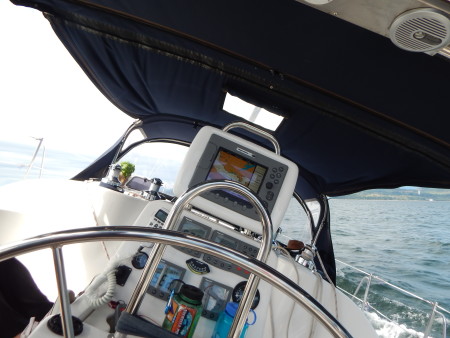
The first tack was a disaster in sailing terms, although I’m not ashamed of it. We lost all way and had to really crank the jib back in, but we got the boat turned and back on course without an incident and just a loss of distance to the Shack. After that, it was matter of finding a good point and getting used to it.
We were still overpowered on the port tack for most of the afternoon. I could probably have taken a couple of feet of sail back in to increase the reef. But the starboard tack was more comfortable and I really didn’t want to stop again.
There was also a Hunter 35 ahead of us and we slowly reeled him in, in a what was now a three-way race. Leslie and I got more and more comfortable and I started to point higher and higher trying to catch the Shack by shortening the distance of my tacks. I never did pass him, but we were almost alongside at one point.
We sailed at a 20–25° heel most of the afternoon (Scary–Terrified), occasionally exceeding 30°. Leslie learned to perch on the side of the cockpit combing like it was a seat and ride comfortably with her bum 12 feet (basically the width of our boat) in the air.

This is us taken from R Shack Island
It was mind-lockingly terrifying and exhilarating and eventually we made peace with it. Not the easiest way to start our sailing experience in the new boat, but we are unlikely to ever be that scared again. Until we hit 30 knots, I guess.
Stowage Leasons Learneds
Stowing gear for sailing involves putting things where they can’t fall and making sure things won’t slide over the fiddles (the lips on the edge of counters etc.). On our first sail we learned through a series of crashes and bangs that stowing for 20 knots is not the same as stowing for 12 knots. On our second big day we learned by way of even bigger crashes and bangs that stowing for 20 knots on a steady port take is not the same stowing for a long day of beating in 20-plus knots.
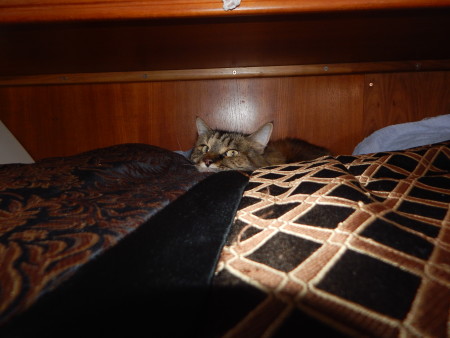
I think by the third trip down after a big crash everything — and I really mean everything — was on the floor, in the sink or, in the case of the poor cat, wedged between something like the pillows and our headboard.
The cockpit wasn’t much better. Cushions, charts, cameras, water bottles and binoculars were strewn across the floor of the cockpit. But eventually everything was wedged or shoved in a corner and the crashing ceased. That probably went a long way to reducing our heart rates right there.

—Captain Why #Posts
Housekeeping Notes
You may or may not know that I am mantaining two blogs. I have decided to try and keep neverforever.ca as a more boat-specific journal and leave the regular trip reports to macblaze.ca
Hopefully that will keep the noise down and not annoy anyone less interested in what I had for dinner or the number of compliments our cat got.
My first report 20 Knots and All’s Well has been posted so if you interested in a report in our first big sail have a visit over there. I hope to post weekly ( or at least regular) links here.
As for us, we’ve met up with R Shack Island and are starting our trek north to the Broughtons. The current plan is roughly Powell River (Westview), the Yucaltas and then try and stay inside until Johnstone Strait calms down.

—Captain Why #Posts
20 Knots and All’s Well
Note: I am currently maintaining two blogs and have decided to keep day-to-day trip report stuff here on my personal blog. I’ll reserve things on Neverforever.ca for more specific “boating topics”
After sitting in Nanaimo for half a week, we felt it was time to move on. R Shack Island was unfortunately delayed and had agreed to meet up with us later. So we set our sights on Secret Cove across the Strait and cast off. The winds were up (15-20 knots) and I wanted to try actually sailing our new boat.
Now here is the thing about us, learning to sail, and new boats. Every single time we have raised the sails in a new boat, it has been stressful, terrifying and generally a total laugh-a-minute circus. And this time was no different. Even though there was good wind, I decided to motor out past Snake Island; that way we would have plenty of sea room for any (inevitable) shenanigans. The seas were quite rough with spray coming over the bow as we were banging straight into them, but the boat handled them fine. So far so good.
Eventually we were far enough out we could attempt to raise the sails without fear of having to head toward anything solid while we figured it all out. Given the winds were peaking at 21 knots, I wanted to start with a reef in. But I’d never actually reefed a furling main, so it was all theory at this point. Our Selden rig has a continuous furling line and on the mast there’s a switch that allows you to switch it from free-running to ratchet. The theory being that when in ratchet mode you can loosen the outhaul and furl in the mainsail without the wind grabbing it coming unfurled again. That’s the theory.
What I failed to think through was this means you have to let the sail out all the way and then ratchet it back in. Starting with the furling line in ratchet mode just means you can’t pull the sail out; a fact that occurred to me after 5 minutes of tugging on the outhaul, looking up jammed mainsail in the manual and scratching my head. You see, my theory had been to pull the sail out only half way from the safety of the cockpit, so I had gone out on deck and engaged the ratchet first.
Eventually I figured it out and switched from head scratching to head smacking. So we let out all the main, engaged the ratchet and then furled it back in about a meter. I had no idea how much reef that was, but in a traditional mainsail I figure we would have at least one reef in and be contemplating a second. This looked roughly like one reef. I hoped. Then we headed off the wind and started sailing north close hauled, but left the motor running just in case. As soon as we started to turn, I unfurled the jib and away we went.

Of course the winds being so strong, we immediately started to heel. Leslie had the helm and was doing a good job, but as things started crashing down below — we never do manage to secure stuff well the first time — and the boat started hitting 20° and we were still looking for the damn tell-tales to try to trim the sails and the various wind instruments were not in agreement and the spray was crashing over the bow and… well, suffice to say the stress levels went up and the confidence levels went down as per usual on our first big sail.
Afterwards there was some discussion about the merits of having your first big sail in 20 knot winds. I mean, after all, it wasn’t likely to get worse and we worked out all the flaws in the system pretty quickly, if only because of sheer panic. That meant the rest of the trip should be relatively benign. Others might say a gradually rising curve of difficulty might be a better scenario, but we’d done that in the Shearwater the first time we sailed in the 20-knot range and all it had done was fill us with false confidence until we were literally doused with cold water. As it turned out, the boat handled the winds just fine as we spent the next 15 minutes trimming and tweaking and getting used to the heel. It’s always a bit terrifying the first time you heel the boat over so far you are literally climbing to get to the high side of the cockpit, but after a few (10 or 15?) minutes you get used to it and gain your confidence that the boat isn’t about to roll over like a breaching whale.
So, poise regained, we sailed in steady winds for an hour or so until they gradually started to drop. Eventually they settled down to around 10 or 12 knots and we were feeling very salty and sailorly cruising along. That’s why we then decided to heave to, shake the reef and let out the rest of the main before heading on our merry way. For the rest of the afternoon the winds continued to drop until they were bouncing around 6 knots on our beam just off the Merry Island lighthouse. I have no idea how fast our boat will actually go in the heavy winds because, frankly, we never did get them trimmed right. We had been doing a steady 5.5 to 6 knots most of the trip, but in the light winds we managed a respectable 3.7 to 4 knots on a broad reach. Eventually, as we got inside Thormanby Island, the winds shifted direction and I hauled in the jib and fired up the engine. We motor sailed through Welcome Passage, cruising along at 6.5 knots while only running at 1800 rpm.
Smuggler’s Cove
The tide was about 3 hours short of high, and after discussing it, we decided to try Smuggler Cove. Smuggler Cove is a marine park just a bit SE of Secret Cove. We had been in there for a look-see once before at low tide but had never stopped. The entrance to Smuggler Cove is a narrow, rock-filled channel with all the rocks showing at low tide and very few of them visible at high. They are all well charted and between your paper charts, your chart plotter and a Mark I eyeball, it’s a pretty safe and easy passage. The challenge comes when, once you are inside, the dozens of boats that are all stern-tied at various angles seem to combine with all the rocks on the charts to make a giant slalom course. We were perfectly prepared to abandon our plan if it was too crowded or seemed too risky.

Luckily, the cove was only moderately populated and a big cliff face with lots of depth and several red-painted metal rings for stern ties was readily available with lots of room on either side to give us a margin for error. Which, it turned out we needed. Learning seems to be like that.
Once again, the “first time in a new boat” syndrome bit us on the ass. We got the anchor down easily enough and our stern pointed at the ring, so I grabbed the 200’ stern line and jumped in the dinghy. I didn’t neatly uncoil the line (unless you’ve rock climbed for years, you can’t imagine how unforgivable a sin this is), I didn’t discuss a plan with Leslie, and I didn’t, in any way, even bother to check for currents. There was one. Right on our beam. That swung the boat 90°. Sigh.
Eventually I got the dinghy ashore and the rope untangled and took a wrap around the metal ring to try to haul the stern back. That was pretty much a lost cause. This left me (with my limited imagination) with little recourse but to begin shouting instructions to Leslie to try to get her to maneuver the boat back to where it had started from. A thus we have set our scene for a very Shakespearean comedy of errors.
There were miscommunications, slapstick hijinks, well-intentioned — but ill-informed — do-gooding, misdirected wrath, intentional malfeasance (on the part of the dastardly current), heroes, heroines and villain (again the current) and even a bear. Well, there was no actual bear, but our hero did growl a bit, especially after falling in the water while exiting the dinghy onto the rocks for the third time.
But, as in all good comedies, it all turned out and eventually we were secure and steady and ready for a bear… I mean a beer. The opening night review read that there was a strong cast and great story, but the actual plot was a bit lacking and it could have used a song or two. In retrospect (don’t you love retrospect?) my big mistake was not discussing the various possible outcomes with Leslie before I exited the boat and then just leaving her in charge of execution. The reviewer noted that attempting to captain a boat from shore is at best an exercise in futility and more generally an act of egoistic stupidity. Our heroine was perfectly capable of dealing with the issue on her own, but it was never made clear it was her issue to deal with, so she just kept trying to interpret the hapless hero’s less-than-coherent shore-based instruction. But at least we amused, amazed and terrified our neighbours, so at least that was something. They definitely got their money’s worth. Thank god there’s still time for some rewrites.
The Three Rs
As the tide rose, a few more boats showed up, and although none of them got caught out as badly as we did, a few did have their share of troubles, and we learned a quite a bit by watching how they chose to resolve their issues. Soon the tie-up rings on shore disappeared beneath the water. The full moon and time of year combined to give us some of the highest tides of the year, rising to 16′ from a low of 2.5′. A few of the later boats had to run their lines through rings a foot or more below the surface.

When we toured the cove by dinghy at low tide the next day, I noted that there were an awful lot of traps for the unwary at Smuggler Cove if one came barreling in here at high tide. It was good to see the lay of the land before we ever attempt to penetrate deeper into the cove. The back cove especially has a treacherous curved entry with a shoal that runs out from the red marker that would be most dangerous with the tide at its mid point.
Despite the long weekend, Smuggler Cove emptied out during the morning and soon there were only four boats left to enjoy the whole front cove, with three or four more tucked away in the back section. It is a beautiful spot to stay and relax, but I imagine most people just treat it as a stop-off spot on their way to and from Desolation Sound. That’s kind of a pity. Next time we intend to stay more than overnight we will brave the much quieter back cove and avoid all the morning and evening traffic.
The other thing of note — and I have no idea why this is — is that it seems this is a cove that inspires outboard use. And by that I mean of the 15 or 20 tenders and dinghies we saw exploring the cove, only one other boat besides us rowed. Everyone else explored the tiny cove using their outboards. Very odd for such a small quiet place. And even though there were quite a few kayaks, I saw more than one kayaker exit back onto the mother ship and then hop aboard the tender, fire up the 15-horse outboard and putt away to explore some more. Very odd indeed.

As for us, well, we rowed, read and relaxed. These are now, hopefully, the three Rs of our boating adventure. At least for the next few months.
Oh, and I finally got the graphics on the bow of the dinghy. Laughing Baby has officially been christened.

The First Week or Seven Days and We’re in Nanaimo
It’s been a hectic 7 days for us n00bs. We have moved from our 1900-sq-ft condo in Edmonton onto a 38′ sailboat, transported our poor cat 1200 miles to a new, danger-fraught lifestyle, and had to learn/develop a new routine for just about everything. On the other head we’ve experienced fireworks, seals, lovely rainstorms, and quiet walks along the beach.
A Start
All along our plan was to move aboard and head as soon as feasible to Nanaimo. There is good anchorage there (which means free) along with options for a marina ($1.40/foot or $53.25/night), mooring buoys ($12/night) and even the docks at Newcastle Island ($2/metre or $23 a night). Nanaimo also hosts The Harbour Chandler, a Thriftys, London Drugs, and a BC Liquor store all within a short walking distance of the dinghy dock. Oh and it also has the famous Dinghy Dock pub on Protection Island, accessible only by boat. All this made it the perfect place for us to settle in and provision before we sailed off for parts north.
But still back at Granville Island, we headed up to W 4th Ave and a visit to the No Frills for basic supplies. We had decided to leave the major provisioning until Nanaimo and since we had raided the condo’s kitchen for everything we could think of (except the balsamic vinegar — there were two bottle in the cupboard and I forgot both –sigh!) we didn’t need too much except a couple of days’ meals and some basics.
The walk to the No Frills goes right past the West Marine so we stopped in and browsed our wish list. There were a couple of Mustang PFDs for about $40 so we bought two. This brought our total up to four plus two inflatables. The boat came with six of those cheap, tie around your neck types, but we decided to leave those in the truck. Other than that, everything else looked like it could wait.
Speaking of the truck, I had arranged to keep it at a friend’s house in Surrey until October. Our berth in Victoria would be available October 1, so we were planning on parking the boat for a week or two, and returning home to YEG to finish off closing up the house. So after we had loaded anything extraneous we could think of (extra pillows, used cutlery, pfds, containers etc.), I left Leslie to catsit and drove out to South Surrey. And despite the dubious help of my iPhone’s gps I didn’t manage to get lost. I did arrive a bit early so I checked out the local Canadian Tire for some Velcro wall hangers and a few more small containers. Then Dave gave me a ride back to Granville and we went back to moving in and stowing stuff.

Stowage & Supplies
Putting things away is harder than it seems. First off you need cooperation and consensus. And if you manage to get past that hurdle you also need to remember what you’ve got and where you put it, and then train everyone to put it away in the same space. Living small seems to take a lot of cooperation. We will get it eventually. I hope. Maybe.
I do think an running grocery inventory is going to be necessary. You can’t always see what you’ve got and asking Leslie every five minutes “Did we buy X?” seem to be annoying her; and I can’t afford that until at least week two (or when we are far enough away she can’t abandon ship). And she used to really like lists so…
Another thing we are learning is the importance of usage rates and container sizes. For example, we bought two frozen limades and then ended up going back twice more to get extras. With the heat, we seem to be consuming a lot more of certain things and under- (or over-) estimating what we will use. We have enough pasta to eat until the next century but have run out of granola bars already.
And I figure it will all change as the geography and climates change. Less of a learning curve than a learning cliff. BUt that’s why we are hanging out in Nanaimo to settle in.
More Bills
The amount of money we have spent in this first week is phenomenal. It just goes to show how bad I am at budgeting. I think I set week one’s budget as double a regular week. Well, we are into about 5 times that now. Some of it was unexpected stuff from Specialty Yacht Sales and the work they did on the boat. And of course the dreaded moorage charges. But a lot of it was just underestimating the number of things we would want to add to our cruising inventory.
We’ve picked up things like extra containers, microfiber towels, a solar shower, a few bits of clothing, a popcorn popper, et cetera, et cetera. Very little of it has been extravagant — I’m saving those things for later when Leslie isn’t following me around — and some have already proven their worth (like the solar shower: awesome on Day 3 when the hot water is a distant memory).
But a warning to any readers who are newly provisioning: Week One’s a killer.
Granville Island & Fireworks
We spent the first couple of days at the docks on Granville Island.
Friday A.M. Steve from Jensen Signs showed up to apply the new name. Despite the rain, he got the new graphics applied to the bows and the stern. Later that evening Leslie, Artemis and I gathered on the bow with a bottle of champagne to thank the sea gods for Rainbow Hunter’s good service and to ask them to look over the newly christened Never for Ever. Then we poured them their share and drank the rest. Artemis turned her nose up at her share but that was all right. More for me.


Saturday night there were fireworks in English Bay and we watched them from the cockpit. The bridge obscured a lot of the show, but it was enjoyable and comfortable. We also had a lot of rain over those couple of days and used the enclosure a lot. It doesn’t keep the space really dry — there is leakage where the canvas covers the arch — but it is pretty comfortable and we can set out buckets or something to keep the water contained. Still, if I had $10,000 lying around, I might want to re-design the enclosure.
We also ran into John from Spiritus II. We had met him at the Rendezvous. He was just offloading his visiting kids and grandchild and waiting for his wife. He invited us over for a glass of wine when she (Karen) arrived, and we spent a nice evening chatting. He is another reluctant socialist married to a committed one. We commiserated.
They are also Broughton-bound, so we might run into them again.
Nanaimo Harbour and Newcastle Island
Eventually we cast off and headed across the Strait. As per usual the wind was non-existent and we motored all of the way across. Artemis was a bit put out and spent the entire six hours hiding out in the bow. She had started off in the aft cabin but I moved her forward because it was quieter, and she settled in. She will eventually figure out the best spots, but for now we are shuffling her like new furniture that just can’t seem to find its “right” spot.


We arrived in Nanaimo eventually and tried out our brand-new Rocna (anchor) in the bay. It set first time and we shut down the engine, took a deep breath, and tried not to second-guess everything we had just done. Luckily it was pretty quiet and we had lots of room. There was one powerboat we kept swinging around near but never got closer than about 40 feet. The currents in the bay off Newcastle Island are pretty active and everyone spun a lot. It’s hard to tell where everyone will be at any given moment. The next morning after some of the boats left, we broke out the kellet (Thanks Dave and Margaret!) and adjusted our scope until we were happy and confident. Then we just hung on anchor for three days, enjoying nightly walks in Newcastle Island park and soaking in the ambiance.
Propane Tanks, Parents, and Special Hexes
Nanaimo was fun. The public dock is right downtown and we could dinghy in and shop for groceries, booze, sundries, and boat supplies — all within easy walking distance. Since we are now people of leisure, we decided on lots of small trips rather than staggering around like pack mules on a cross-country trek. First off we had discovered our anchor light wasn’t working, so I picked up a small hoist-able LED and some wire to work on my chart plotter/radio connection at Harbour Chandler, and then we grabbed a day or two’s worth of groceries on the way back. A few more trips over the next couple of days added to our inventory.
Leslie’s parents agreed to come down and visit on Wednesday, so we put our heads together and formulated a plan. Mine clunked hollowly, but hers still seemed a bit full of something. Still it didn’t hurt that much. Rubbing our noggins, we decided that they wouldn’t enjoy the dinghy ride out to the anchorage much, so the plan was to move the boat to the park docks on Newcastle Island. They are free if you are a day visitor and only $2/meter if you stay overnight. I found a nice stern-in berth so everyone could just step through the transom and the climbing and scrambling would be kept to a minimum.
Then we grabbed our two 10-lb propane tanks and headed over in Laughing Baby (the dinghy) to the dock where we had agreed to meet them. Stephen (L’s brother) had come along so the merry mini-van load of us all set off to find a propane place. Apparently the Co-op is the place to go but it is up the highway a bit. We filled one tank, but it turns out our secondary tank (for the BBQ) was out of date and the girl wouldn’t refill it. And the closet place to re-certify it was Chemainus. So we gave up on that and picked up a few disposables for back-up.
We also stopped at Pet Smart for a new harness for Art. The old one was giving us some grief and we wanted an alternative. Then we grabbed lunch at BP.
On the way back we stopped in at Midland Tools. It seems the back of the NavPod that houses the chart plotter was attached using security hexes. These are hex nuts with a pin in the center of the hole, which means you need a special allan key with a matching hole to take them off. Neither the chandlery nor Canadian Tire had any, so a tool place was our last chance. I picked up a complete set of security driver bits for $9.99 (plus PST and GST — I’m still not used to the damn taxes).
Then L et al. took the ferry across to Newcastle and I rode the dinghy solo. Back at the boat I broke in via the forward hatch (Leslie had the key), restowed the tanks, and got ready to cast off. While we were gone a big powerboat had parked in front of us, blocking us in the narrow finger. I enquired as to their willingness to move, and he figured that we would fit in the gap between them and the boat across the finger so there was no need. I expressed doubt in return and he produced a tape measure. So we measured. Turns out there was 14 feet and our beam was only 12 feet 9. Plenty of room (rolls eyes). Anyway, both boats involved expressed a willingness to let us squeeze through and offered assistance, so I agreed.


Once L’s family arrived and was stowed below, she and I fired up and started edging out. The two of us, plus four on one boat and two on the other, managed to hand-bomb the Never For Ever safely through — yikes, there wasn’t even room for the fenders — and we were off and running. Boating is definitely an adventure. Then we invited everyone on deck, and I ran out the jib and killed the engine. We sailed out toward Gabriola in 5 knots of wind making a stately two and a half knots. It was great, great fun.
While we were out After Eight (Pattison’s yacht) pulled out and passed us affording everyone a great view of how the other, other half lives. Seaplanes took off and landed all around us and commercial barges, sailboats, and a stream of traffic coming from Dodd Narrows passed us by. We tacked back and forth a few times in the channel and eventually cruised back to the docks and found a berth on the other side to avoid the squeeze. One and all took a short walk around the park and visited the pavilion until it was time for them to reboard the ferry. Then we said our goodbyes and retired back to the boat.
We decide to pay up and stay the night. The docks at the park are much more communal and family oriented than any others we had stayed at. Lots of day traffic with a bunch of boats casting off around 6-ish. And tons of kids running around and diving off the docks into the warm-ish water. Lots of fun and a completely different ethos than usual when we’ve been at dock.
Last Day
The next morning we called the port to enquire after a berth. We were out of power and short on water and needed to empty the holding tank. They were on a first-come, first-served basis and said there was room, but call again from the breakwater. So we cast off and headed in.
After we were snugged up at I-dock and all plugged in recharging, we headed up to the grocery store for a major provisioning. Between the London Drugs, Thriftys, and the liquor store, we ended up making three trips but eventually were were set for a couple of weeks with a need only to replace fresh stuff at some point.
The dock was yet again another type of community. I have to say it was nice to have power and water, but I much preferred anchoring out when at Nanaimo. It’s just a bit too busy and too commercial. Nothing bad though, just different. We listened to music on the boardwalk, walked down to the fishing wharf and looked out over the harbour, then retired for the night.
So that was our first week. We had watched a couple of episodes of the last season of Gilmore Girls on the laptop and read some books and generally tried to get some stuff done but overall it was busy. It hasn’t been very relaxing yet and we don’t have any firm plans of what we are doing, but all in all it was a pretty successful start. We are waiting for R Shack Island to be put back in the water and make the trip up from Blaine. Then we will head north hopefully to spend most of August in the Broughtons.
Stay tuned.
—Captain Why #Posts
Costs update…
Wanna buy a boat? Huh. I’ve said it before, a fool and his money…
There is a euphemism in boating refered to as the boat buck. It’s the equivalent of a thousand dollars. Want a new dodger? Slightly over a boat buck. A full enclosure? Call it 10 boat bucks. A new heater? Another boat buck. I’ve also heard boat actually stands for “break out another thousand.” Are we starting to get the picture?
I had entered into this adventure with the idea of buying a turn-key boat and not spending much until we had made the decision about our long-term relationship. Maybe just an anchor as a treat. Fool again I say.

So way back in April I had gone over some of the anticipated costs and then summarized expenditures to date (How Much So Far?), but, since we’ve spent a bunch more, I thought I’d cough up a brief update.
| 4 Trojan Batteries — Because the batteries had some bad cells and we are going to be wanting to live on the hook for days at a time. | $800 |
| Rocna 22 anchor — Because I want to have faith in my anchor. | $600 |
| Head Rebuild Kit — A small leak. I will do the actual repairs myself. | $75 |
| Paper charts — All the way up to the Broughtons. I like paper. Besides it’s still the law in Canada. | $600 |
| Sony Digital Receiver — All our music is digitized. A CD player that couldn’t hook up to an iPod seemed pretty stupid. | $80 |
| Boat Cards — For fun (see below). | $40 |
| Vinyl Lettering (installed) — Installation almost doubled the price, but I’ve screwed up vinyl before. Better to get it right the first time. | $500 |
| Fire Extinguishers — It was a rush and I didn’t have time to get the old ones recertified. | $125 |
| New Flares — Safety requirement. | $200 |
| Rebedding a leaking hatch — Not sure if this was a good expense or not but… | $380 |
| New masthead Nav Light — Sigh. | $100 |
| Temporary moorage at Granville Island — A boating Gotcha. You have to pay for the moorage at the repair yard. Tanstaafl. | $1500 |
| Skipper Delivery Charges — So we could save 1000s in BC sales tax. | $400 |
| A dinghy safety kit — It’s the law. | $50 |
| A new inflatable pfd for Leslie — It’s a comfort thing. | $150 |
| 3 new life jackets — For the dinghy, so we don’t have to use the inflatables and to replace the old scummy ones. | $120 |
| A new windex — So we can see which way the winds are blowing. | $140 |
| Wet Bilge Investigation — Because who likes a wet stinky bilge? | $160 |
| Engine check after overheat — This one ahould be obvious. | $325 |

There are a ton of small things I haven’t recorded, like the new queen sheets, a small cookie sheet, a LED reading lamp, non-skid cat bowls, a new litter box, a few microfiber towels, and even some new fender lines.
There are also a few things we want to get but we will leave until later, stuff like new docking lines ($120+) and new fenders ($50 each), another folding seat and of course some way to generate power. But the moneytree seems a bit bereft and Patience is starting to whack me upside the head cause she wants some attention.
—Captain Why #Equipment, #Posts
The Cat’s Meow

I may have mentioned that there are three crew initially aboard the Never for Ever. There’s myself (Bruce), Leslie and Artemis. No, Artemis didn’t have weird pro-pantheon parents; Artemis is a cat. She’s part Rag Doll, part Norwegian Forest Cat and all over odd. She’s six and a half and recently lost her life-long companion Samantha. We just never considered leaving her behind.
But what do we know about cats on boats? Well, actually nothing. We’d seen one at anchor on Tumbo Island and there’s a few http://baileyboatcat.com“>internet boat cats out there of moderate fame but not a lot of resources. Dogs seem to be the boaters’ pet-of-choice. There are a ton of them around and we’ve even met a few. And dog advice just doesn’t translate well to cat advice.
But after a little research and a few more discussions, we decided that we couldn’t leave Art behind on our adventure and set out to transform a life-long indoor cat to a boat cat. Luckily we had started letting her out on our upper balcony a few years ago when we moved to the condo, so she was at least fairly used to street noises and smells. Her only traveling though had been to the vet and back and that had been pretty sporadic. So we borrowed a soft carrier from Pedro the Lion (a neighbour cat) and proceeded to take Artemis out for long walks in the park. We also broke out her old harness and leash and let her walk jingling around the house. We had already decided that — aboard — a belled cat was a safe cat.
There was also the small issue that the boat was 1200 miles away and that was a pretty hefty trip for a beginner driver. So we took Artemis for a few short drives. There was little bit of pathetic mewling but, that really didn’t suit her and overall, it went pretty good if the drives weren’t too long. Then we took Art off to the vet to get her shots all up to date (we have intentions of visiting the U.S.) and get any advice from him he could offer. He was very encouraging; he agreed with most of the reading we’ve done that cats are very resilient. It was starting too look like this wasn’t an impossible mission.
A little research suggested switching her litter to pine pellets to try and keep the tracking of litter to a minimum. She didn’t mind the change and kept on with her business as usual. The pellets have a bit of a pine odour that some might find too strong, but since she didn’t mind, neither did I.
Anyway, as these things do, the day of departure arrived. We reserved the back seat for luggage and cat, bought a small litterbox for the floor, added a small food and water dish and arranged everything for the cat’s comfort. We had debated getting a hard carrier but in the end decided as we weren’t taking it on the boat, it was just an additional expense that wouldn’t do much more than the soft one in terms of safety or comfort. So we loaded up the truck with all our worldly possessions — or at least the ones we thought we would need for the next several months — and then loaded the cat in the carrier and the carrier in the truck and headed off at 4 a.m. for the 12 hour plus drive.

The early morning start was partly because we wanted to arrive in Vancouver during the daylight and partly because we thought driving straight through would be easier on Art than trying to overnight in a hotel. It was a good idea in theory. The problem is you wake up tired and never actually recover. I think Artemis was the only one to get any real rest for the next few days as she proved once again that cats are tougher then humans.

The first 3 hours on the road were filled with pathetic mews sporadically drifting out of the cat carrier on the back seat. Leslie tried putting the carrier on her lap but that just made Art more anxious to get out as she pressed her nose against the mesh trying to muscle her way to freedom. Eventually we stopped for a break and a driver change and I decided to let Art out under the strict policy that the back seat was her domain and the front seat verboten. The theory being it would be less stressful to the cat and the slight chance of an accident was worth risking for her (and our) mental health. After some pacing, and bit more complaining about the quality of the accommodations, she eventually settled down atop the pile of luggage where she had the best views and spent the majority of the next 8 hours sleeping with one eye squinked open. Occasionally she would sneak up and retest the “not in the front seat rule” but eventually she gave up.

After we arrived at Granville Island, Artemis was given the run of the cab as we hauled everything down to the boat This actually seemed to make her madder and she huddled in the foot well of the drivers seat. But eventually it was her turn and a quick ride down the docks in her carrier found her introduced to her new home.
When I mentioned Artemis was half Rag Doll I really meant it. She is the most floppy, mellow cat you are ever going to meet. She gives Freida’s cat a good run for cat most like a handbag. And that means when we let her out on the boat she flopped down on the settee and gave us the look, before having a great big bath and the settling down to catch up on her sleep. The new digs were entirely a non-issue. And that pretty much set the tone for the next couple of days.
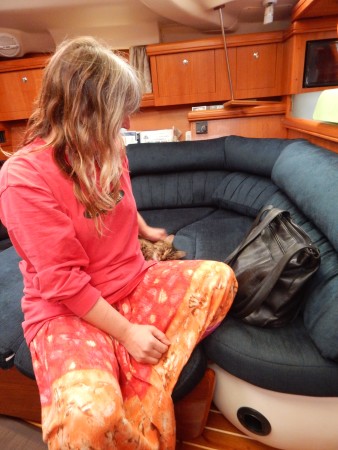
She was still pretty edgy, but that is mostly general nervousness. We introduced her to a few cubbies and since the dining room table is currently down, the space below makes a terrific cat cave. But generally she is out and about and demanding scratches and attention. We spent 3 days at the dock and it rained quite a bit so she was generally inside catching up on her zzz’s. But when we went out into the cockpit we carried her out with us, all duded up in her harness complete with bell. She was nervous at first and stayed up near the hatch or ducking back down into the boat, but after the second or third time we were out, but left her below, she eventually decided she wanted to be where her people were and came up the companionway on her own. After that she just got braver and more accomodating.

I took her into the dinghy for a little float and she took it fairly well but you could see she would rather be on the bigger boat. The complexity of the physics involved in launching herself upwards off a floating object seemed to escape her, so I made sure I handed her back aboard rather than letting her jump as she seemed prepared to do. She also came out on deck when we renamed the boat. Her being named after a greek goddess and all we figured she deserved her own tot of champagne (thanks Earl).

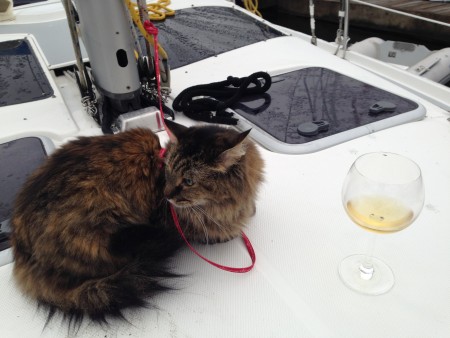
Eventually it came time to fire up the engine and cast off. Leslie went below to be with Artemis when I fired up the big noisy diesel. It didn’t seem to bother her outwardly but you could tell she classed it under just an other indignity to endure! She hunkered down in the back cabin for a while until I moved her forward, letting her know that it was quieter there. Crossing the Strait of Georgia took about five and half hours, motoring all the way (except for an abortive attempt at sailing as we passed the north edge of Gabriola Island) and she hung out mainly on the floor in front of the v-berth the whole way occasionally hiding in one of the cubbies below the mattress. After we had anchored we did discover she had been sick, but since hairballs are a semi-regular occurrence with her, it was hard to tell if the motion got to her or it was her usual intestinal cleanse.
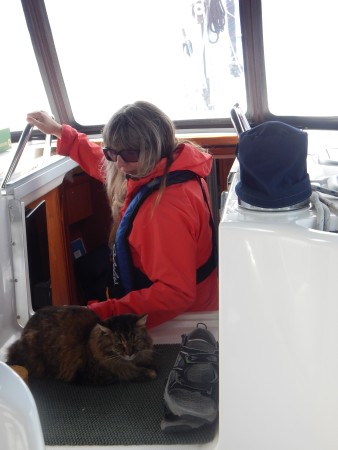
Now at anchor, the boat rules currently consist of no kitty on deck without a harness and a supervisor. No clawing anything but approved and supplied clawing surfaces. And no kitties on the transom. This has, of course, made the transom irresistible. She’s literally toeing the line every time I turn to look. But a few gentle swats and constant reminders have seemed to at least made the rule clear. She’s a pretty smart cat. Absolute obedience is another matter entirely. As I said, she’s a pretty smart cat.
So here we sit at anchor for a few days in Nanaimo Harbour. She’s settling in fine and eating well so everyone is happy. And now we will wait and see what the next phase of the adventure brings.
—Captain Why #Posts