Winter Berths
The keystone to our plan for 2015-16 was the idea that we could overwinter in Victoria. If we could find a comfortable place to stay when the weather turned cool, well then who needs the tropic eh? The winter climate in Victoria is supposed to be the best on the West Coast, it’s a small, walking city, Leslie and I have a fond history with the city and it has a university with all the academic accoutrements so Leslie can get some work done. So I set out to find what the liveaboard options for Victoria were.

And of course, the Inner Harbour is right downtown.
There are two main options. Both the GVHA (Greater Victoria Harbour Association) and The Coast Victoria Harbourside Hotel & Marina offer packages with their off-season moorages. There are a few more liveaboard options like West Bay on the other side of the harbour or a few up in Sydney but they are farther away and don’t offer any particular off-season packages.

The Coast Victoria Harbourside Hotel & Marina
The Coast has a fairly small marina just west of Laurel Point. They offer 7-month package from October 1st to April 30th at $13.45/foot. So at 39′, Never for Ever would cost $524.55/month or a total of $3671.85. This includes power and the hotel amenities like shower, pool and exercise room. It’s a bit of a walk downtown, but they offer a shuttle and still well within walking distance. But we would have to be gone by the end of April.
Contacting them was a bit of an issue since there is not clear contact info on the website and I ended having to go through central booking. But eventually I got in contact with Josh who is their marina manager. When I contacted him back in March there was already a waiting list so I signed up right away, before we had even settled on a boat. This marina was my preferred choice but the waiting list makes me nervous.
We stopped in to see him when we were there in late May but he seems to only work from 3pm onward so I have only had a few brief email exchanges..
Josh Ramsdale
j.ramsdale@coasthotels.com
or call the front desk 250-360-1211
Website
GVHA
The Great Victoria Inner Harbour Association has 4 main marinas. FIsherman’s Wharf is just west of the Coast and offers berths for commercial fisherman and year-round liveaboards. The Causeway is directly in front of the Empress Hotel, Ship Point is the long straight dock just north and is mostly reserved for bigger boats like luxury yachts and Wharf Street which is a bit more north again, just after the seaplane base. The last three all have low-season options.

Causeway and the Empress

Causeway from the street
GVHA offers a Low Season Moorage 8-month package from October 1 to June 20th. 30’–44′ boats are charged at $8.45/foot which is $329.55 /month. Power is extra (30amps is $70/month) and there is a $104/month liveaboard fee for a total of $503.55/month and $4044.40 for the whole 8 months.
There are showers right near Wharf Street with washers and driers and you are literally right downtown. Wharf Street would be our preference of GVHA’s offerings with proximity to everything, a locked gate and away from the tourist bustle of the Causeway. The only downside is the seaplanes if that sort of noise bothers you (it doesn’t bother me). They also offer a free pumpout service — a small boat that comes around once a week and pumps out your holding tanks.
The GVHA doesn’t take new applications until the end of May. They give their current customers until mid May to renew and then start in on the new applications, so although I had contacted them originally in March, we have had to wait to apply.

Wharf Street
Taris Walter (Marina Services Administrative Assistant)
TWalter@gvha.ca
250-383-8326
www.gvha.ca
Rates in General
For comparison purposes the GVHA’s year-round rate is $12.70/foot (with all the extra fees as well) and transient moorage is $28.80/foot so the $8.45 rate is pretty good. Vancouver moorages can run upwards of $13 even without liveaboard privileges. Blaine, Washington’s annual moorage is around $7.80 foot (usd) so you can see it doesn’t cost all that much to be living in the center of everything.

Ship Point
Where are we now?
Well, we stopped in Victoria on our way home from our Circumnavigation and visited the Coast and the GVHA. The Coast still looks like a great option, but unfortunately Josh wasn’t there to talk to about the state of the waiting list. On the other hand, when we arrived at the GVHA office, Taris was right in the middle of working on the lists. I mean we could see her actually working on the dock layouts.

So we asked a few questions and then applied on the spot. At Wharf Street, there were openings on the outside of D-dock and the inside of C-dock. During our stay there a few days earlier aboard the Northwest Passage we had rafted up to a boat on the inside of C-dock and it seemed nice so we (I) picked there. We answered a bunch of questions and voila, we had a berth pending a successful application. Once our application was accepted we would be on the hook for a cancelation fee but up until then we would be free to cancel anytime. Leslie really like this spot and actually prefers it over the Coast Harbourside so cancelling now seems unlikely.

This lovely pilothouse is almost exactly where our tentative berth is.
The Process
A few days after we got back from our trip, I got an email from Taris and the GVHA:
Good Afternoon,
We are pleased to announce that there is space to accommodate you in our 2015-16 Low Season Program, pending approval of your moorage application. In order to submit a moorage application we require the following documentation:
- Proof of Ownership (Bill of Sale)
Proof of Registration- Proof of current insurance:
Minimum $2 million protection & indemnity (liability)
GVHA must be named as an additional insured OR, we require a letter of undertaking from your insurer (see below)- Two photos of your vessel : One of side, one of stern
- Two References:
One professional (preferably from a previous marina)
One personal (not a family member)
*Note: this can be a letter of reference OR contact information for your referenceOnce we have received this documentation, and approved moorage, I will send you a moorage agreement, and we will process a security deposit in the amount of one month of moorage to secure your slip. Also at this time we require that GVHA be named as an additional insured OR a letter of undertaking provided from your insurer. This ensures that GVHA is notified of any policy changes or cancellation.
Please let me know if you have any questions or concerns; we look forward to having you with us next fall!
So now I am in the process of collecting the documentation and will hopefully fire it off in a short while. The only outstanding thing is the photos and I suppose I can use old ones and photoshop out the old name.
We are really excited and this confirmation is another worry lifted from our shoulders. Now we just have to actually start the trip.
—Captain Why #Posts
Brilliant Marketing & Stock Photography
Super Stock Photos
Vince Vaughn’s latest movie Unfinished Business, which comes out in March and Twentieth Century Fox teamed up with iStock by Getty Images to produce a bunch of prototypical stock images using what I thought was the cast of the movie.


It was brilliant! If you’ve ever gone looking for business type stock images you will find page upon page of this dreck. And they were actually selling (giving away actually) the images on iStock for editorial use. THey had (I supposed) actually spent a day recreating some of the worst photography out there. I suppose this isn’t as clever to those of you who have never used stock but to me it was enough to make me want to rush out and see the movie to see what other bears they were going to poke
But, unfortunately for me, it turns out they didn’t actually shoot the images, rather just photoshopped the star’s faces onto existing images. (click on the images to see the originals)


Major bummer. Still it was pretty damn clever. I didn’t pay to go see the movie though; I was just that disappointed.
My cellphone sees…
Huh, they're green today. #selfie

We’ve been replaced!
While we were away it seems we have been replaced.

The developers have been working hard all spring on our new lake and while it’s not ready for much use by people, the local waterfowl have declared it acceptable so we have some geese, ducks and a bunch of seagulls now as residents.
One day C saw a young teen walking a family of geese and goslings towards our newly filled lake. Apparently they had been born somewhere in the neighbourhood and this was the big trek to water. The teen (and her mother following in the van) were just helping out to ensure a safe arrival. C curiously headed down to the lake to check out the new family with some bread treats.
Well it seems upon her retelling of her visit to her parents she was lectured on how bad bread was for waterfowl and a involved in a discussion about if such a new lake would have enough food for the young ones. And then magically, a few days later, a 50lb sack of cracked corn appeared in her garage. Since she now had to get rid of the corn, a daily visit to the lake turned into a ritual. By the time we returned home, C’s new family would now come running (no wing feathers yet) at her call of “Babiesss…” to share in their daily meal. Eventually the other resident pairs of geese would also join in, only to be hissed away by Dad. So now she had to shlep even more corn to feed the neighbourhood.
We were gently introduced to the family and have tentatively been accepted as long as we are with Auntie C. We are pretty sure these are just an early batch and the two or three other pairs of Canada Geese that live at the lake are hiding their nests up in the old community garden plots. You never know, C may just need another 50lbs soon…


My cellphone sees…
Look what Carmen made!

My cellphone sees…
Chat noir

Easy Lessons in Boat Ownership
We just completed a circumnavigation of Vancouver Island aboard Tim Melville’s Baltic 42. This is something he has done the last couple of years with his wife Donna as crew and cook and a select few, paying passengers/students. It’s a whirlwind trip around the island done in only two weeks. We had booked the trip well before *Never Forever* came into the picture and while I might cringe slightly at the cost now that I have a boat of my own, I learned a tremendous amount that will serve me long into the future.
You can read a day-by-day account in my blog (macblaze.ca) but I thought I would sum up the more boat-ownership type details here for posterity.
The relationship between captain and crew
I’m not really captain material. In fact Leslie has more leadership skills (kind of obvious given her experience). With just the two (or three…sigh) of us it is no big deal, but it gets important when a coordinated effort among new crew is necessary. Things like tacking and gybing can be done half-heartedly in most scenarios but docking at night or in crowded situations, keeping a lookout, reefing etc. all work better and safer if the responsibilities and relationships are clear. And that takes communication. And good communication, much to my chagrin takes a reasonable amount of leadership. You need to clearly and effectively outline goals, tasks, responsibilities and outcomes before you start, not trust that it will all come together. This is a flaw in my leadership style I have always known, but on a boat, the potential outcomes of my laissez faire, come-what-may, we’ll-deal-with-it-later style becomes a bit scary.
But I did score well on the “not getting too excited” side. While my inside voice may have said jesus-muther-f8ckin-christ more than once, I don’t think it slipped out even in my demeanour. Or maybe I am fooling myself.

Diesel engines
Diesel engines are simple. They say they need only two things: fuel and air. Having said that there seem to be a lot of ways that those two simple things can be a problem.
We ran out of fuel by accident; we had switched to the small tank and forgot to switch back. This meant the old Perkins needed to be reprimed which entailed opening valves all along the fuel system and bleeding the air out of the fuel lines. If that sounds complicated, well it was. At least on a Perkins. The key factor we learned was that once you get to the the other side of the injector pump you are in a high pressure system and you need to crank the engine to force the air out; there was simply no way to do that by hand. And if you have run your battery down by trying to start it before the injectors are bled, well, you should thank your lucky stars you are a sailboat. It didn’t get that far with us and after a lot of consultation we got the system bled and the motor restarted but still…

The spring that reset the shutoff solenoid also broke at one point. This meant when we went to start the motor the next morning it wouldn’t. Tim traced all the systems until he reached the broken spring. It hadn’t disengaged the shut off solenoid and so no fuel was reaching the engine. a manual reset, a pair of pliers and some wire bending and it was good to go. Simple, if you can find it.
Tim had also recently replaced his 55 amp alternator with a 100 amp Balmar. It was 100 amps because that is all the single v-belt on his engine could handle. In reality, with 6 people aboard and a lot of power use it turns out the single belt couldn’t handle it. The alternator’s regulator would demand all the power the alternator could churn out right on start up and the belt was slipping or wearing or something until it finally gave up. As a result we ended up blowing the belt. The big deal there was Tim’s spares were all for the old alternator, which with much effort he was able to make use of until we hit a town with spares.
A later phone called revealed a belt saving setting that controlled the load that the regulator demanded upon start up. Things worked better after that and we eventually switch back to the original spec belt.
Since I also want to add a 100 amp alternator, this is good stuff to know. The other solution is to change out the pulleys and use a serpentine belt that is better able to handle the load. This of course adds big $$ to the project.
Sail repair
Most boats I have sailed on came with a sail repair kit, at a minimum some sail tape but sometimes thread, awls, palms (big leather thimbles for your palm) and glue. The genoa’s leech was rubbing on something — although it simply could have been the horrible way his beginner crew were treating the poor foresail — and the stitching around the leech line had started to go midway up. We dropped the sail and performed a tape job to put it back into shape for the rest of the voyage, but Tim’s said it need the tender ministrations of a sail loft as soon as we got back.

So I guess all that’s all stuff I will need to add to the list.
Tows
R Shack Island has had an odd issue with her racor (fuel filter) for a couple of seasons and Dave has told me stories of all the times she has needed a tow back to the docks. It never really struck me how terrifying that must be until we also needed a tow after running out of fuel. Luckily we were towed to the fuel dock at Blind Channel which is out in the open. The tow boat just swung around like a ski boat and let us loose. Our speed was a bit high but there were quality people on the dock to catch the stern line and get a few wraps to bring us to a halt before we had to bail or hit something.
Not a skill I want to practice but I am beginning to believe it’s not an uncommon one amongst sailors.
Rapids & tides
Take them seriously. But not too seriously. If you are going with the tide, tidal rapids of up to 5 or 6 knots are not actually as scary as all that. Or at least some of them aren’t. Up until this trip I have been meticulous about avoiding current except the few times Tim has been with us. But now his respectfully cavalier attitude is beginning to rub off; a current isn’t always your enemy if you give it the right amount of respect.

Check the tables, know your currents, access the risks and then enjoy the ride.
Keel depth and scope
Northwest Passage had an eight-foot keel. Eight feet plus four feet to the bowroller added twelve feet right off the top to any scope we were allowing for when anchoring. With a 5:1 scope in 20 feet of water that meant we needed 160 feet of rode out. But since a lot of the anchorages were small and the rode was all chain we often left it at 40 meters (130 feet) or less. Chain counts for a lot.
Charts vs chart plotters
It’s official: I like charts. I like north-up. And I like to know where I am. At one point Tim turned off the chart plotter for the rest of a leg and I was 100% more comfortable with the whole process. A chartplotter has too many toys and lulls you into relying solely on it. In fact I think it makes using a chart harder. I am much more comfortable relating the chart to what I see around me than trying to interpret the pixels on a small 6-inch screen. And when sailing around in a fog, tacking back and forth, using course-up gives you no sense of heading or any deviation; the chart plotter is continually spinning. At least (to me) north-up relates to the psuedo-reality of the familar map/chart system.

No one else on the trip agreed with me, although Tim was a big advocate of using the charts for practice. The chartplotter is great, essential even, for negotiating narrow or rock-filled channels in low visibility, but I continually felt without having studied the route on paper, I was still flying blind. Personal preference I guess, but I will stick with the old technology and use the new as a back-up.
Swell and Fog and Night
Ocean swell is a thing. Even with no wind and no waves we were often rising and falling 10 feet in sets of 2 or 3 with smaller swells in between. Depending on what the orientation of the boat to the swell was, this could range from being hardly noticeable to downright uncomfortable. Following seas were definitely the most enjoyable. It also affected visibility in some interesting ways.

Fog is both no big deal and a huge big deal. Going slow, using the light and sound signals and a constant eye on the chart plotter, AIS and radar makes fog a snap. Of course that’s if there are no other small boats out there. They are the wild card because they won’t have AIS, might not make a big blip on the radar and might or might not be sounding their signal. Exciting stuff that keeps you on your toes.

The other thing about fog and about sailing at night is that it is four bazillion times as hard to keep a steady course and so very easy to go off it slightly without noticing. One day in the fog I was sailing according to a shifting wind and ended up pointing a completely other direction than I thought I was. If the chartplotter is zoomed in too much or zoomed out to much it is easy to miss the long slow curve. Maintaining a course was easier at night because we were more paranoid and there was the occasional light showing to orient yourself to; just be careful it it isn’t a ship that is also moving.

And docking at night in a strange harbour is a whole ‘nother thing that must be experienced. A powerful light used sparingly so as not to destroy night vision and an attentive crew are musts.
Keeping a watch
In the Gulf Islands it is really important to keep a good watch as there are logs and crab traps everywhere. Keeping a watch at night is more of a crap shoot and I guess you just pray you miss things. Going back to my first point, you would think a crew of six would be able to miss everything, but with all the distractions involved, if there are no clear instructions to keep watch or sing out when you spot something, the risk of hitting something goes up a lot.
Luckily for us, when I did finally run over a crab pot, the engine wasn’t running and the line only tangled around the rudder which we were able to eventually discern and thus confidently cut the line, freeing ourselves. But in retrospect that incident and some of the other near misses are borderline unforgivable. Still, if you listen to the stories, it happens to everyone eventually.
And so…
I realize two things now that perhaps weren’t as clear before our trip. First, I have a lot to learn about the details. There is minutiae that can make the difference between a confident decision and wild-ass guess work and not knowing a crucial fact can turn an oops into a disaster pretty damn quickly. The second is that I know a lot. The trick, it seems to me, to learning the minutiae is to already know the broad strokes and then refine and repeat over a lifetime of experiencing. Every time I go sailing I cut a wider swath through my ignorance and the small things then come as they may. I will never know everything — Tim certainly didn’t and he has decades on me — but eventually I might get to his level where I might be able to figure out just about anything the boat throws at me.
I am sure there will be times in the next year I will be absolutely terrified and lost, but this trip has filled out my tool kit a bit and hopefully I will be able to work through whatever the fates (or my own stupidity) has in store.

—Captain Why #Posts
Van Isle Summary
I’ve cleaned up the blog entries a bit, fixed the sort order and uploaded the kml files so the track now show. On the ferry ride back to Vancouver we finally saw some orcas, so I guess Tim is off the hook. And the piéce de resistance was a lanky lone wolf crossing the highway right in front of us as we were exiting Jasper. We slowed down and he looked right at us before dismissing us and ducking down into the bushes along the road. So cool!
The numbers
- About 741 nm (1372 km)
- 16 days aboard
- 6 crew
- 2 night dockings
- 5 iphones, 2 ipads, 1 imac and a lone android
- a bazillion bald eagles
- hundreds of sea lions
- dozens of sea otters
- 3 Orca
- 2 Grey whales
- 1 wolf
Last Day
Up at 7:30. Coffee on deck and then Jim and Gwen came by. Gwen is an old friend of Donna’s and they are off a 42′ Catalina that had been anchored in Montague overnight. We ate breakfast and visited until it was time to cast off. Sea Esta X will travel alongside us at least until the north end of Thetis Island.
Today is another no chart plotter day with Terry in the hot seat. We wound our way northward and swung by Wallace Island for a peek. This is something we have done a few times but we’ve never stopped. This time we decided, at the last minute, to actually do it. There was a spot open at the end of the pier and Terry made for it leaving the rest of us to scramble to get lines and fenders out. We got it all done except for the stern line so I wrapped the bow line around the base of a stanchion and used it as a midship line to get us on the dock.
We spent about 10 minutes on the island and did a quick poke around before casting off again. Terry and Bob both wanted to make the 3 o’clock ferry so we needed to hustle. A bit later the Catalina pealed off into Clam Bay and we continued on. Eventually we slid by the beautiful sandstone cliffs of Valdez Island, all worn and pitted by the action of the water and rounded the point towards Degnen Bay.
A quick docking and unloading was followed by a group picture and hauling gear. Terry and Bob drove their separate cars down to the dock (a Mazda Miata and a Mazda 3) and we said our goodbyes. An interesting group we made, but it goes to show that all it takes is a little will for people to get along. Still it might make a good story if you pushed the personality types a bit and added some conflict or a giant poisonous anaconda or something.
The highlight of the day was the lack of a highlight. Nothing broke, fell overboard or failed to function in its proper way. Pretty boring actually.
Leslie and I helped haul stuff up to the house and then relaxed aboard for a bit. Then we wandered up to the house for a beer and some showers. Sated and refreshed we got out of Tim and Donna’s way with a plan to come back 6:42-ish to meet up and walk to the Silva Bay pub for something to eat that isn’t good for me. My digestive system has a rude surprise in store for it as I transition back to my typical diet.
We packed up a bit and Leslie tried for a nap while I lounged in the cockpit enjoying the sun.
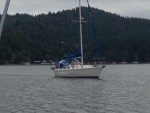
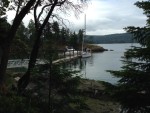

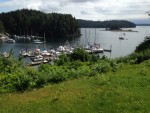

This pretty much wraps our Vancouver Island circumnavigation. It was a tremendous experience and I learned a lot about boating and about myself. I could wish we had some bad weather so I could’ve experienced it in ‘controlled’ conditions but that seems kind of petty.
I’m working on a summary for neverforever.ca and will cross-post it here when it’s done. Tomorrow we head for Victoria to check out the moorage possibilities and then it’s on to home, loved ones and the cat.
[flexiblemap src=”http://macblaze.ca/kmz/VanDay14.kml”]

My cellphone sees…
Sitting in the dock of the bay. Back on Gabriola Island. Tomorrow we hit the road back to #yeg
